
A hot stamping machine test is one of the most practical ways to reduce the risk of buying the wrong equipment for a packaging project. For gift boxes, wine boxes, rigid boxes, paper boxes, laminated paper, coated paper, and textured paper, the final stamping result cannot be judged accurately from a short description alone. Real materials, artwork, and the actual product structure give PackFinish much better information than photos or verbal explanations.
Hot stamping quality is not decided by the machine alone. The result depends on the packaging hot stamping machine, hot stamping foil, stamping die, fixture or jig, substrate, temperature setting, pressure distribution, dwell time, stamping area, and operator method. Testing helps confirm whether the process is suitable before machine selection.
When the sample set includes caps, boxes, and laminated panels, use the three-substrate hot stamping test-plan guide to separate fixture, backing, layer, and evidence requirements instead of treating every material as one generic trial.
Why a Sample Test Is More Reliable Than a Verbal Description
Many packaging projects look simple at first: a logo on a box lid, a gold line on a wine box, or a brand mark on a paper sleeve. In production, small details can change the result. A laminated surface may release foil differently from coated paper. A textured paper may need a different foil or pressure balance. A rigid box may require a special fixture because the stamping area is close to an edge, corner, groove, or raised structure.
A test also shows whether the design is suitable for hot stamping. Fine lines, small letters, reverse-out details, and large solid areas do not behave the same way. Some artwork needs die adjustment, foil selection, fixture support, or layout changes before the machine direction is confirmed.
Physical Samples to Prepare Before a Hot Stamping Machine Test
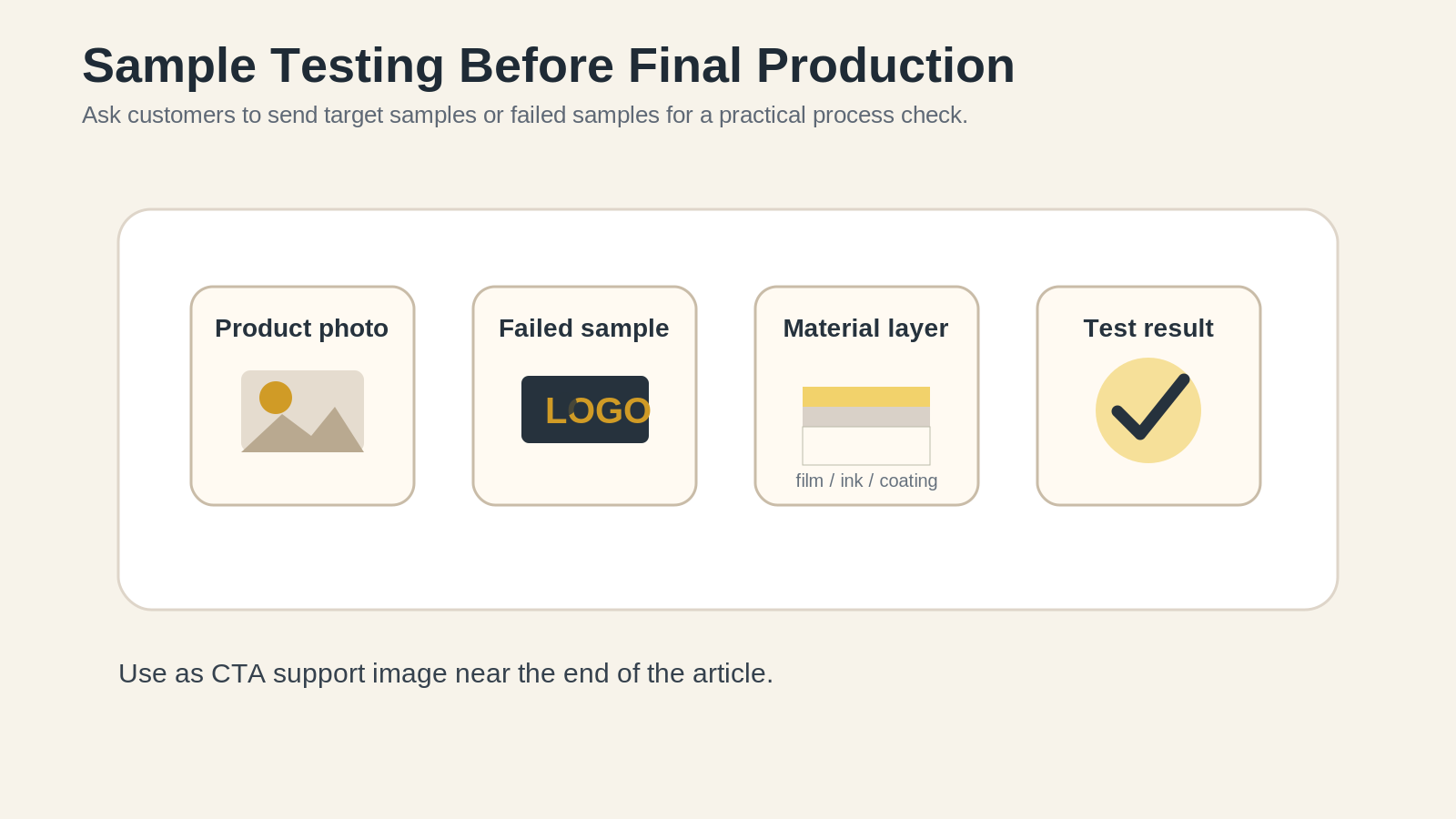
For a useful hot stamping machine test, send samples that represent actual production conditions as closely as possible. Prepare these sample types when available:
- Original material sheets or panels before forming, laminating, or box assembly.
- Finished or semi-finished products that will actually be stamped.
- Existing approved samples, especially if you already have a target effect.
- Failed samples, if another process produced poor adhesion, unclear edges, foil breaks, or inaccurate positioning.
- Samples from different material batches when color, coating, lamination, texture, or surface treatment may vary.
- Extra blank samples for repeated testing, adjustment, and comparison.
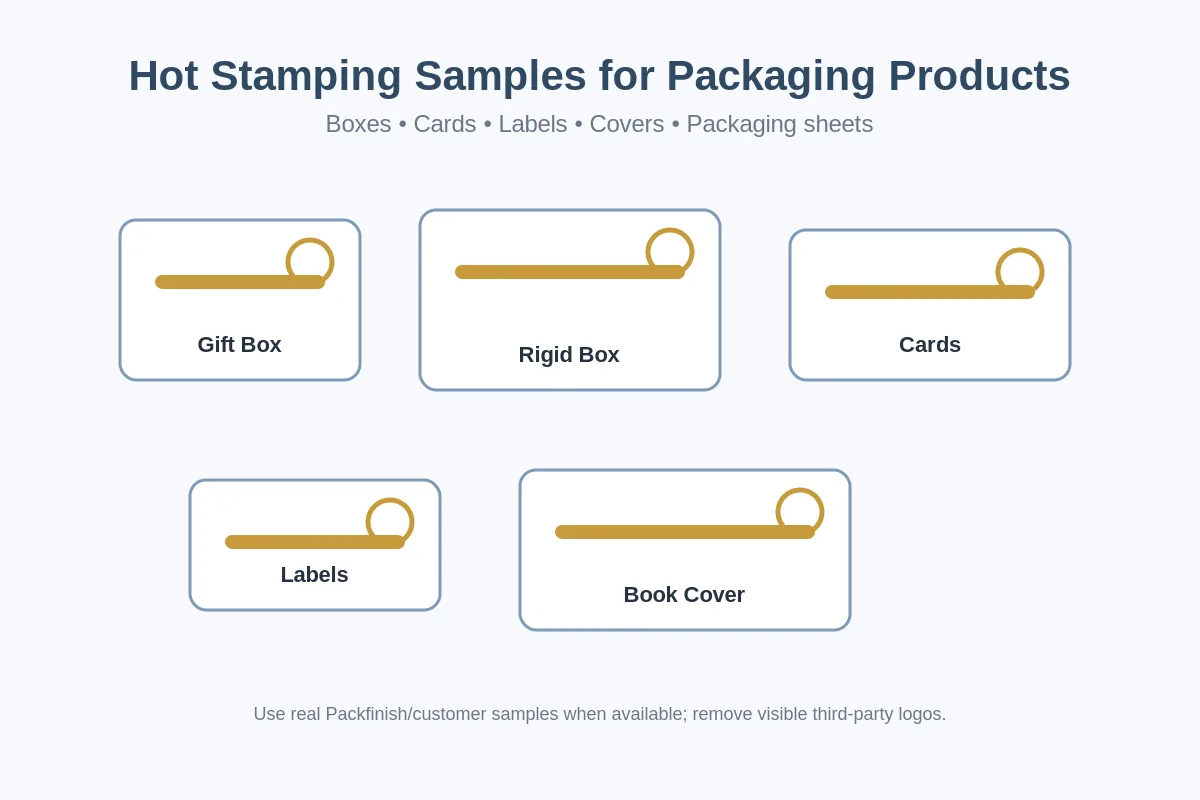
For rigid boxes, hot stamping machine for gift boxes, hot stamping machine for wine boxes, and paper box projects, product structure matters. A flat paper sheet and an assembled box lid do not always behave the same way under pressure. If the stamping position is near an edge, shoulder, curve, or fold, PackFinish needs to see the real structure so the fixture and positioning method can be evaluated.
Design Files and Positioning Information PackFinish Needs
The artwork file is as important as the physical sample. A clear design file helps evaluate die requirements, stamping area, registration tolerance, and suitable equipment type.
Before accepting a machine from selected samples, define a traceable registration accuracy and repeatability test with an agreed datum, continuous sample sequence, measurement method, and pass or retest rules.
- Logo or artwork files in vector format when possible, such as AI, PDF, EPS, or SVG.
- Exact stamping size, including width, height, and line thickness where relevant.
- A position drawing showing where the foil stamping should appear on the product.
- Reference photos or approved samples showing the expected foil color and finish.
- Notes for effects such as matte gold, bright gold, silver, holographic foil, color foil, or clear gloss.
- Tolerance requirements when foil must align with printed graphics, embossing, windows, or box edges.
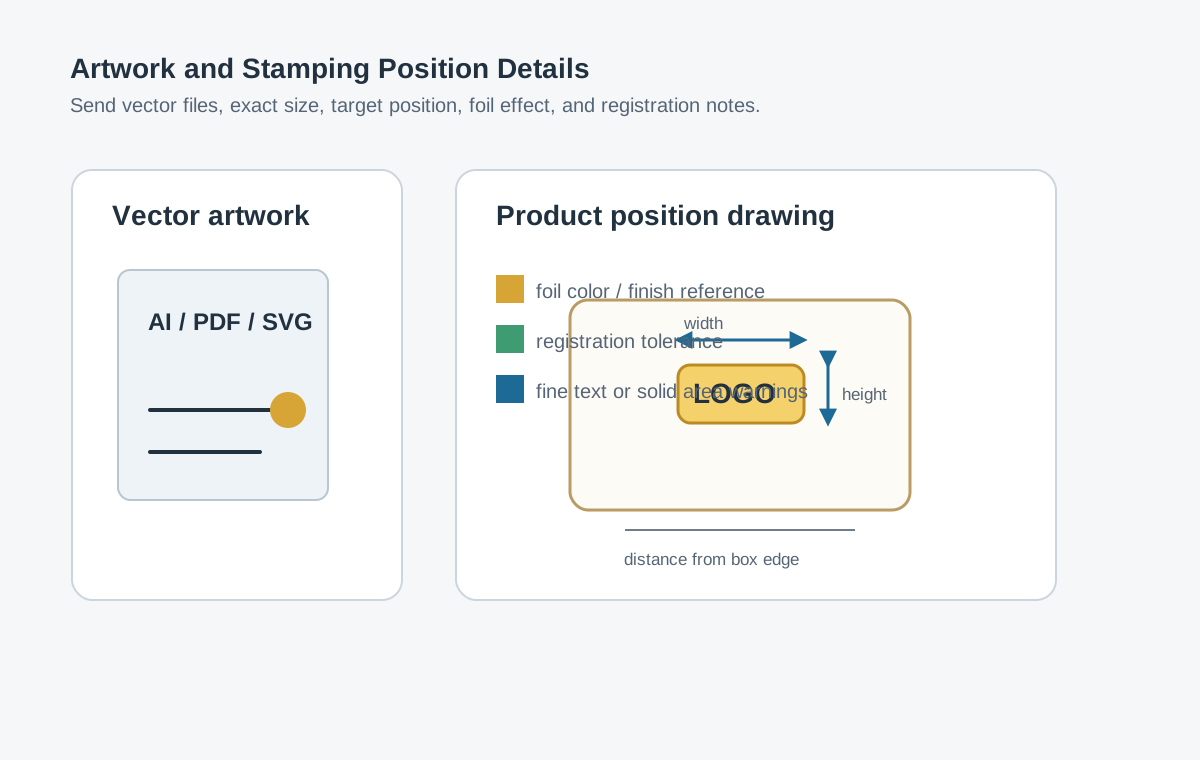
If the artwork includes very small text, thin strokes, dense patterns, or large solid areas, mark these parts clearly. These details influence the stamping die, foil release, pressure distribution, and test sequence.
Production Requirements That Affect Machine Selection
A sample test is not only about whether foil can transfer onto the substrate. It also helps decide which equipment configuration fits the production method. Before the test, provide practical production information so PackFinish can avoid recommending a machine that works for one sample but not for daily operation.
Useful production details include estimated quantity, daily demand, short-run or continuous production needs, current operation method, automation level, product size range, changeover frequency, and whether the job needs one-side stamping, multiple-position stamping, or repeated registration.
For small batches and frequent style changes, flexible positioning and quick fixture adjustment may be more valuable than a highly automated setup. For stable long-run production, feeding method, repeatability, operator workload, and batch consistency become more important. If the machine level is still undecided, compare manual, pneumatic, hydraulic, and automatic hot stamping machines before locking the purchase direction.
What PackFinish Checks During Sample Testing
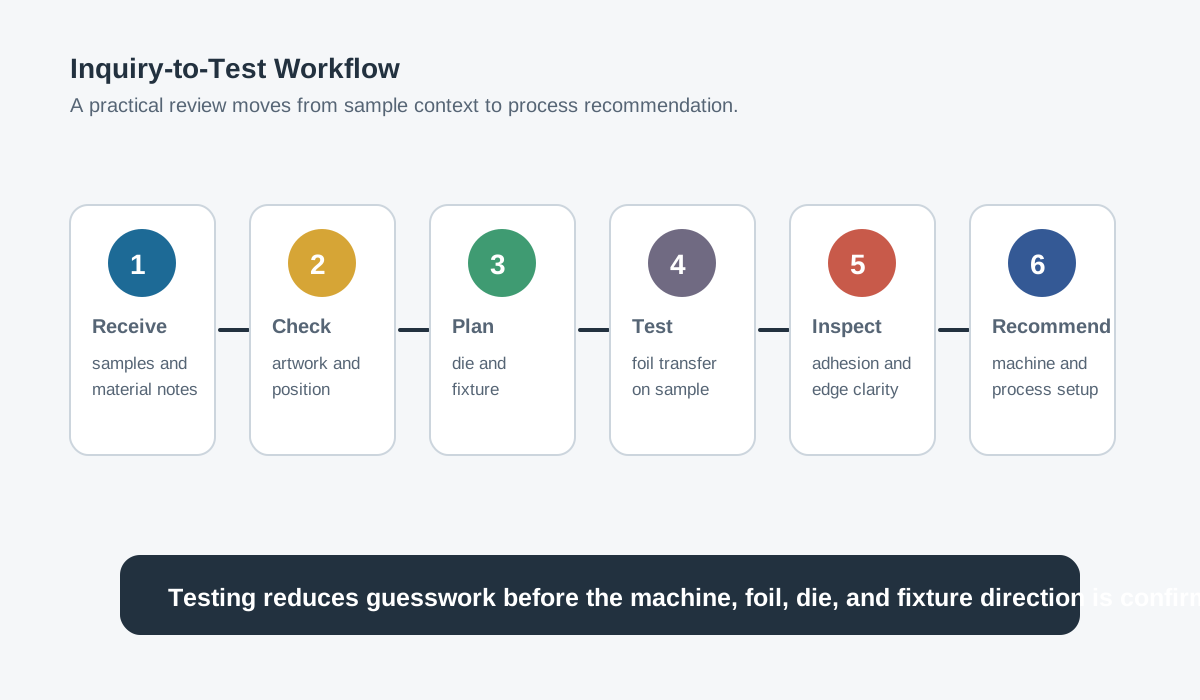
During sample testing, PackFinish looks beyond whether the foil appears on the surface. A good test should reveal both the visible effect and the process stability.
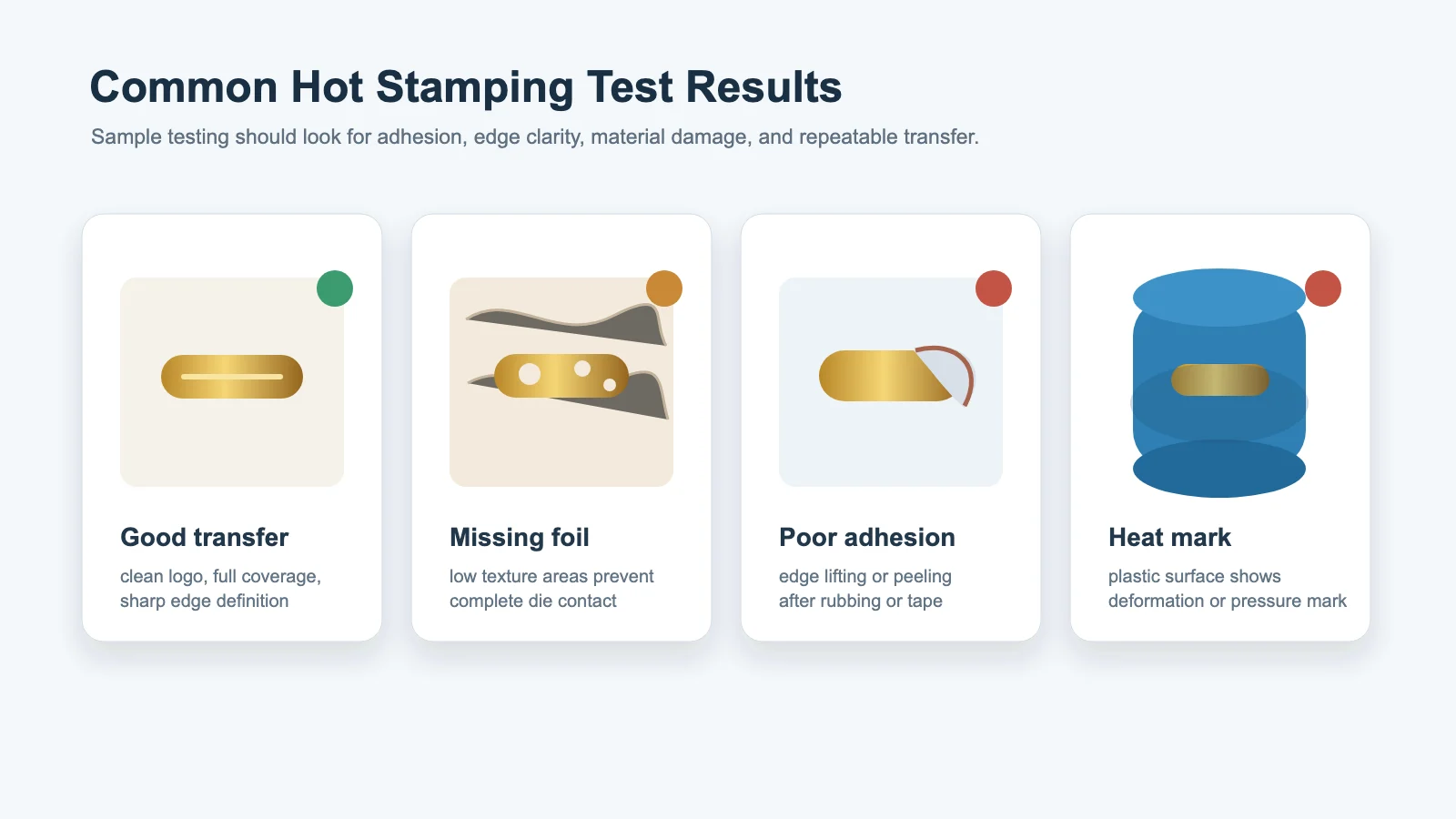
The main evaluation points include material compatibility, foil adhesion, edge definition, surface response, positioning, registration, pressure distribution, fixture requirements, and machine type suitability. PackFinish also checks for burn marks, dents, distortion, cracking, or unwanted texture changes.
A test result may show that a different foil, die design, hot stamping fixture and jig, or product preparation method is needed. This is why PackFinish treats the machine as one part of the total hot stamping solution, not as a universal answer for every material and design.
Common Mistake: Asking for a Final Solution From One Photo
One photo can help PackFinish make an initial judgment, but it cannot replace sample testing. A photo usually cannot show the coating type, lamination layer, surface tension, material hardness, box structure, exact position tolerance, or how the substrate reacts to heat and pressure.
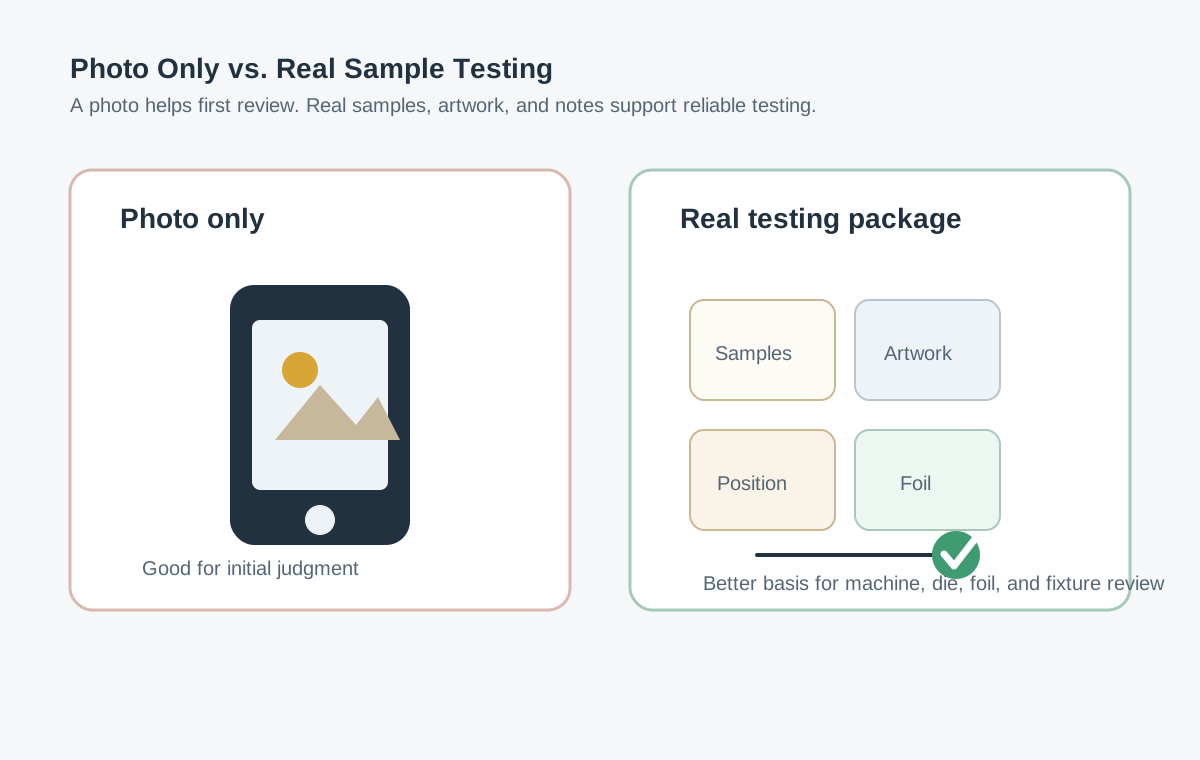
Photos are useful for early communication when they show the product shape, approximate stamping position, and target effect. But a final recommendation based only on a photo would be risky. Two materials that look similar may behave very differently during foil stamping. For this reason, PackFinish may request physical samples before confirming equipment direction, foil selection, or tooling requirements.
If the project already has missing foil, blurred edges, and poor adhesion, send the failed samples together with the target sample. The failed pieces often reveal what the next test needs to avoid.
Inquiry Checklist Before Sending Samples
Use this checklist when preparing an inquiry for PackFinish:
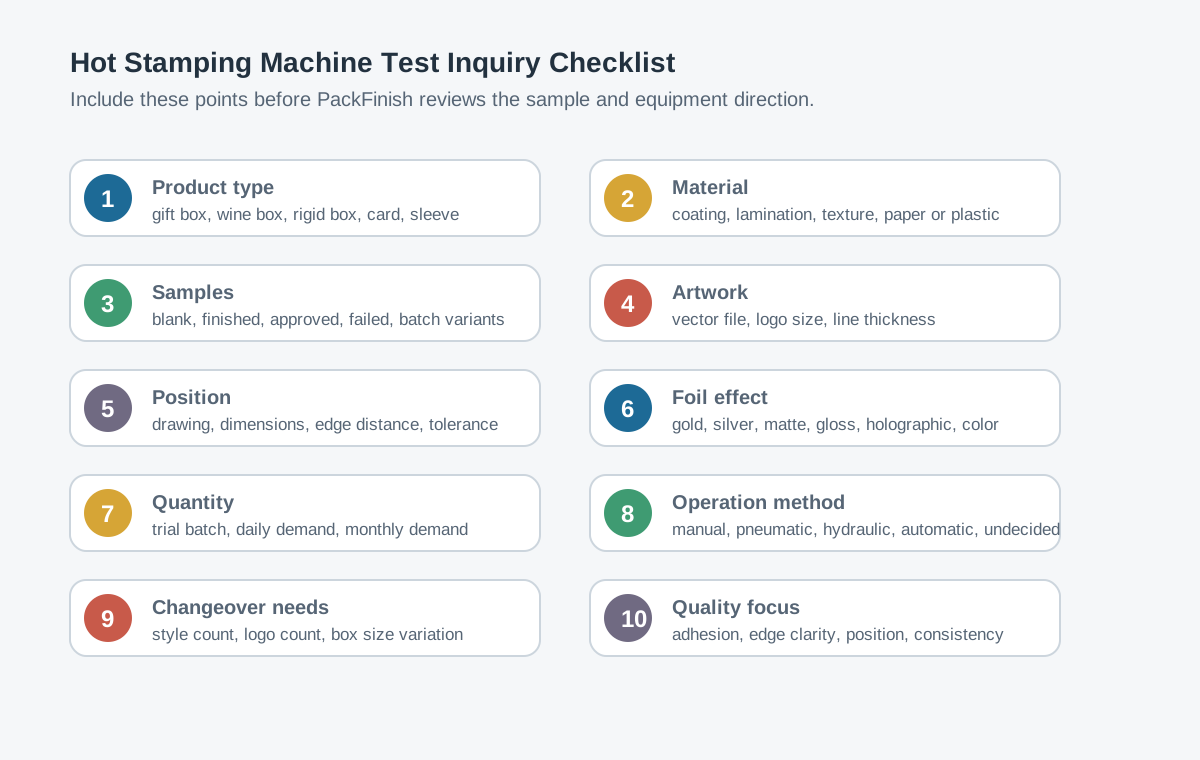
- Product type: gift box, wine box, rigid box, paper box, card, sleeve, or other packaging product.
- Material: coated paper, laminated paper, textured paper, cardboard, specialty paper, or other substrate.
- Sample status: blank material, finished product, approved sample, failed sample, or mixed batches.
- Artwork file: vector logo or pattern file with exact size.
- Stamping position: marked drawing, photo with dimensions, or sample with position notes.
- Target foil effect: gold, silver, matte, gloss, holographic, color foil, or other effect.
- Quantity requirement: estimated batch quantity, daily demand, or monthly demand.
- Operation method: manual, pneumatic, hydraulic, semi-automatic, automatic, or not yet decided.
- Changeover needs: number of styles, logos, box sizes, and stamping locations.
- Quality focus: adhesion, edge clarity, positioning accuracy, large area coverage, fine line detail, or batch consistency.
FAQ
Can PackFinish confirm the machine model from photos only?
Photos can support early communication, but they are not enough for a reliable final recommendation. Physical samples, artwork files, position information, and production requirements are needed.
How many samples should be sent for testing?
Send enough blank products or material pieces for repeated testing and adjustment. If the material has different batches, coatings, colors, or surface treatments, include representative samples from each variation.
Should I send failed samples from a previous supplier or process?
Yes. Failed samples are useful because they show what problem needs to be avoided, such as poor adhesion, blurred edges, broken foil, uneven pressure, or inaccurate positioning.
Does a successful sample test mean every future batch will be identical?
A sample test helps reduce risk, but future batch consistency still depends on material stability, foil quality, die condition, fixture accuracy, machine setting, operator method, and production control.
Prepare Complete Information Before Choosing a Hot Stamping Machine
A useful inquiry is not only "Can this product be hot stamped?" The better question is: which machine, foil, die, fixture, and process setup are suitable for this specific material, artwork, product structure, and production demand?
Before ordering a hot stamping machine, send PackFinish your physical samples, vector artwork, stamping position, target effect, and production requirements. With complete information, PackFinish can evaluate the real process, reduce guesswork, and help you choose a more suitable hot stamping solution for packaging production.