
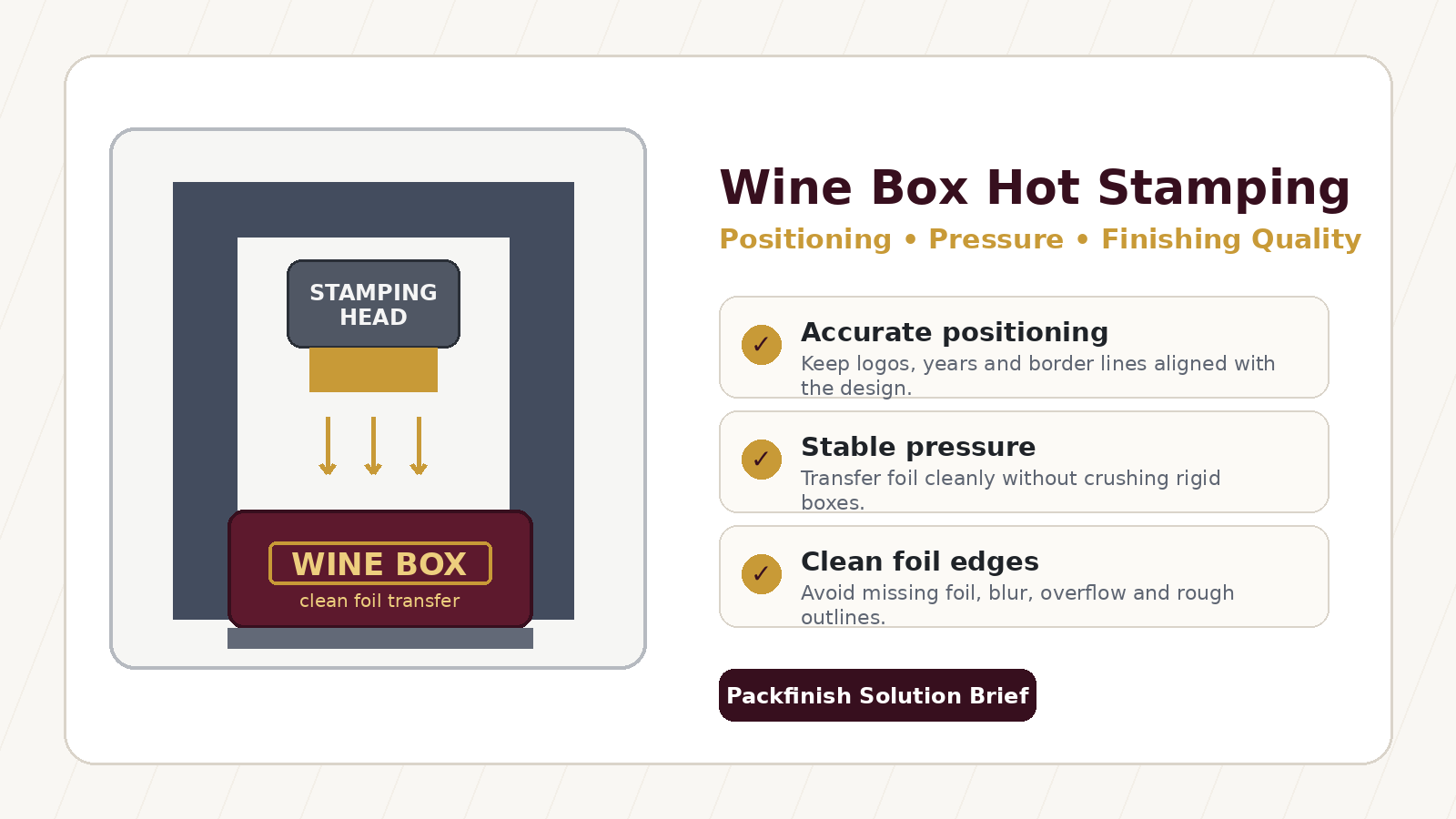
Wine packaging does more than protect the bottle. It carries the brand image, product level, and first impression. For many wine brands, the wine box is part of the product experience, so a clean foil logo, bright year mark, metallic border, or elegant decorative pattern can affect how premium the package feels.
Hot stamping is a common way to create this metallic effect, but wine box hot stamping is demanding. The machine must control positioning, pressure, heat, foil transfer, and finishing quality, especially when the box is thick, laminated, textured, or already formed.
For wine box suppliers and wine packaging factories, choosing the right hot stamping machine is not only a question of machine size or price. The useful question is whether the machine can hold the actual box structure and deliver stable results in production.
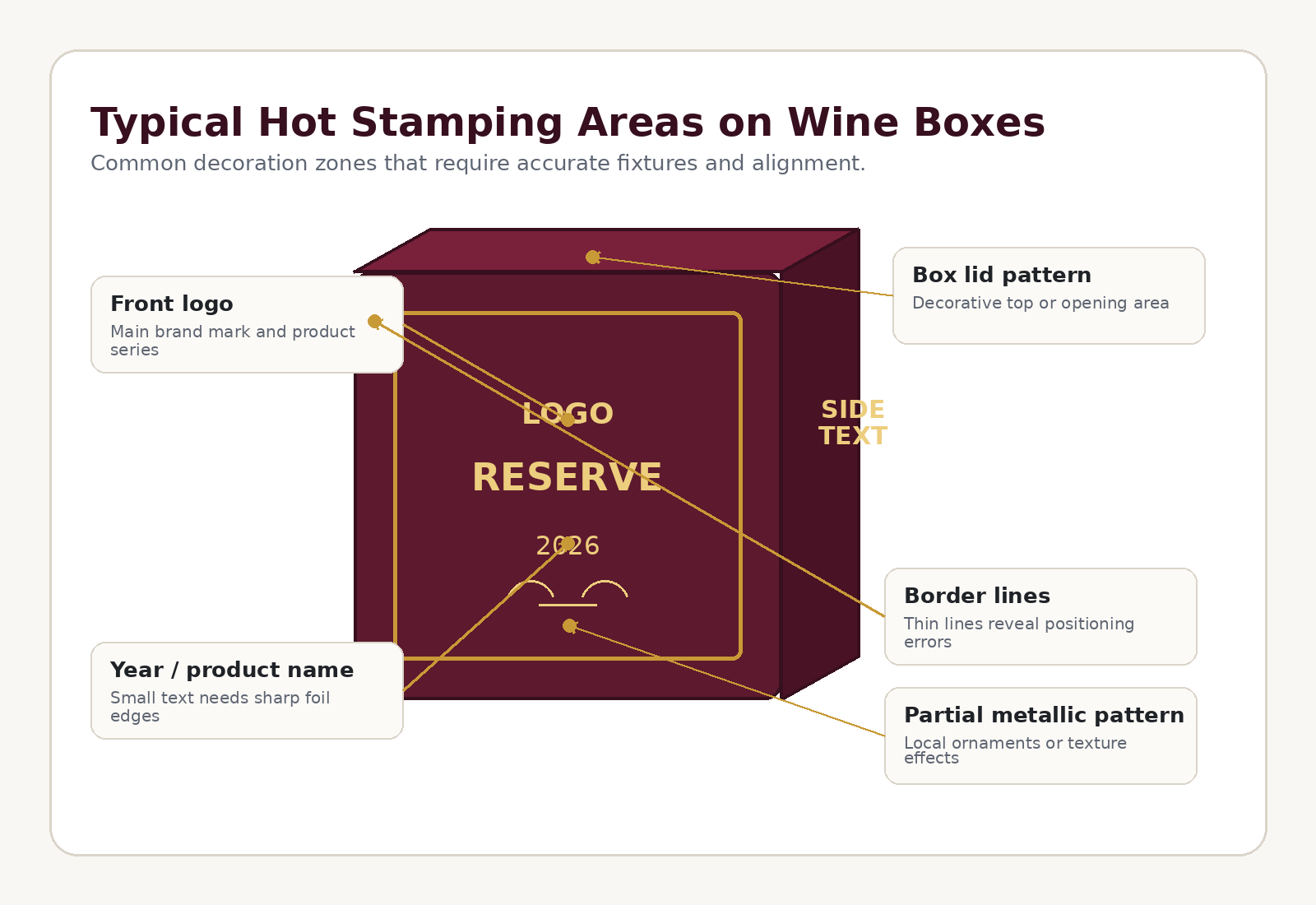
Common Hot Stamping Areas on Wine Boxes
Wine boxes usually have more than one stamping area. Different positions require different fixture designs, pressure settings, and operation methods.
Front logo
The main brand mark must be centered, bright, and clean because it directly affects brand recognition.
Wine name or year mark
Small letters and year details need accurate alignment and clear foil edges.
Side panel text
Narrow side areas need reliable positioning support to avoid shifting during repeated stamping.
Lid pattern or border
Premium layouts often need alignment between printed graphics, metallic lines, and foil areas.
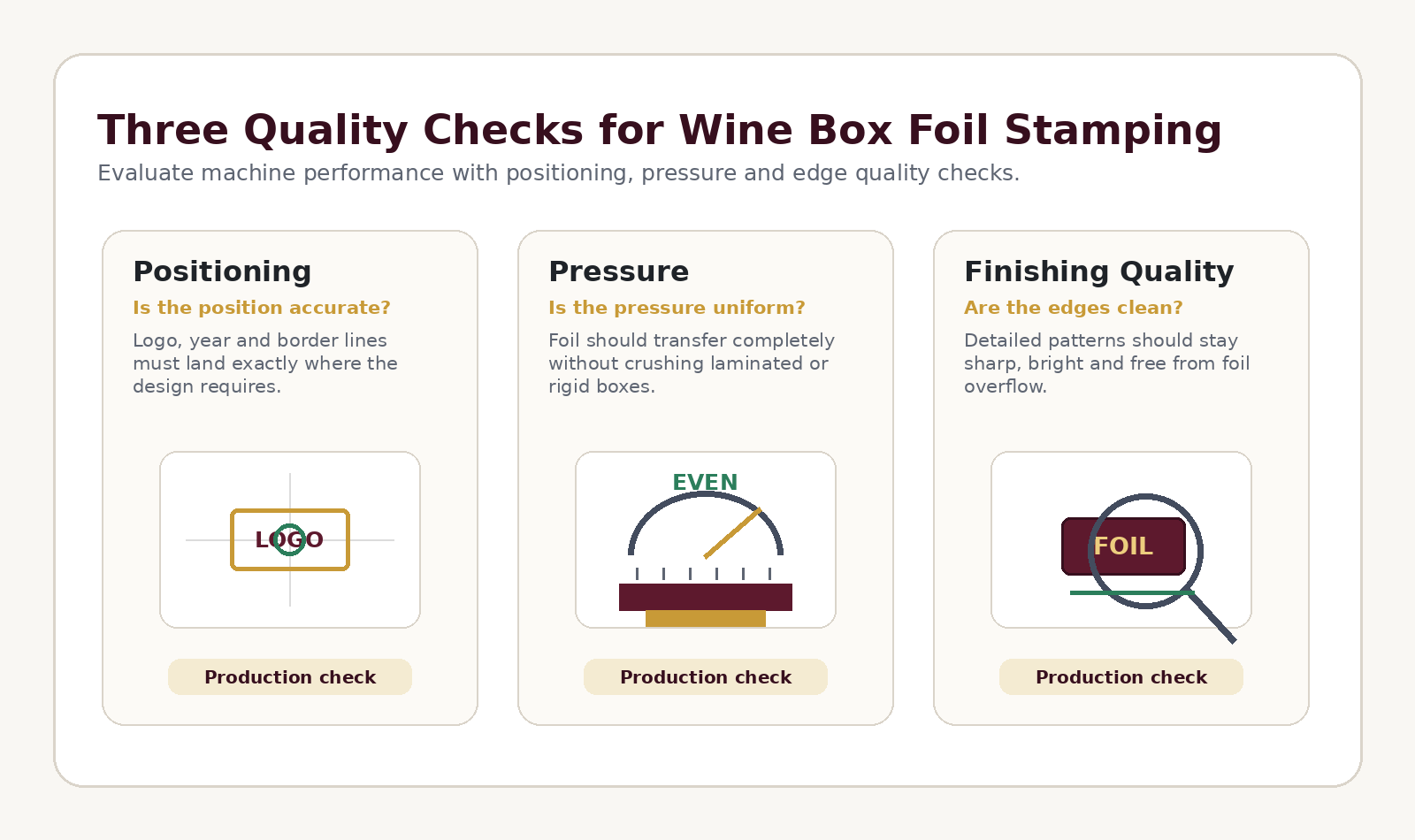
Three Key Issues in Wine Box Hot Stamping
When evaluating a hot stamping machine for wine boxes, three questions matter most: whether the position is accurate, whether the pressure is uniform, and whether the final foil edges are clean.
Accurate positioning
The logo, text, lines, and partial patterns must appear exactly where the design requires. Even a small shift can be obvious on luxury packaging.
Uniform pressure
Too little pressure may leave missing foil. Too much pressure may crush the surface, roughen the edge, or deform a formed box.
Clean foil edges
Sharp logo edges and smooth metallic lines are especially important on dark boxes, laminated surfaces, and textured papers.
Buyer note
Start with the wine box sample, not only the machine photo
A flat wine box sheet and a finished rigid wine box may need different machine setups. A small logo on smooth paper and a wide metallic pattern on textured paper may also need different pressure, foil, temperature, and fixture decisions.
The safer buying process is to send the actual sample, artwork, stamping position, and target output before confirming a machine configuration.
Difficulties Caused by Wine Box Materials and Structures
Wine boxes are more difficult to stamp than flat cards or thin sheets because the material and structure can create several production challenges.
| Wine box condition | What to evaluate before machine selection |
|---|---|
| Thick paperboard or rigid board | Check pressure stability, table support, and whether the box surface can be pressed evenly. |
| Matte, glossy, or soft-touch laminated surface | Test foil adhesion with the real surface because film type can affect transfer quality. |
| Textured specialty paper | Confirm that foil can transfer into the texture without broken lines or visible pressure marks. |
| Already formed rigid box | Review side walls, folded edges, magnetic closures, inner supports, and fixture clearance. |
These details mean the machine should not be selected only according to box length and width. The actual sample structure should guide the table, fixture, die, pressure, and operating method.
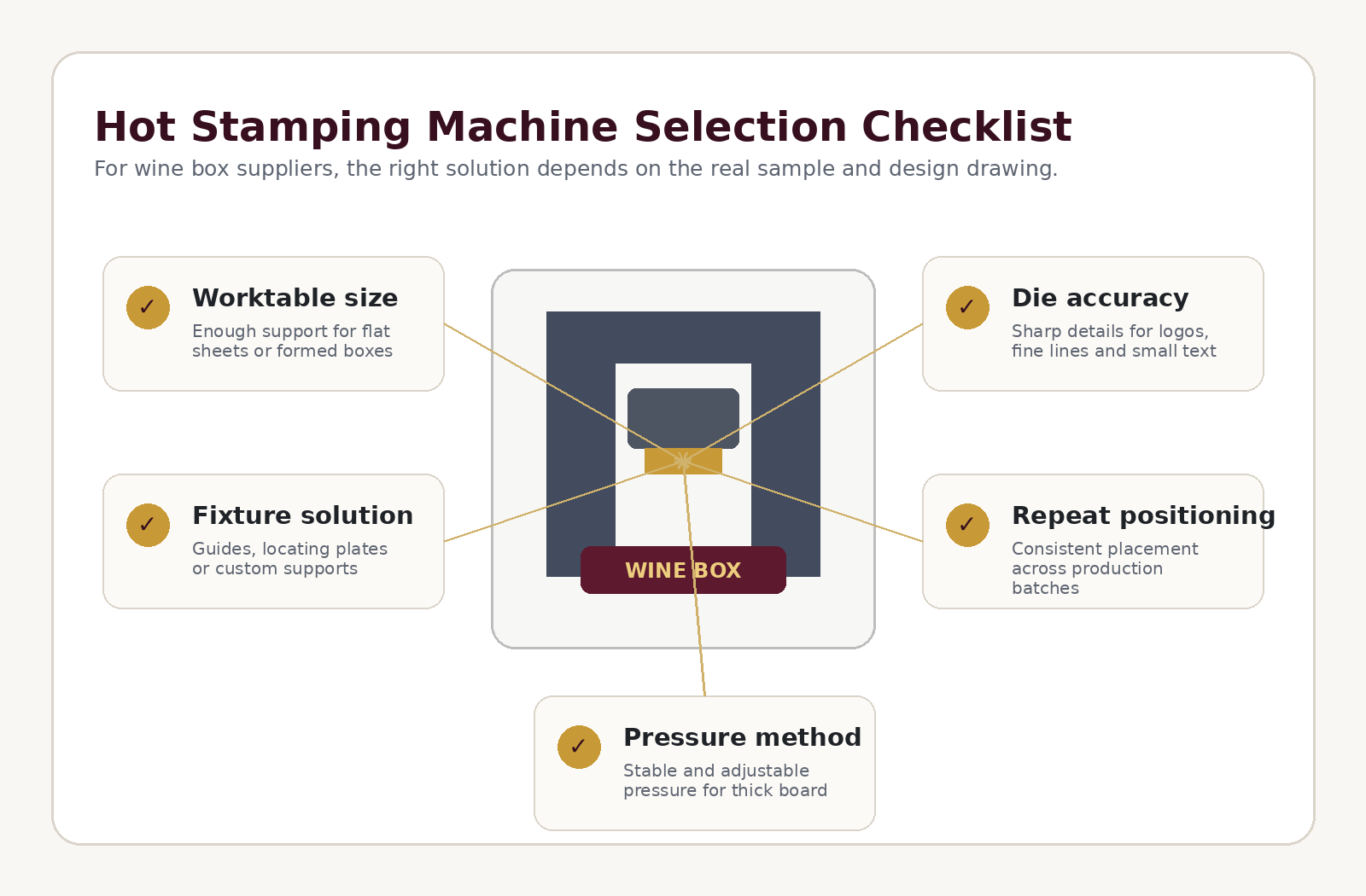
What to Check When Choosing a Hot Stamping Machine for Wine Boxes
Before choosing a hot stamping machine, wine box suppliers should check whether the machine and fixture can support the real box, repeat the target position, and protect the final package appearance.
Worktable size
The table must support the box safely, especially when the box is long, wide, or already formed. Enough space also helps the operator load and remove the box smoothly.
Fixture solution
For wine boxes, the fixture is often as important as the machine. It keeps each box in the same position and reduces movement during pressure application.
Pressure method
Pressure should be strong enough for thick board and textured paper, but adjustable enough to avoid crushing the surface or deforming a formed box.
Die accuracy
The stamping die affects line sharpness, small text clarity, and edge cleanliness. Poor die quality can make a premium box look unfinished.
Repeat positioning
Production requires the same design to land in the same position across the batch. Flexible adjustment is also useful when a factory handles different wine box projects.
Sample testing
Testing the real box helps confirm foil adhesion, pressure marks, edge quality, and whether the workflow is practical for the expected quantity.
Why Samples and Design Drawings Matter
For wine box hot stamping projects, asking only for a machine price is usually not enough. The correct setup depends on the box material, box structure, stamping area, logo size, foil type, and production requirement.
With the actual sample and design drawing, a supplier can better evaluate the stamping position, surface condition, pressure requirement, and fixture method. This reduces the risk of choosing a machine that fits the rough box size but cannot produce the required foil effect.
Sample review
PackFinish can evaluate wine box samples before recommendation
PackFinish can review wine box samples and design drawings before recommending a hot stamping solution. By checking the actual material, structure, stamping area, and production needs, the recommendation can focus on machine fit instead of relying only on a general quotation.
- Wine box photos or physical sample.
- Design drawing, logo file, or stamping artwork.
- Box material, surface finish, and formed or flat condition.
- Stamping area size, foil effect, and target position.
- Expected production quantity and workflow requirements.
Related PackFinish Pages
FAQ
Can one hot stamping machine handle every wine box project?
Not automatically. Wine box structure, surface material, stamping position, artwork size, and fixture method all affect machine fit. The real sample should be reviewed before a recommendation.
Why are formed wine boxes harder to hot stamp than flat sheets?
A formed box may have side walls, folded edges, inner supports, magnetic parts, and uneven height. These details can affect table support, die access, pressure balance, and repeat positioning.
What information should buyers send before asking for a machine recommendation?
Send wine box photos or samples, box dimensions, surface material, stamping artwork, target position, foil effect, stamping area size, and expected production quantity.
Should buyers choose by worktable size alone?
No. Worktable size matters, but buyers should also check fixture design, pressure control, die accuracy, repeat positioning, material surface, and whether the actual box can be held safely.