
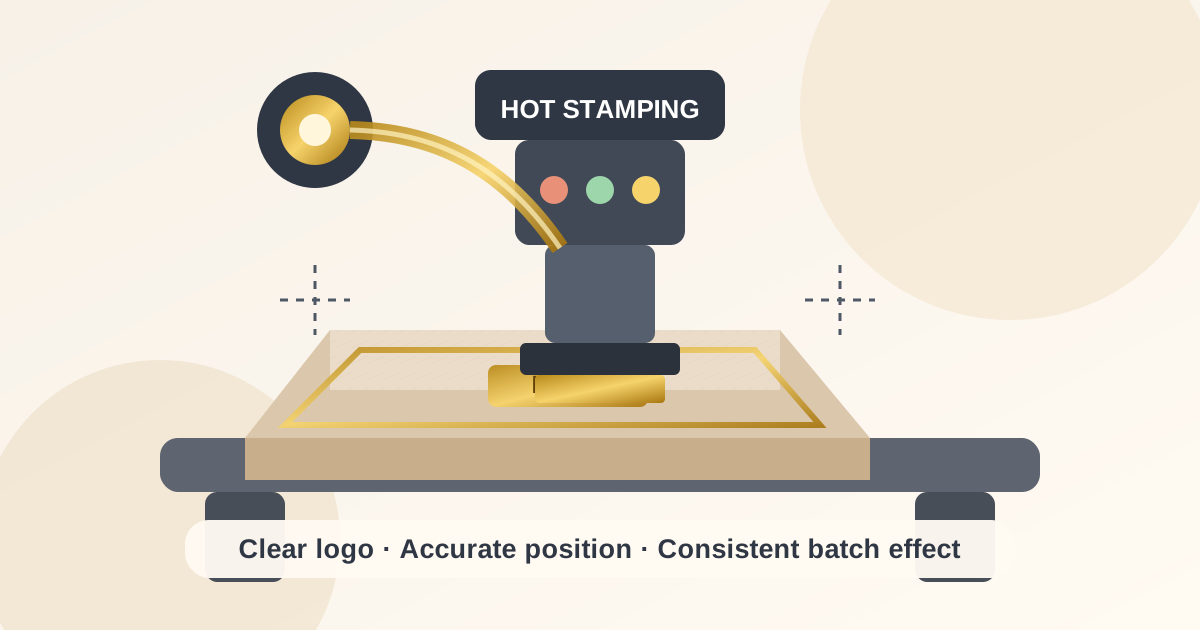
Gift box foil stamping is not only about making a package look premium. For gift box factories, gift packaging suppliers, and small-batch custom packaging teams, the bigger challenge is stability. A clear logo on one sample is not enough. Buyers usually need the same logo clarity, the same stamping position, and the same visual effect across a full production batch.
This is why choosing a hot stamping machine for gift boxes should start with the real box, the real material, and the real stamping position. A machine that works well on a flat card may not be suitable for a rigid box lid, a finished gift box, or textured specialty paper.
Before purchase, buyers should check how the machine handles gift box structure, material surface, working size, positioning, pressure, die installation, and changeover.
Quick answer
Start from the box sample, not from the machine photo
The useful question is not only whether a machine can stamp gift boxes. The buyer should confirm whether the machine can hold the real box steadily, reach the target area, transfer foil cleanly on the actual surface, and keep the result repeatable after setup.
This guide is a gift-box-specific companion to PackFinish's broader article on choosing a hot stamping machine for packaging products .
Why gift box hot stamping requires stable and consistent results
Gift boxes are often used for cosmetics, jewelry, electronics, food, tea, wine accessories, holiday promotions, corporate gifts, and premium retail packaging. In these applications, the logo or decorative foil is part of the brand image. A small defect can make the entire box look lower value.
Common quality problems include blurred logo edges, incomplete foil transfer, uneven pressure marks, position deviation, foil peeling, and inconsistent gloss between boxes. These issues are more noticeable on gift boxes because the stamping area is usually placed in a highly visible position, such as the center of the lid or the front-facing brand name.
When buyers compare machines, they should ask whether the machine can keep the foil result stable after repeated production with the same box type, same logo, same material, and same operator workflow.
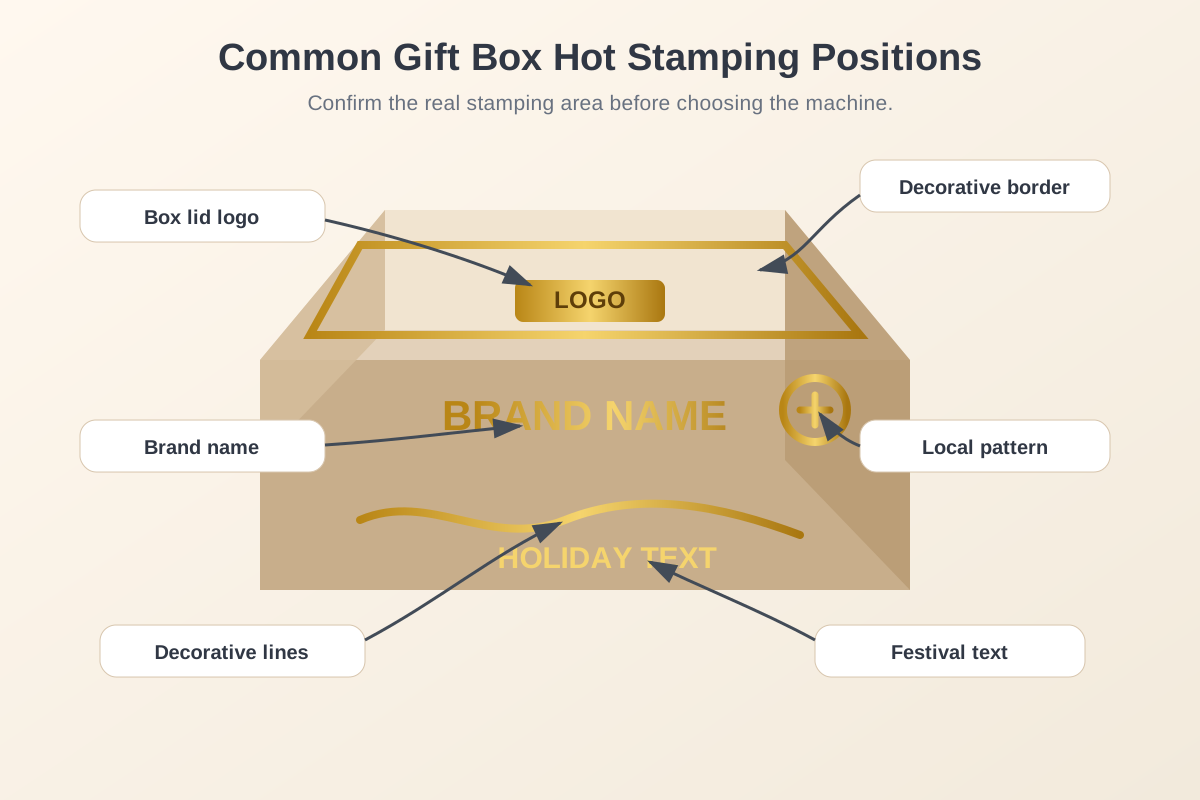
Common hot stamping positions on gift boxes
The stamping position directly affects machine selection. Gift boxes may look simple from the outside, but the usable stamping area can be limited by box shape, wall height, lid thickness, inner support, or raised edges.
Box lid logo
Usually placed in the center of the top surface. It requires accurate alignment and clean logo edges.
Brand name or product name
May appear on the lid, side panel, sleeve, or front face. The fixture must support repeat placement.
Decorative border
Often used around the lid or on a paper sleeve. Straight positioning and even pressure are important.
Fine decorative lines
Need stable pressure and correct temperature to avoid broken foil lines or blurred edges.
Festival or seasonal text
Common for holiday gift boxes, promotional packaging, and limited-edition runs.
Local pattern or icon
Used for small graphic details, seals, corner decorations, and premium marks.
How gift box structure affects machine selection
One of the most important questions is whether the box is being stamped before or after forming. The answer changes the machine requirements.
| Gift box condition | What buyers should check |
|---|---|
| Flat paperboard or flat wrapped paper | Confirm working area size, heating plate size, die size compatibility, pressure stability, and repeatable positioning before box forming. |
| Semi-finished gift box parts | Check table support, folded edges, glued areas, thickness changes, and whether the real part creates pressure imbalance. |
| Finished rigid gift boxes | Confirm box height clearance, worktable support, fixture repeatability, die reach, and whether pressure can be applied evenly without deforming the box. |
For finished-box projects, sample testing is especially important. The lid may have height, side walls, inner cardboard, magnetic closure parts, ribbons, or decorative accessories that interfere with the working table, die position, or press movement.
How gift box materials influence foil stamping quality
Gift boxes are made with many surface materials. The same foil and temperature setting may perform differently on coated paper, laminated paper, textured paper, and wrapped rigid box paper. Buyers should not assume that a machine result on ordinary paper will match the result on the actual gift box material.
This is why material review should be connected to the broader hot stamping material test process , especially when the surface is laminated, soft-touch, textured, coated, or wrapped around thick board.
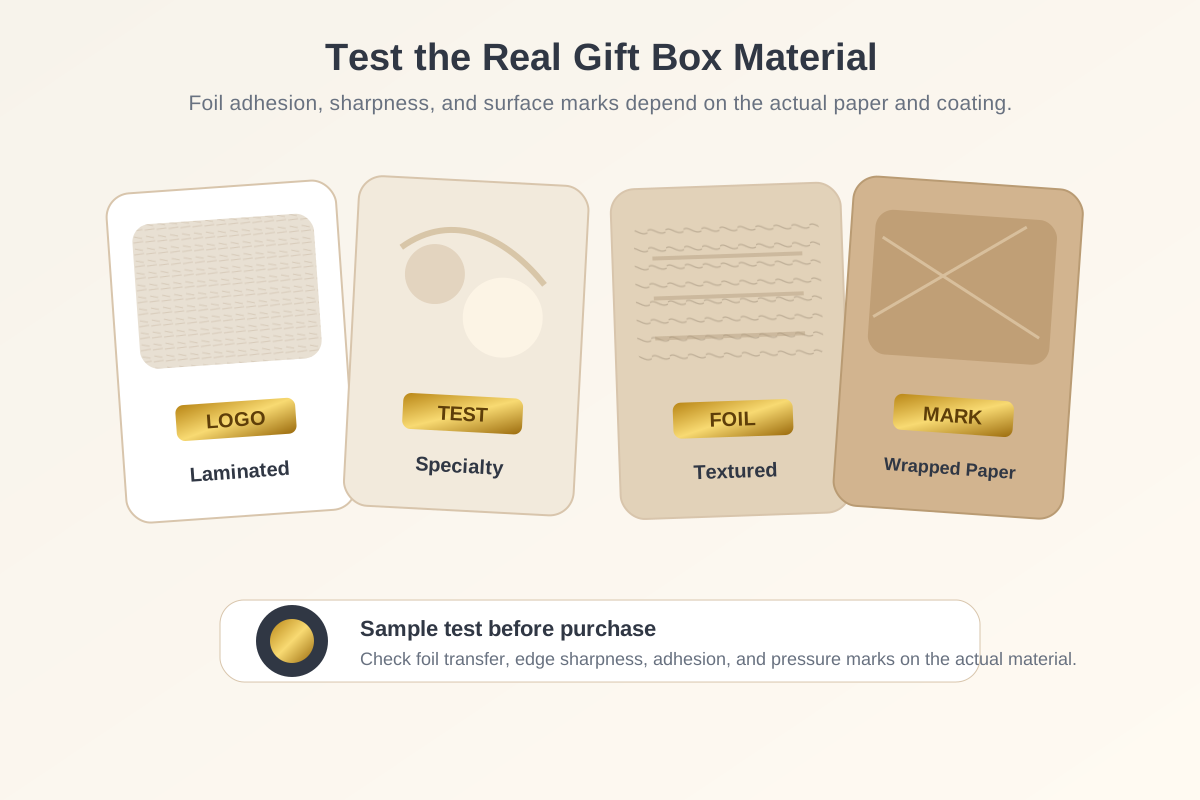
Common gift box surface materials to test
Laminated paper
Gloss or matte laminated paper is common in gift packaging. The foil result depends on the film surface, foil grade, temperature, pressure, and dwell time.
Specialty paper
Specialty paper can create a premium look, but coating, fiber texture, metallic particles, or irregular absorption may affect logo detail and foil adhesion.
Textured paper
Fine text or thin lines may break if pressure does not reach the lower parts of the texture. Too much pressure may flatten the texture or leave marks.
Rigid box wrapped paper
Wrapped rigid box surfaces can compress under pressure. The setup must transfer foil without crushing the board, leaving deep marks, or creating uneven edges.
Equipment capabilities buyers should confirm before purchase
After the buyer understands the box structure and material, the next step is to check whether the machine has the right capability for the job. A standard machine may be enough for a flat lid logo, while a finished rigid box may require a different table, fixture, or clearance.
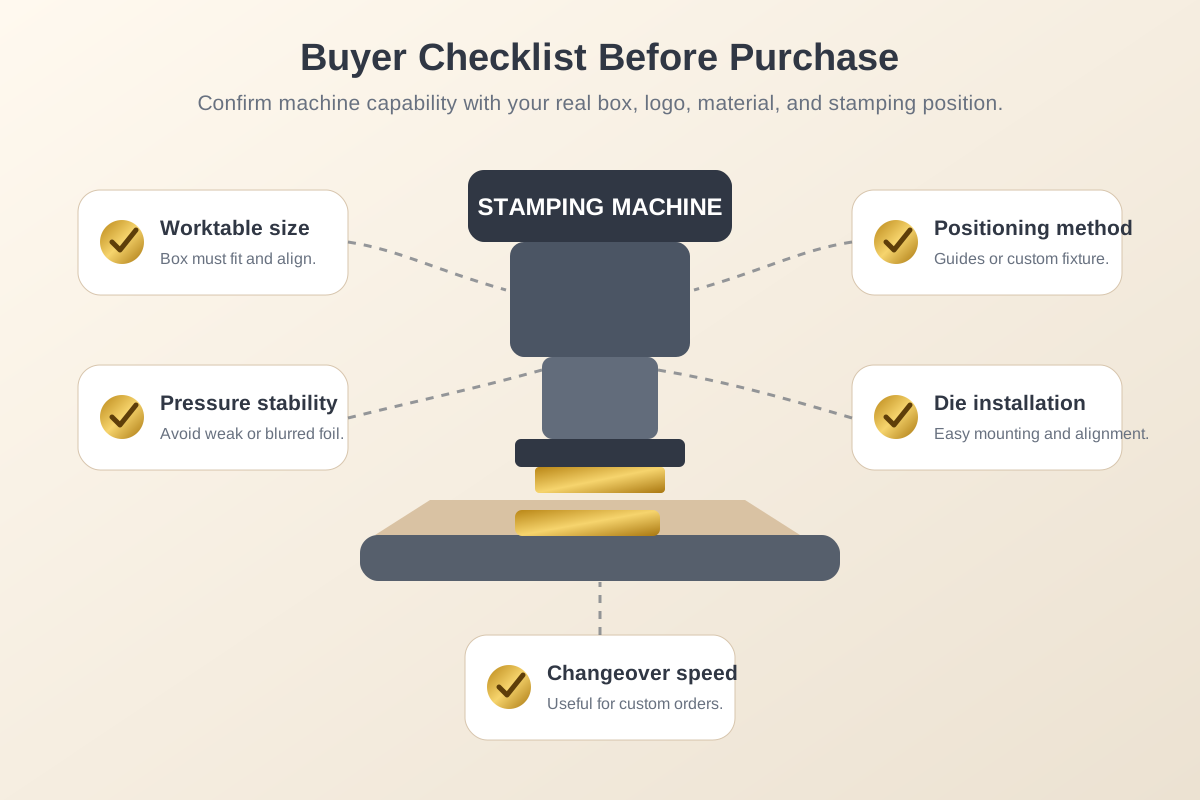
Machine checklist for gift box buyers
- Confirm actual usable worktable area and maximum stamping area, not only the outer machine size.
- Check whether the positioning method supports repeat placement with side guides, front stops, adjustable rulers, pins, vacuum support, or a custom holder.
- Confirm pressure stability across the required stamping area, especially for larger logos, borders, or slightly uneven box surfaces.
- Ask about heating control and temperature consistency during repeated operation.
- Confirm supported die type, die size, mounting method, and alignment process.
- Review changeover time when the factory switches between different logos, foil colors, box sizes, or small custom orders.
- Make sure the operator workflow is practical for loading, unloading, checking quality, changing foil, and adjusting settings safely.
Sample review
Need to confirm whether your gift box can be stamped?
Send gift box samples, logo files, and stamping position drawings. PackFinish can review the box structure, material surface, and stamping area before recommending a machine setup.
Practical information to prepare before asking for a quotation
A buyer can get a much more accurate recommendation by sending complete project information. Instead of asking only for the price of a "gift box hot stamping machine," prepare the following details:
- Box type: flat board, semi-finished part, lid, sleeve, or finished rigid box.
- Box dimensions: length, width, height, lid thickness, and any raised edge.
- Stamping position: center logo, side brand name, border, corner pattern, or other location.
- Logo size and artwork file.
- Material surface: laminated paper, specialty paper, textured paper, wrapped paper, or other material.
- Foil color and expected visual effect.
- Estimated production quantity per order.
- Frequency of logo or box size changes.
- Sample photos or drawings showing the stamping area.
Why sample testing should come before final purchase
For gift box projects, sample testing is the most reliable way to reduce purchasing risk. A machine photo cannot show how the actual paper, foil, logo, and box structure will behave under pressure.
A proper sample test can confirm:
- whether the logo edges are sharp;
- whether the foil transfers completely;
- whether the stamping position is repeatable;
- whether the material surface is damaged;
- whether the finished box can be placed and removed smoothly;
- whether the operator can maintain stable results in repeated trials.
Sample testing is especially important for finished rigid boxes, textured paper, laminated surfaces, and fine logo details.
Related PackFinish pages
FAQs about gift box hot stamping machines
Can one hot stamping machine handle all gift box types?
Not always. A machine suitable for flat paperboard may not be suitable for finished rigid boxes or boxes with high side walls. Buyers should confirm box structure, clearance, table support, and positioning before purchase.
Is a finished gift box harder to stamp than flat paper?
In many cases, yes. Finished boxes may have height, edges, inner support, magnetic parts, or uneven surfaces. These factors can affect placement and pressure consistency.
What samples should I send before buying a gift box hot stamping machine?
Send real gift box samples, logo files, stamping position drawings, material details, foil color requirements, and estimated production quantity. This lets the supplier test the actual working condition before recommending a setup.
Why does textured paper need testing before purchase?
Textured paper has an uneven surface. Thin logo lines may not transfer completely if pressure is too low, while too much pressure may flatten the texture or leave visible marks.
What is the most important machine feature for gift box logo stamping?
There is no single feature for every project, but positioning accuracy, pressure stability, suitable worktable size, and compatible die installation are usually the most important items to check.
Do not buy only by machine photos
A hot stamping machine for gift boxes should be selected based on real production conditions. Buyers need to check the gift box structure, material surface, stamping position, table size, positioning method, pressure stability, die installation, and changeover process.
Before confirming an order, send gift box samples, logo files, and stamping position drawings. A sample test can show whether the machine can deliver clear logos, accurate placement, and consistent batch results on your real gift boxes.
Request a gift box hot stamping sample review from PackFinish.