
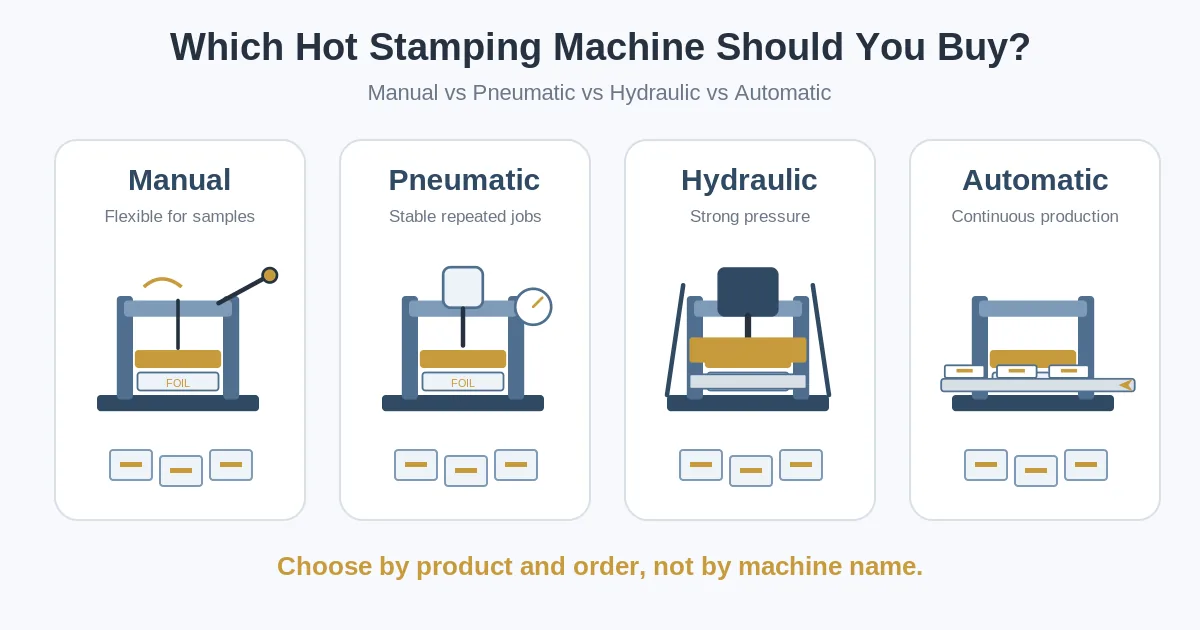
Quick answer
Choose by production scenario, not by machine name
Different hot stamping machines are not simply different price levels of the same equipment. A manual hot stamping machine is not automatically "too basic," and an automatic hot stamping machine is not automatically the best choice.
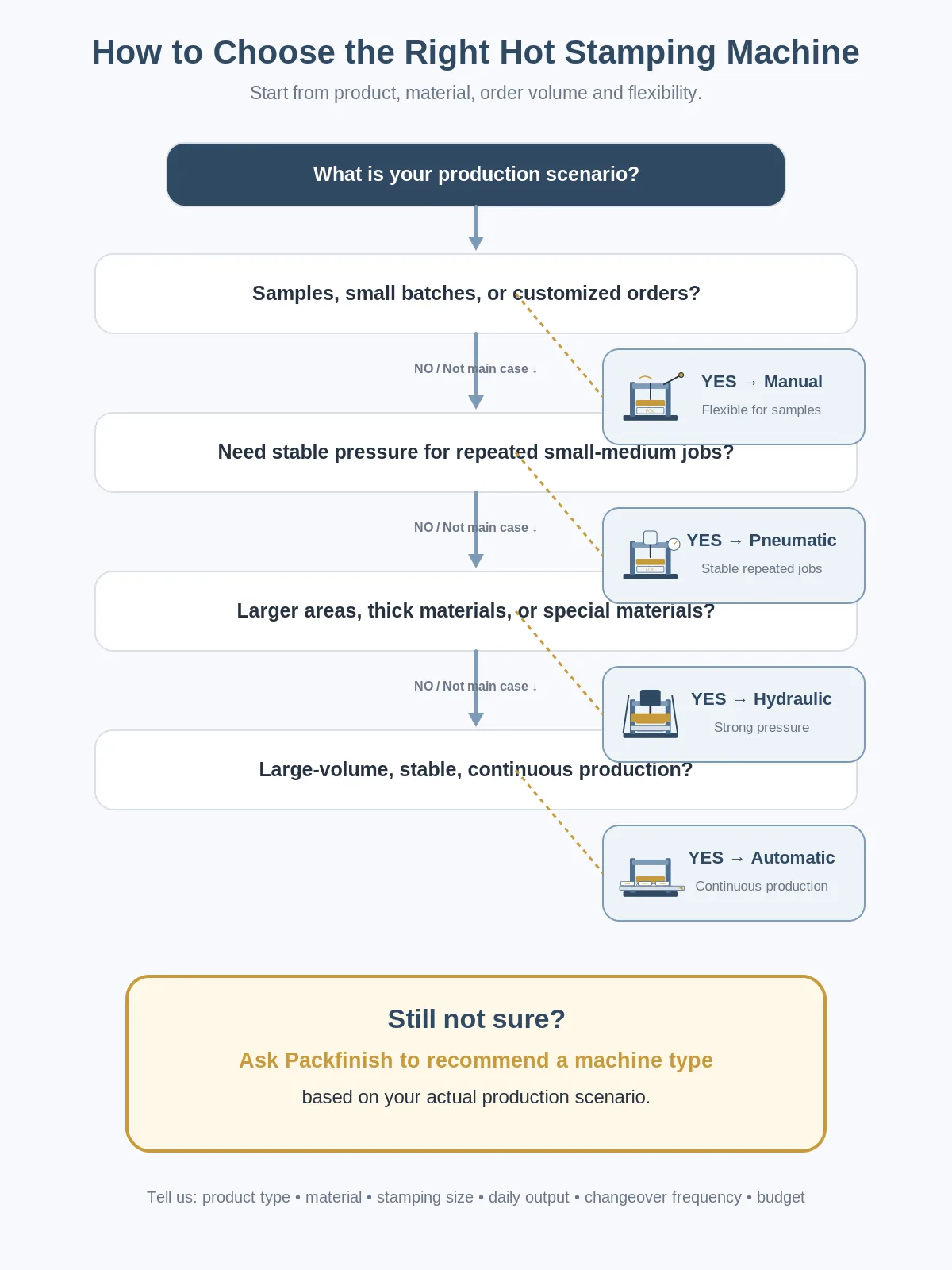
Manual machines are usually better for sampling and flexible small orders. Pneumatic machines suit repeated small to medium batch work where stable pressure matters. Hydraulic machines are used when the stamping area, material, or pressure requirement becomes more demanding. Automatic machines make sense when the product is stable and the order volume can justify higher setup investment.
See the machine-type difference in motion
The following animations compare manual operation, air-driven action, hydraulic pressure, and automatic feeding so buyers can review the operating sequence before testing real product samples.
Quick comparison
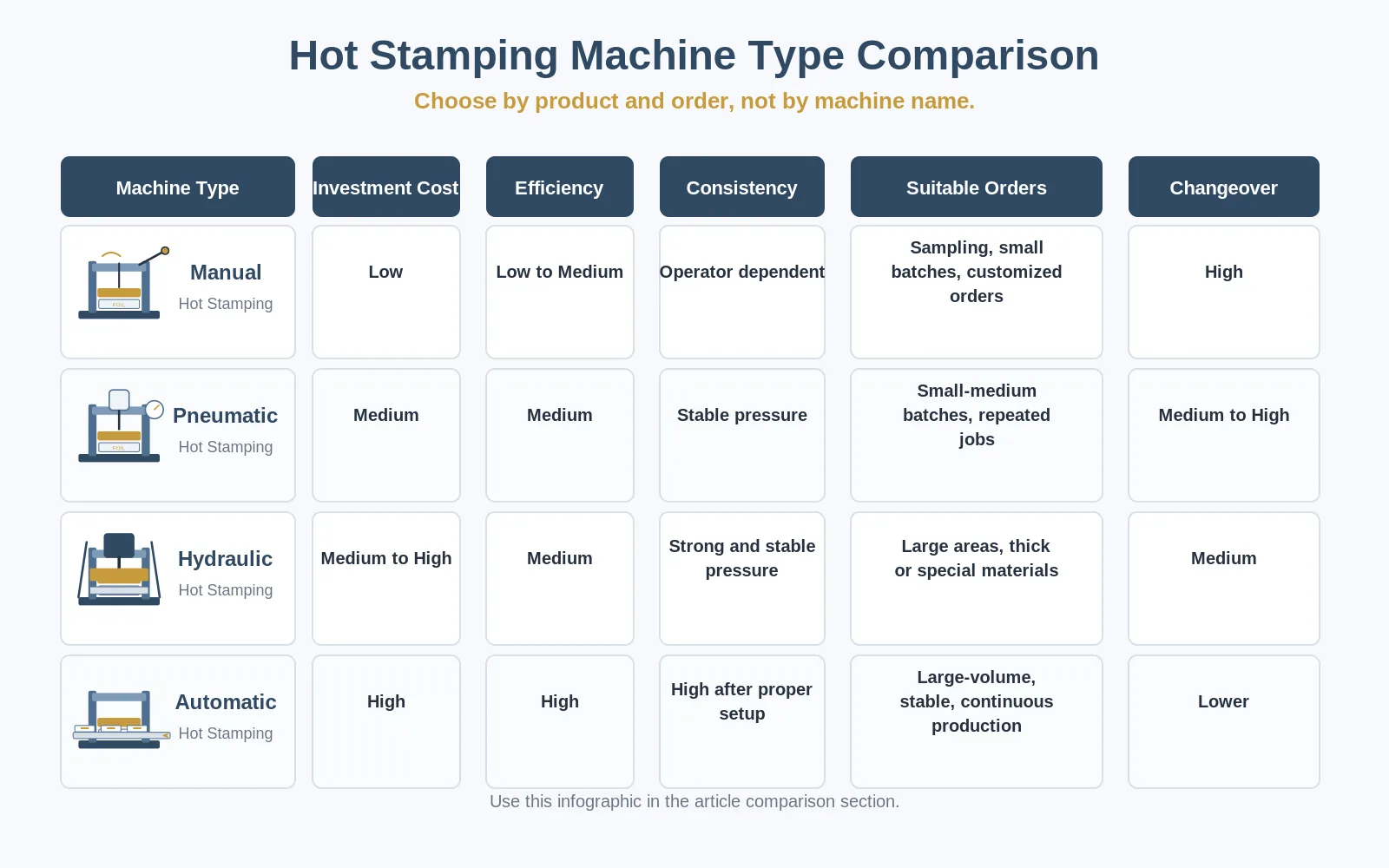
| Machine type | Best fit | Main advantage | Main limitation |
|---|---|---|---|
| Manual hot stamping machine | Samples, small batches, customized products, frequent style changes | Flexible operation and lower starting investment | Output and consistency depend more on the operator |
| Pneumatic hot stamping machine | Small to medium repeated orders, packaging finishing jobs | More stable pressure and repeatability than manual operation | Still needs fixture setup and operator loading |
| Hydraulic hot stamping machine | Larger stamping areas, thicker materials, demanding pressure requirements | Stronger pressure support for difficult work | Higher equipment and setup requirements |
| Automatic hot stamping machine | Large-volume, stable, continuous production | Higher efficiency after proper setup | Higher investment and less convenient frequent changeover |
Manual hot stamping machine: flexible choice for sampling and small orders
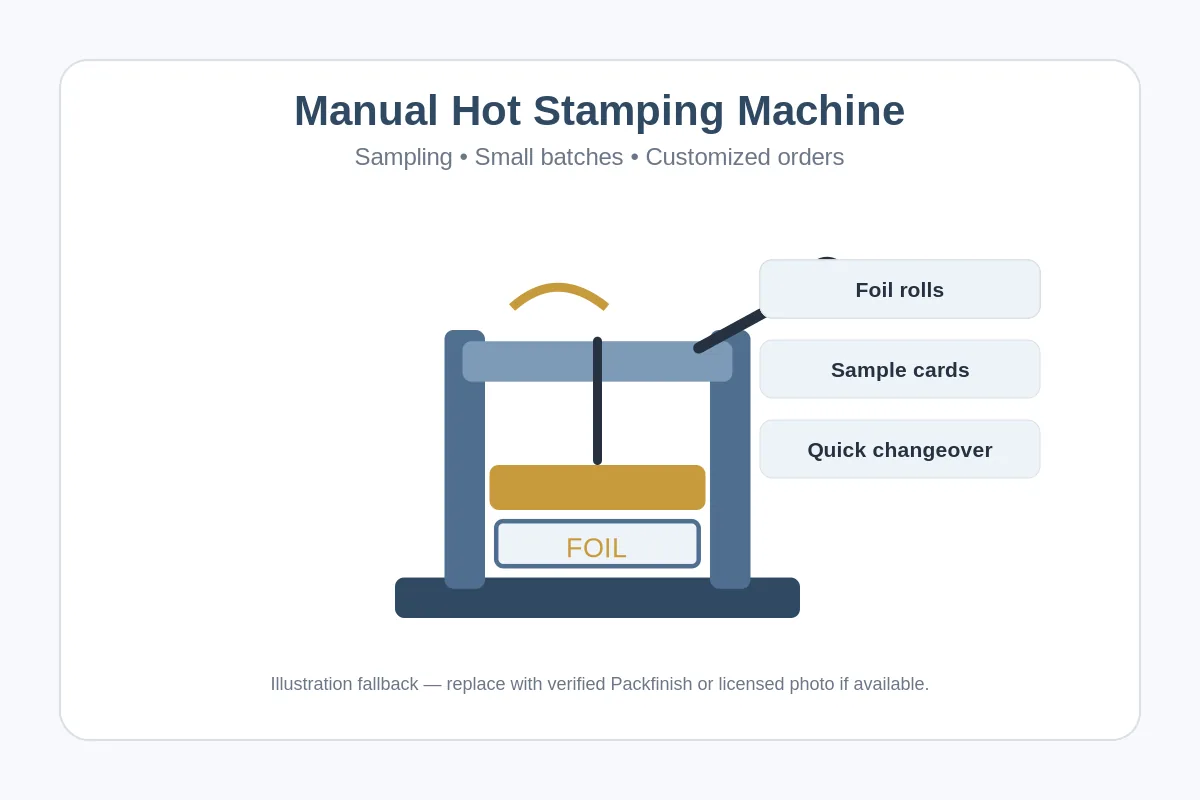
A manual hot stamping machine is often the most practical starting point when the buyer needs flexibility more than speed. The operator controls the stamping action by hand, so the machine can be useful for product samples, small batch orders, customized packaging, trial production, and workshops that change product styles often.
This type of machine can be a good fit when the product is still being tested, the stamping area is small, the budget is limited, or the order quantity is not stable enough to justify a more automated setup.
The tradeoff is consistency. Pressure, timing, and loading can vary from operator to operator. For simple jobs this may be acceptable, but for fine text, strict positioning, or repeated commercial batches, the buyer should test real samples before making the machine decision.
Pneumatic hot stamping machine: stable pressure for small and medium batches
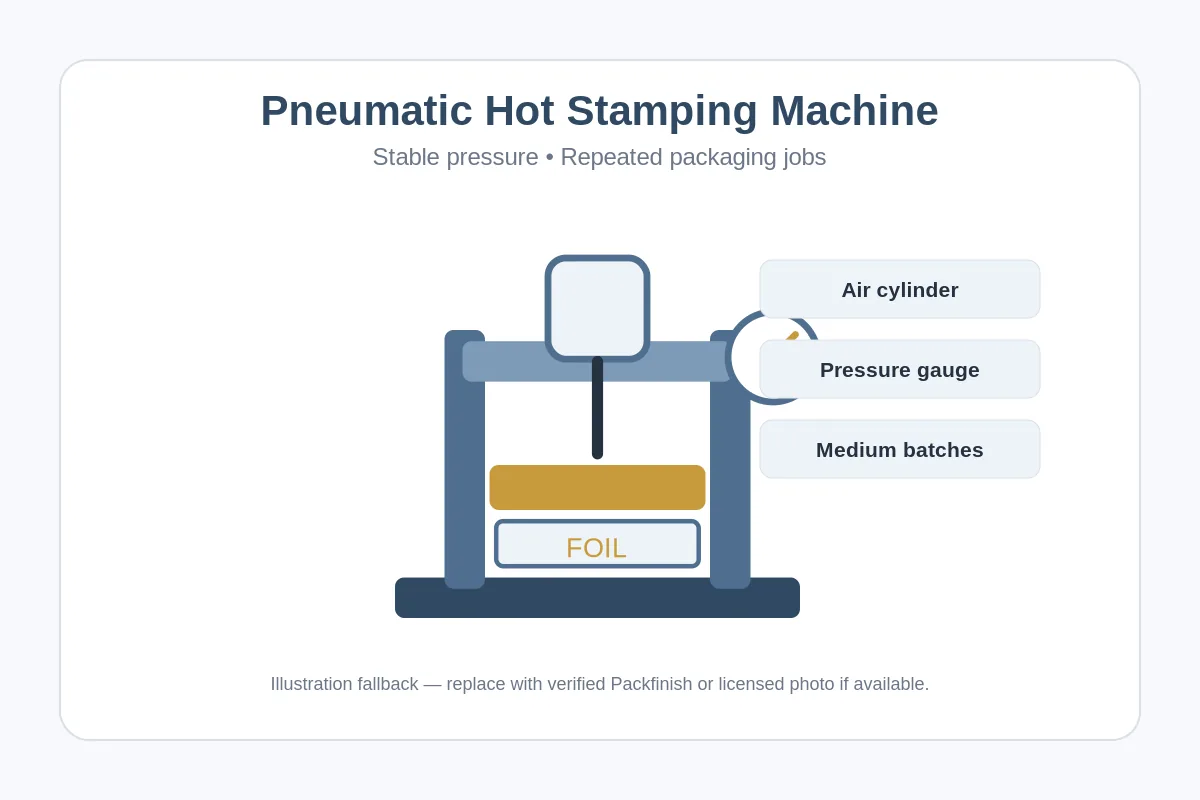
A pneumatic hot stamping machine uses air pressure to drive the stamping action. Compared with a hand-operated machine, it usually provides more stable pressure and better repeatability, especially when the same product needs to be stamped many times.
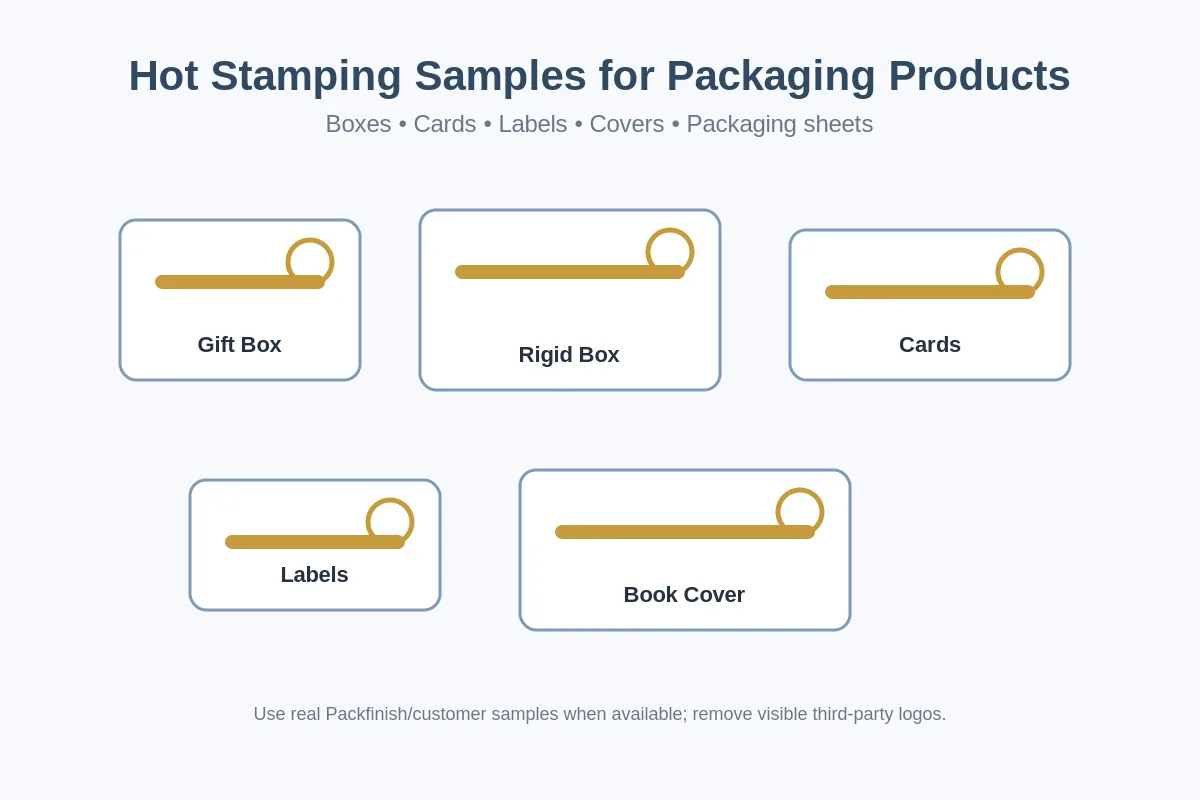
This makes pneumatic equipment useful for packaging finishing work such as paper boxes, cards, labels, covers, small plastic parts, and other repeated jobs where manual pressure may become inconsistent.
A pneumatic machine is not only about speed. Its value is that the stamping force can be more controlled, while the setup can still remain flexible enough for small and medium batch production. The buyer should still confirm product shape, fixture needs, foil adhesion, air supply conditions, and operator workflow.
Hydraulic hot stamping machine: strong pressure for larger areas and special materials
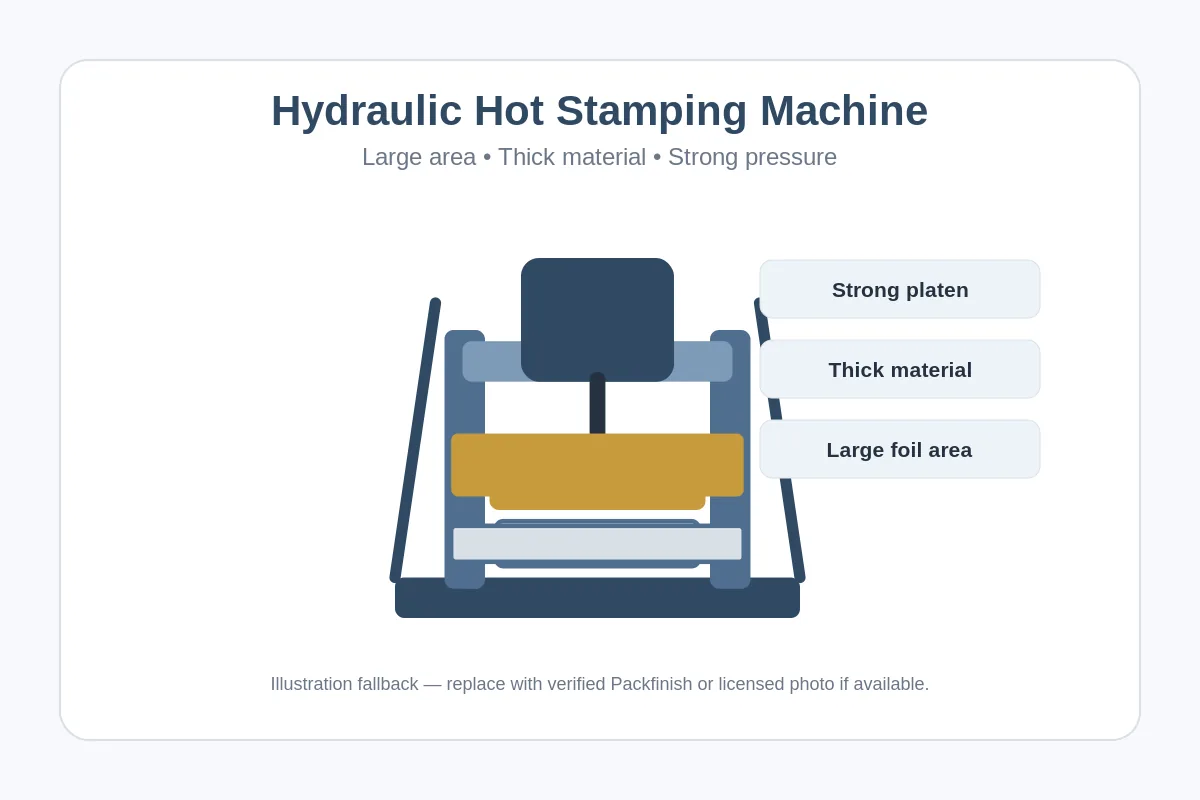
A hydraulic hot stamping machine is considered when the job needs stronger pressure, a larger stamping area, or better force stability across a more demanding surface. It may be useful for thicker materials, larger decorative areas, rigid packaging parts, or special substrates that do not transfer foil easily with lighter pressure.
This does not mean every buyer should choose hydraulic equipment. If the stamping area is small and the order volume is modest, a hydraulic machine may add cost and setup complexity without solving the real problem.
Before selecting a hydraulic direction, review the material, coating, foil, die, temperature, pressure, dwell time, and fixture. The machine is only one part of the hot stamping result.
Automatic hot stamping machine: best for stable large-volume production
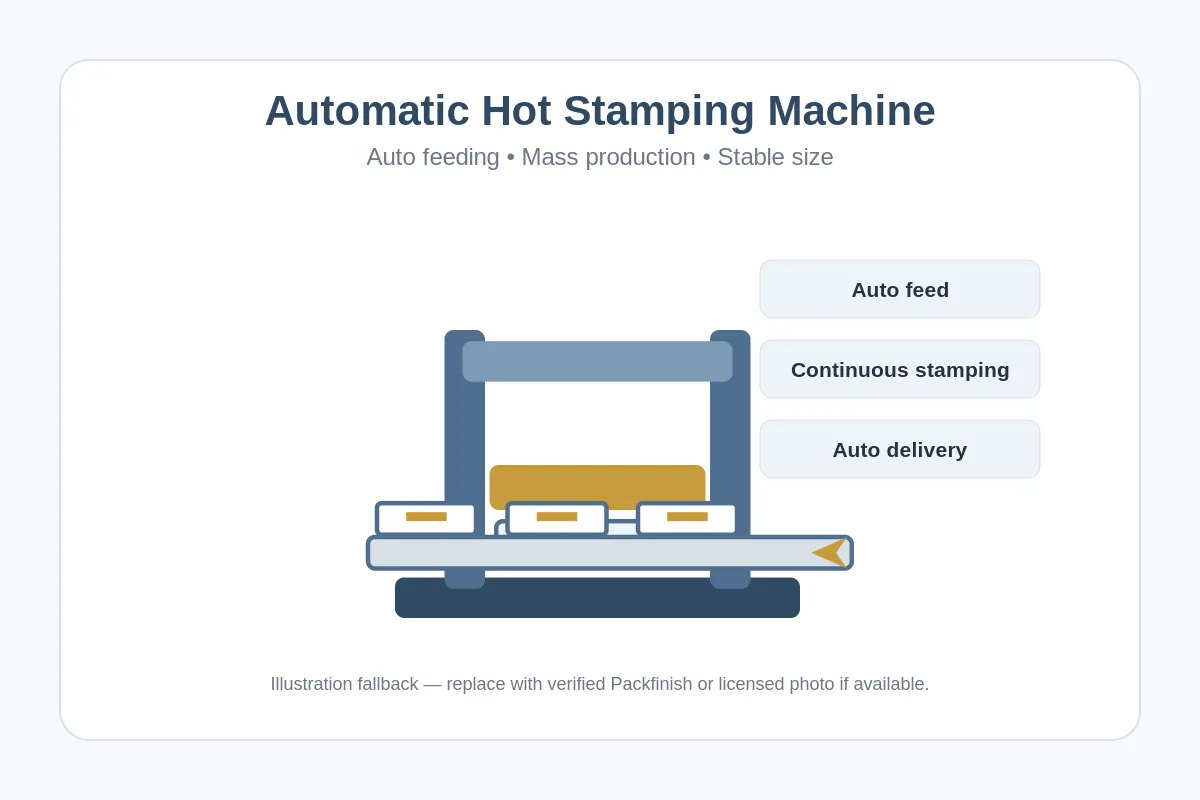
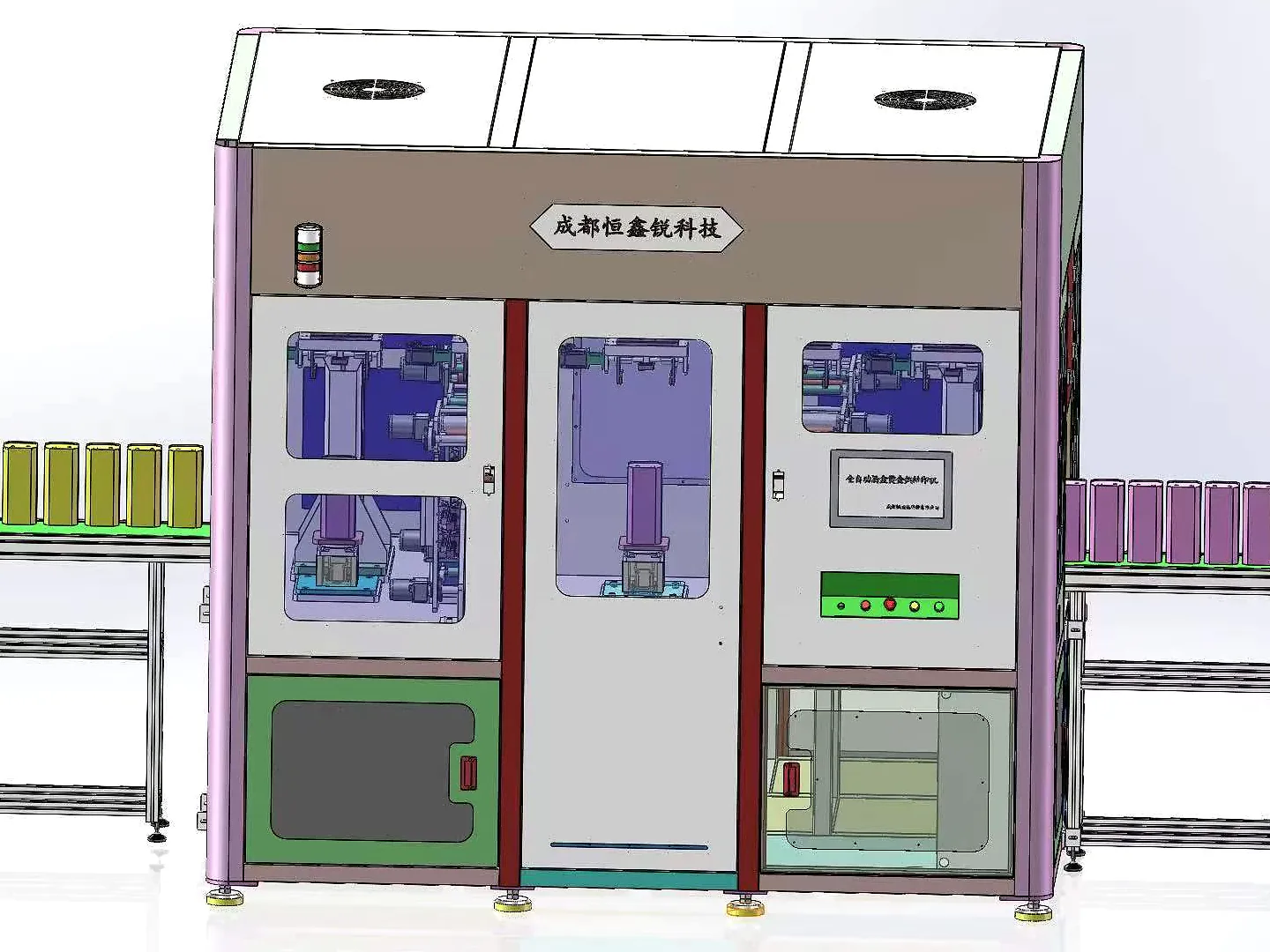
An automatic hot stamping machine is designed for higher output and more continuous production. Depending on the machine structure, it may support automatic feeding, stamping, and delivery. This can reduce manual handling and improve production efficiency when the product specification is stable.
Automatic equipment is usually a better direction when the product shape, size, stamping position, foil effect, fixture, and order volume are already clear. If the buyer changes products frequently, or if the project is still in the sample stage, automation can become less efficient than expected because setup and changeover time matter.
The right question is not "Can this machine run automatically?" It is "Will this product stay stable enough, and will the order volume be high enough, for automation to pay back?"
Do not choose by machine name alone
Many selection mistakes happen when buyers compare only machine names. A better approach is to start from the product and order condition.
- Product type: paper box, gift box, card, label, bottle cap, plastic part, cover, or another packaging component.
- Material and surface: coated paper, laminated paper, textured paper, plastic, metal part, or special substrate.
- Stamping area: small logo, fine text, border line, full-panel foil, or large decorative area.
- Production volume: sample testing, small batch, repeated medium batch, or stable mass production.
- Changeover frequency: one fixed product, several SKUs, or many customized styles.
- Fixture requirement: flat surface, curved surface, recessed area, irregular part, or strict positioning need.
- Budget and growth plan: entry-level testing, stable workshop production, or long-term automated line.
Once the machine type is narrowed, check the usable stamping area, press requirement, worktable, opening height, and loading path as separate specification inputs. The product outline alone does not confirm that the complete setup fits.
Compare the machine types before choosing
The comparison below is a practical starting point, not a fixed specification sheet. Final machine selection should be confirmed with product samples, artwork, material, target effect, and production expectations.
Selection flow
Start from product samples and order volume
- If the job is mainly sampling, trial production, small batches, or customized orders, start with a manual or flexible semi-automatic direction.
- If the job is repeated small or medium batch packaging work, compare pneumatic options and fixture design.
- If the stamping area is larger, the material is thicker, or pressure is the main concern, review hydraulic options.
- If the product specification is stable and the order volume is high, evaluate automatic equipment.
- If the product has a curved or irregular surface, discuss fixtures and sample testing before focusing on machine type.
What to send before asking PackFinish for a recommendation
- Product photos or short videos.
- Product size, material, surface shape, and thickness.
- Stamping artwork, logo size, foil color, and target position.
- Stamping area size and whether the surface is flat, curved, recessed, or irregular.
- Expected daily output or order quantity.
- Changeover frequency and number of product styles.
- Target budget range, voltage requirement, and destination country.
- Existing sample photos if there is a result you want to match.
Related PackFinish pages
FAQs about hot stamping machine types
Is an automatic hot stamping machine always better?
No. Automatic equipment is useful for stable, high-volume production, but it can be inefficient when products change often or the project is still in sampling. Manual or pneumatic machines may be more practical for small batches and frequent changeovers.
When should I choose a pneumatic machine instead of a manual machine?
Choose a pneumatic direction when the job is repeated often enough that stable pressure and repeatability matter. It is commonly considered for small to medium batch packaging finishing jobs.
When does hydraulic hot stamping make sense?
Hydraulic hot stamping may make sense for larger stamping areas, thicker materials, special substrates, or jobs that need stronger and more stable pressure. The exact decision still depends on the product, foil, die, fixture, and sample result.
What information does PackFinish need before recommending a machine?
PackFinish needs the product type, material, dimensions, surface shape, stamping artwork, stamping area, order volume, changeover frequency, target effect, and budget range. Photos or sample videos are especially useful.
Choose the machine from product reality
Manual, pneumatic, hydraulic, and automatic hot stamping machines are different solutions for different production needs. The best choice is not decided by which machine name sounds more advanced. It is decided by product reality.
For sampling and flexible small orders, manual equipment may be enough. For repeated small and medium batch work, pneumatic machines can improve pressure stability. For larger areas or difficult materials, hydraulic pressure may be worth reviewing. For stable high-volume production, automatic equipment can become the more efficient direction.
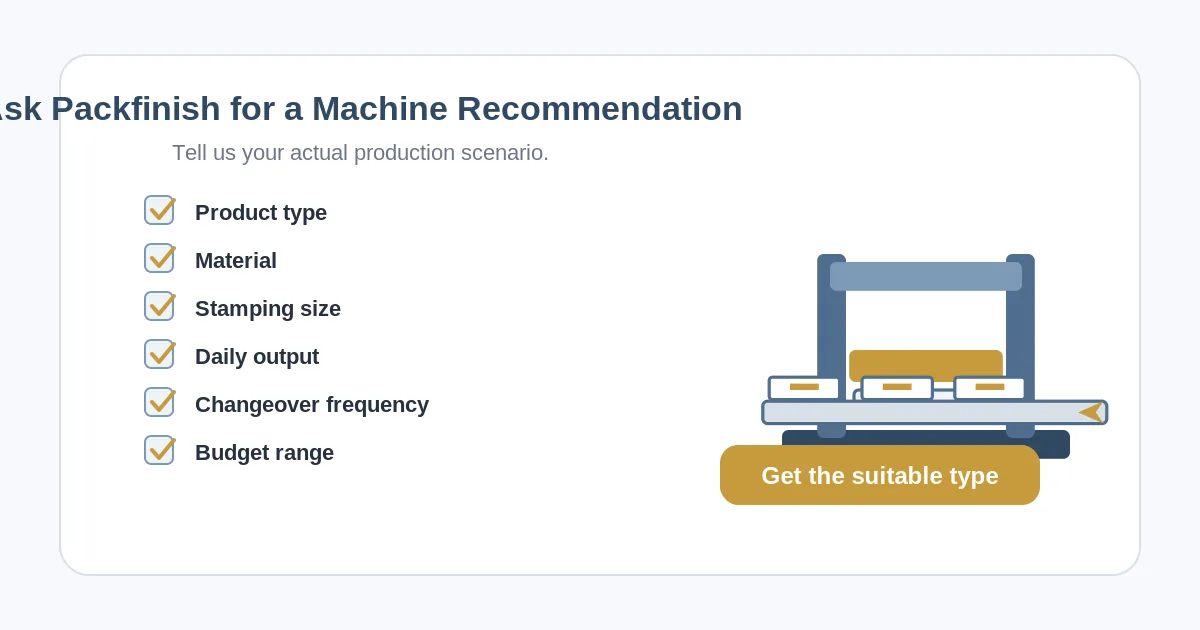
If you are not sure which type of hot stamping machine is suitable for your packaging project, send your product details to PackFinish so the machine type, fixture direction, and sample test plan can be reviewed before recommendation.