
Hot stamping machine registration accuracy is often judged from one attractive sample. One acceptable sample does not prove stable positioning throughout production. Before buying, purchasers should turn “Is it accurate?” into a defined test using actual products, approved artwork, fixed datums, a continuous sequence, and an agreed measurement method.
This matters wherever foil must align with graphics, edges, panels, seams, or structural features on gift boxes, caps, and other packaging. Registration is not determined by the machine alone. The fixture, die, product tolerance, loading method, foil, substrate, and process settings all influence the observed result.
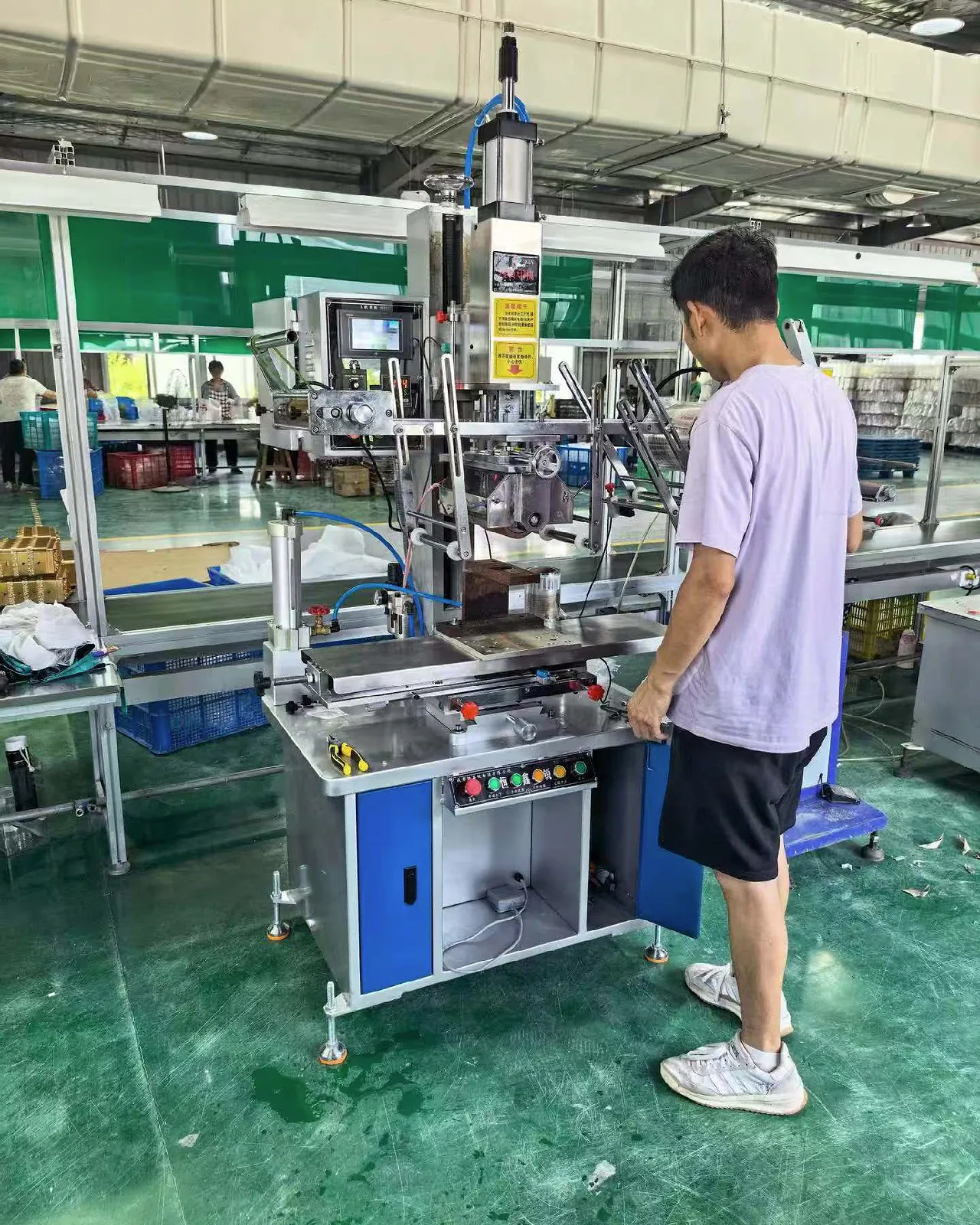
One Good Sample Does Not Prove Production Stability
A supplier can carefully adjust one product until the foil lands in the intended position. That sample is useful for checking artwork size, foil release, adhesion, edge definition, and general feasibility. It does not show what happens after repeated loading, product replacement, table movement, fixture wear, or normal incoming-part variation.
The purchasing question is whether the approved position can be reproduced consistently under the intended production method. Samples should remain in production order, including reloaded or rejected pieces, so the buyer can compare the first piece, intermediate pieces, and later pieces.
Registration Accuracy and Repeatability Are Different
Buyers often use “accuracy” as a general term, but two characteristics should be checked separately.
| Characteristic | Question | Typical observation |
|---|---|---|
| Registration accuracy | Does the stamped image land at the specified target position? | The average result is offset from the approved datum. |
| Repeatability | How closely do repeated products match one another under the same setup? | Position or angle changes from piece to piece. |
A system can be repeatable but not accurate: every stamp may land consistently to one side of the target, indicating a potentially correctable setup offset. It can also produce one accurate sample while later products vary widely. A simple position adjustment will not solve poor repeatability.
This distinction follows general measurement practice. NIST measurement terminology treats accuracy as closeness to a reference and repeatability as agreement among successive results under the same conditions. For a packaging acceptance test, those conditions still need to be defined for the actual product and operating method.

The acceptance method should record both target offset and sample-to-sample spread. Depending on the product, observations may include horizontal shift, vertical shift, and angular rotation. Fine borders, centered logos, and foil elements close to a box edge usually reveal registration problems more clearly than artwork with generous visual clearance.
What Controls Repeatability in Packaging Applications?
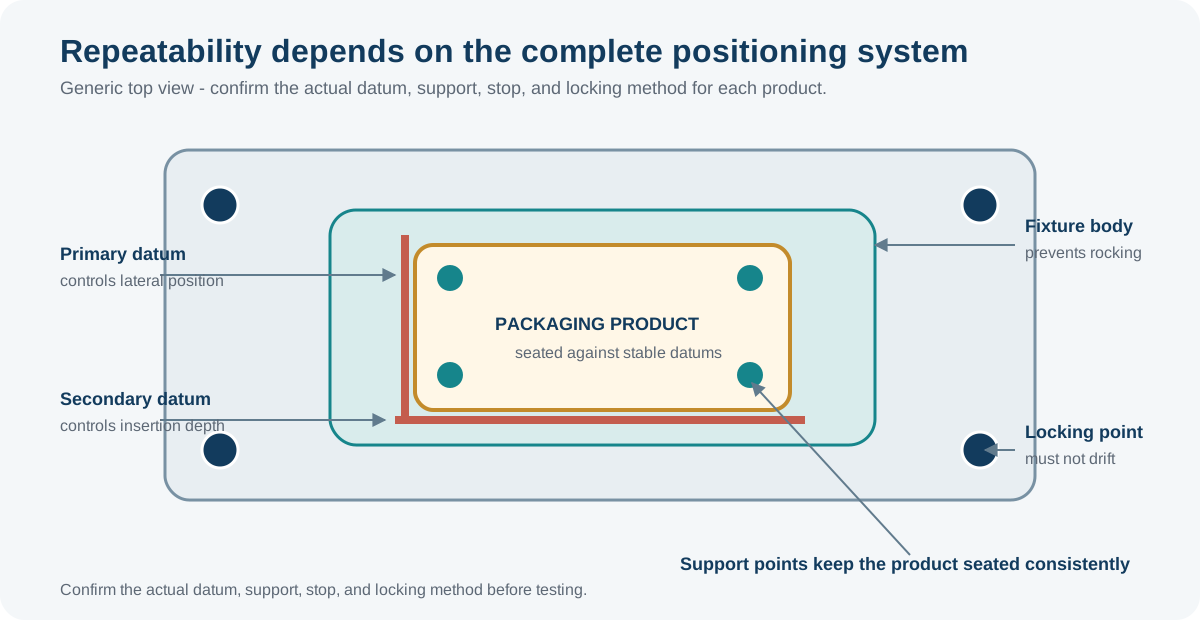
Repeatability comes from the complete positioning system.
Worktable and stop locking: Tables, guides, backstops, and adjustable stops must remain at the set position during repeated loading.
Fixture or jig design: The fixture should locate the product from stable datums, prevent rocking, and support consistent insertion and removal. Folded, wrapped, curved, or assembled products often require more than a flat table and side guide. A custom fixture for hot stamping may be needed when the product has unstable reference surfaces or limited support.
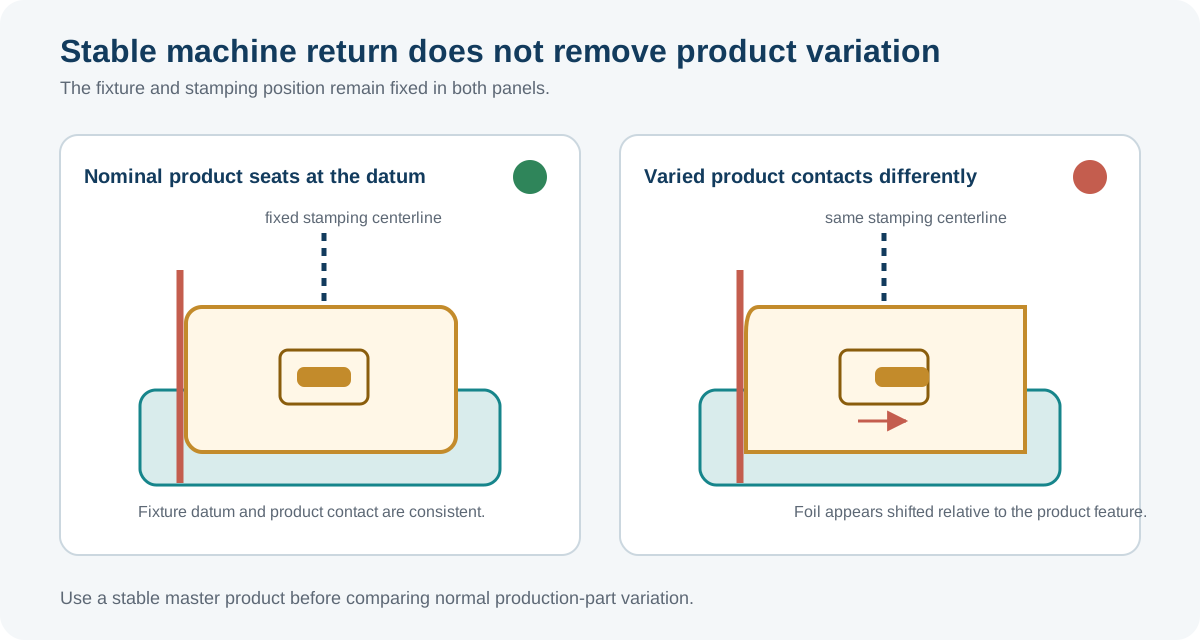
Product dimensional tolerance: Box panels, lids, wrapped edges, caps, inserts, and laminated components may vary. When reference surfaces change, the stamped position can vary even if the machine returns to the same coordinates.
Sensors, motion, and loading: Sensor triggering, slides, cylinders, servo axes, mechanical clearance, return position, insertion angle, seating direction, and full contact with the datum should be evaluated as one operating sequence.
Die and process stability: A loose die, uneven support, or incomplete foil transfer can obscure the edge. Collect registration data only after the foil, substrate, temperature, pressure, and dwell time produce a readable stamp.
How to Test Hot Stamping Machine Registration Accuracy
A useful test should be agreed before the demonstration begins.
Use actual products
Use products from the intended supply condition and record the batch or version. For a box, confirm whether the test uses a flat component, partly assembled item, or finished rigid box. For a cap or shaped part, confirm the dimensions and how it sits in the fixture. The separate sample preparation guide lists the product, artwork, material, and production information to prepare before a machine test.
Use approved artwork and the intended location
Test the actual logo, border, text, fine lines, or solid area that matters to the buyer. A simplified demonstration die may not reveal the same positioning sensitivity. Confirm artwork orientation and its location relative to stable product features.
Define the datum and inspection method
The datum may be a box edge, printed registration mark, structural corner, cap centerline, or fixture reference. Both parties should define exactly where each measurement starts and ends. Inspection may use a calibrated transparent overlay, optical measurement, camera-based inspection, or another documented method suitable for the artwork and tolerance.
Run a continuous, traceable sequence
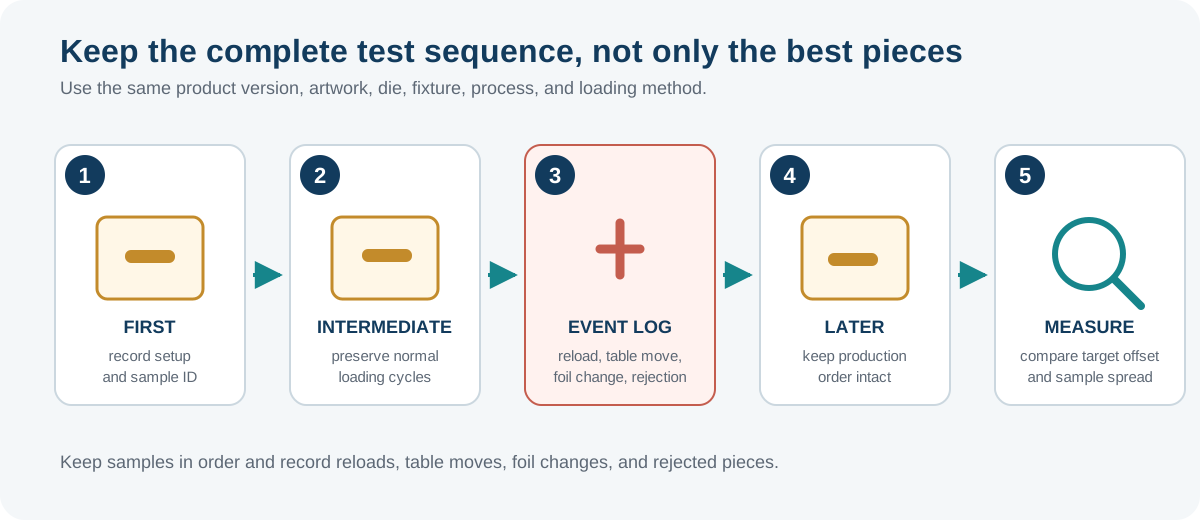
Number samples in production order and compare the first, intermediate, and later pieces. Record unloading, reloading, table movement, foil replacement, or normal operating interruptions because these events can reveal lost position. Do not present only selected “best pieces.”
Record position and process conditions
Where applicable, record X/Y displacement and rotation together with the fixture, operator, product batch, foil, substrate, and relevant settings. This helps separate registration variation from material, setup, or foil-transfer changes.
Reproduce the intended loading method
For operator-loaded equipment, use normal loading cycles and trained production methods. For automated feeding, evaluate how the product is detected, stopped, clamped, and released. The test should represent factory operation rather than an unusually slow demonstration.
Separate Machine Variation from Product Variation
Packaging components are not precision reference blocks. A folded carton may have panel variation. A rigid box may vary in squareness, wrapped-edge thickness, lid fit, or local deformation. A bottle cap may vary in diameter, height, roundness, or surface condition. Storage and transport can also cause warping.
These effects may be misclassified as machine inaccuracy. One practical approach is to use a stable master product to check machine-and-fixture return position, then compare it with normal production parts. The fixture should locate from the most stable functional features, not from a decorative edge that changes between pieces.
For formed or wrapped packaging, the wine box hot stamping guide provides more context on structure, surface, fixture support, and sample testing. A tight foil-to-print relationship may also require better control of printing registration, box forming, component assembly, and incoming inspection. Machine selection cannot compensate for every upstream tolerance.
Use a Measurement Method Everyone Can Reproduce
A registration result is only useful when another person can repeat the inspection. Record the product datum, target artwork outline, actual foil edge, sample ID, measurement direction, and inspection tool. If an overlay or camera is used, keep its alignment procedure and image records with the sample sequence.
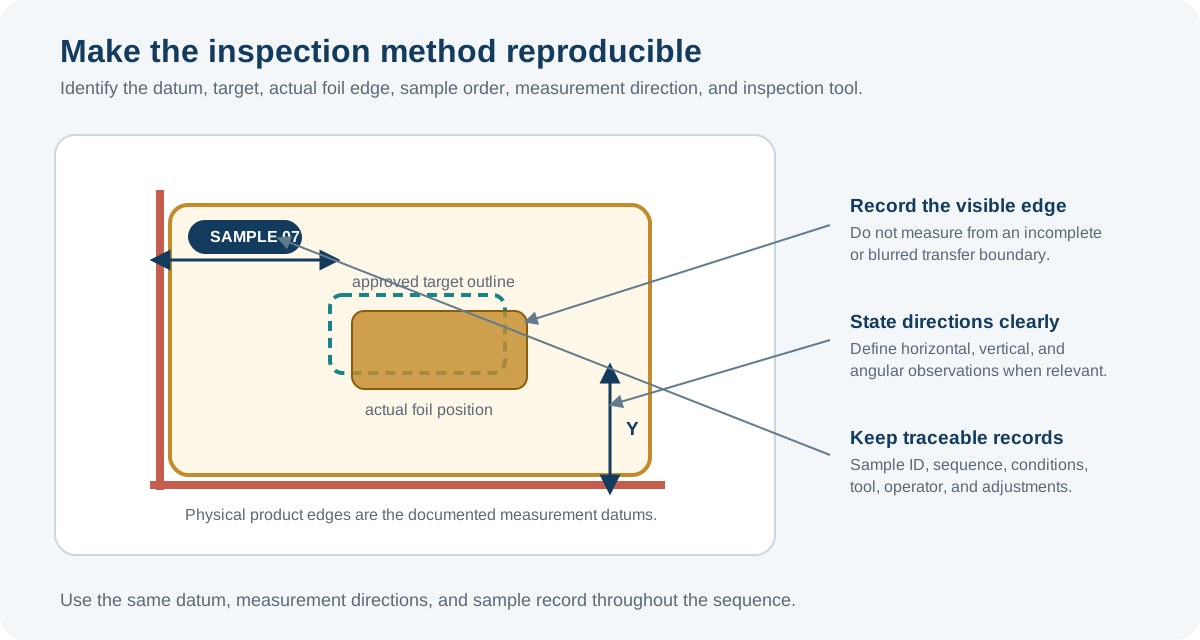
Do not attach a number to the general word “accuracy” without explaining what was measured. Report the target offset, sample-to-sample spread, angular change when relevant, the number and order of samples, and the conditions used to obtain the result.
Define the Acceptance Method Before Signing the Contract
“High precision” is not an acceptance criterion. The purchase agreement or technical confirmation should define:
- product version, material, and supply condition;
- approved artwork, die, stamping position, orientation, and datum;
- fixture configuration and responsibility;
- agreed accuracy and repeatability tolerance;
- sample sequence and loading method;
- inspection equipment and measurement procedure;
- stable process conditions before measurement;
- treatment of reloaded, rejected, or incomplete foil transfers;
- pass, adjustment, and retest rules.
The tolerance should come from the product design and customer requirement, not a generic marketing statement. It must also be realistic for the substrate, construction, artwork, loading method, fixture, and normal incoming-part variation.
Define the Standard Before Discussing “High Precision”
A hot stamping machine should not be accepted or rejected from one selected sample or a supplier adjective. Registration becomes meaningful only when the product, artwork, datum, fixture, sequence, measurement method, and allowable deviation are defined in advance.
Ask PackFinish to run a repeatability test using your actual products and approved artwork. Provide the material, dimensions, assembly condition, stamping position, artwork file, tolerance requirement, sample quantity, and intended production method so the machine, die, fixture, foil, and process can be evaluated as one system. Review the current packaging hot stamping machine page or contact PackFinish with the test inputs.
FAQ
What is the difference between registration accuracy and repeatability?
Registration accuracy compares the stamped position with the approved target. Repeatability compares variation among multiple products produced under the same setup. A system may be consistently offset or may hit the target once but vary later.
Should a hot stamping machine be tested with actual packaging products?
Yes. Actual products reveal dimensional variation, deformation, loading behavior, and fixture requirements that a demonstration sheet may not show. Different constructions should be tested rather than judged from photos.
Can a custom fixture improve foil stamping repeatability?
A suitable fixture can improve seating, support, orientation, and datum control. It cannot eliminate variation caused by unstable products, inconsistent loading, loose components, or unsuitable process settings.
What belongs in a registration acceptance report?
Identify the product, artwork, die, fixture, datum, process conditions, sample order, measurement method, measured offsets, observed variation, rejected pieces, and adjustments made during the run.