
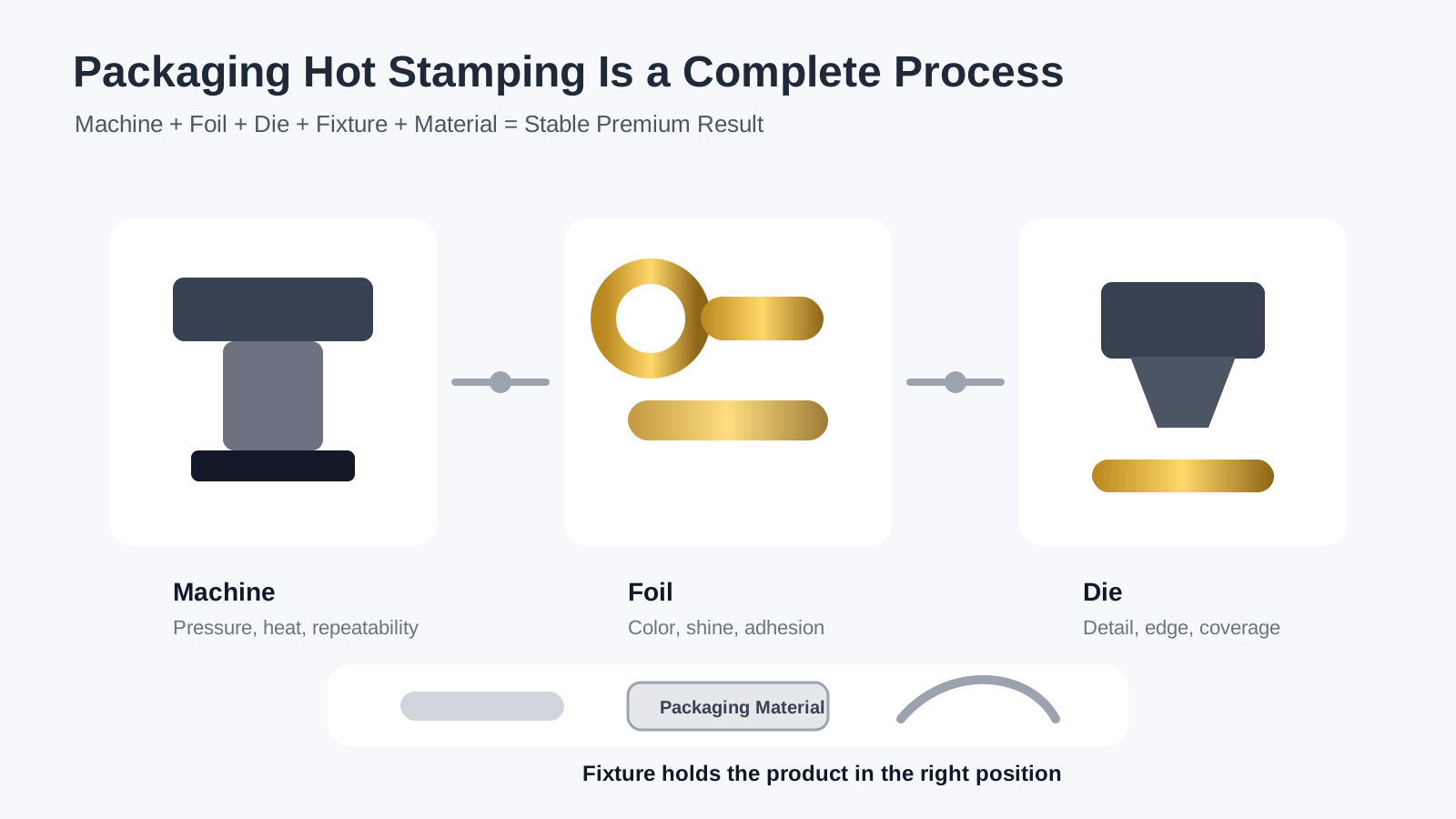
A premium hot stamped logo is not decided by the machine alone.
In packaging production, the final result is created by a complete process system: the hot stamping machine, foil, die, fixture, product material, temperature, pressure, dwell time, and operator setup all work together. When one part of this system is wrong, the result may look dull, incomplete, misaligned, or unstable in batch production. Once the physical combination is fixed, document a product-specific hot stamping process window instead of relying on one copied setting.
This is why choosing a hot stamping machine for packaging should not be separated from choosing the right foil, die and fixture. A good machine gives you stable pressure, temperature control and repeatable movement. But the foil must match the product surface. The die must match the artwork. The fixture must hold the package in the correct position. Only when all these elements are evaluated together can the final decoration look clean, sharp and consistent.
For packaging brands, converters and OEM manufacturers, this approach is especially important. Cosmetic caps, perfume boxes, skincare jars, plastic bottles, rigid gift boxes and irregular packaging parts often require more than a standard machine recommendation. They require a complete hot stamping solution.
For broader machine selection, compare this process guide with PackFinish's hot stamping machine buyer guide, gift box hot stamping checklist, and wine box hot stamping guide.
1. Foil: the First Factor Behind Color, Shine and Adhesion
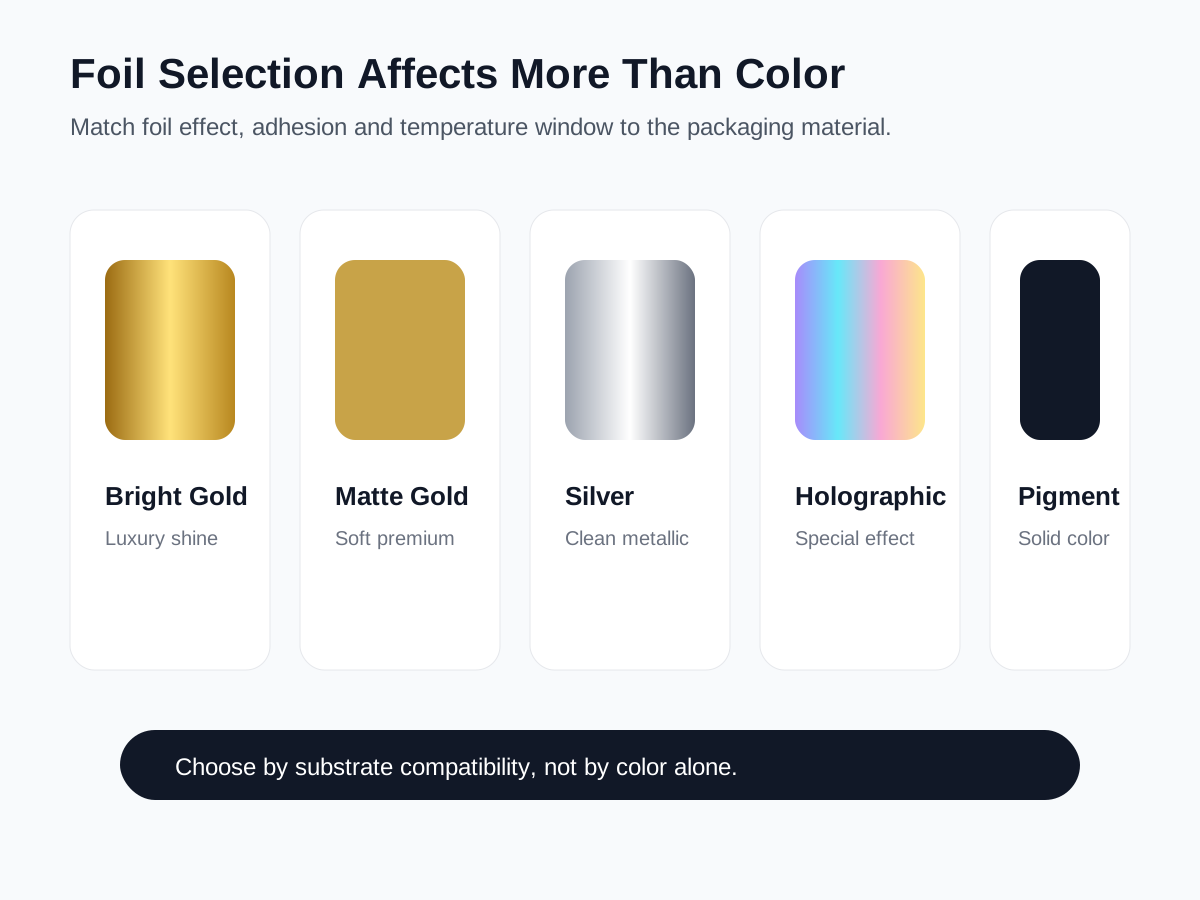
Hot stamping foil is not just a decorative film. It is a multilayer transfer material designed to release color, metallic effect or special coating onto the product surface under heat and pressure.
Different foils create very different visual results. Common options include metallic gold, metallic silver, matte gold, glossy gold, holographic foil, pigment foil, pearl effect foil and special color foils. The right option depends on the desired brand appearance and the product material.
For luxury packaging, bright gold or silver foil can create a reflective premium effect. For minimalist cosmetic packaging, matte foil may look more refined and modern. For promotional packaging, holographic or special effect foil can help the logo stand out. However, visual effect is only one part of the decision. The more important question is whether the foil can transfer cleanly and adhere properly to the substrate.
For a surface-specific decision method, use PackFinish's guide to selecting hot stamping foil for paper, laminated board, and plastic. It separates visual approval from performance approval and shows how to record the accepted foil-substrate-parameter combination.
A foil that works well on coated paper may not work well on PP, PE, PET, ABS, PVC, acrylic, leather-like material or painted metal. Plastic packaging often requires foil with suitable adhesion chemistry and a temperature window that matches the surface. Some plastics are sensitive to heat and deformation, while some coated surfaces need stronger adhesion or longer dwell time.
When selecting hot stamping foil for packaging, evaluate these factors:
- Product material, such as paperboard, coated paper, PP, PE, PET, ABS, PVC, acrylic or metal coating
- Surface finish, such as glossy, matte, textured, painted, varnished or laminated
- Required color and effect, such as bright metallic, matte metallic, holographic or pigment color
- Adhesion strength and abrasion resistance after stamping
- Temperature range and transfer stability
- Logo size, fine details and solid coverage area
- Post-processing requirements, such as handling, filling, assembly or shipping friction
Using the wrong foil can cause missing transfer, weak adhesion, cloudy edges, dull color, excessive residue or poor wear resistance. In batch production, a foil that looks acceptable on one sample may still fail when the product tolerance, surface coating or operator loading changes.
For this reason, foil selection should always be confirmed through sample testing. PackFinish's guide to what packaging materials can be hot stamped is a useful companion when the substrate is still being evaluated. PackFinish normally recommends testing the foil on the actual product material, not only on a similar sheet or flat sample. The real package surface, coating and shape can change the result.
2. Dies: the Key to Sharp Logos, Fine Text and Stable Coverage
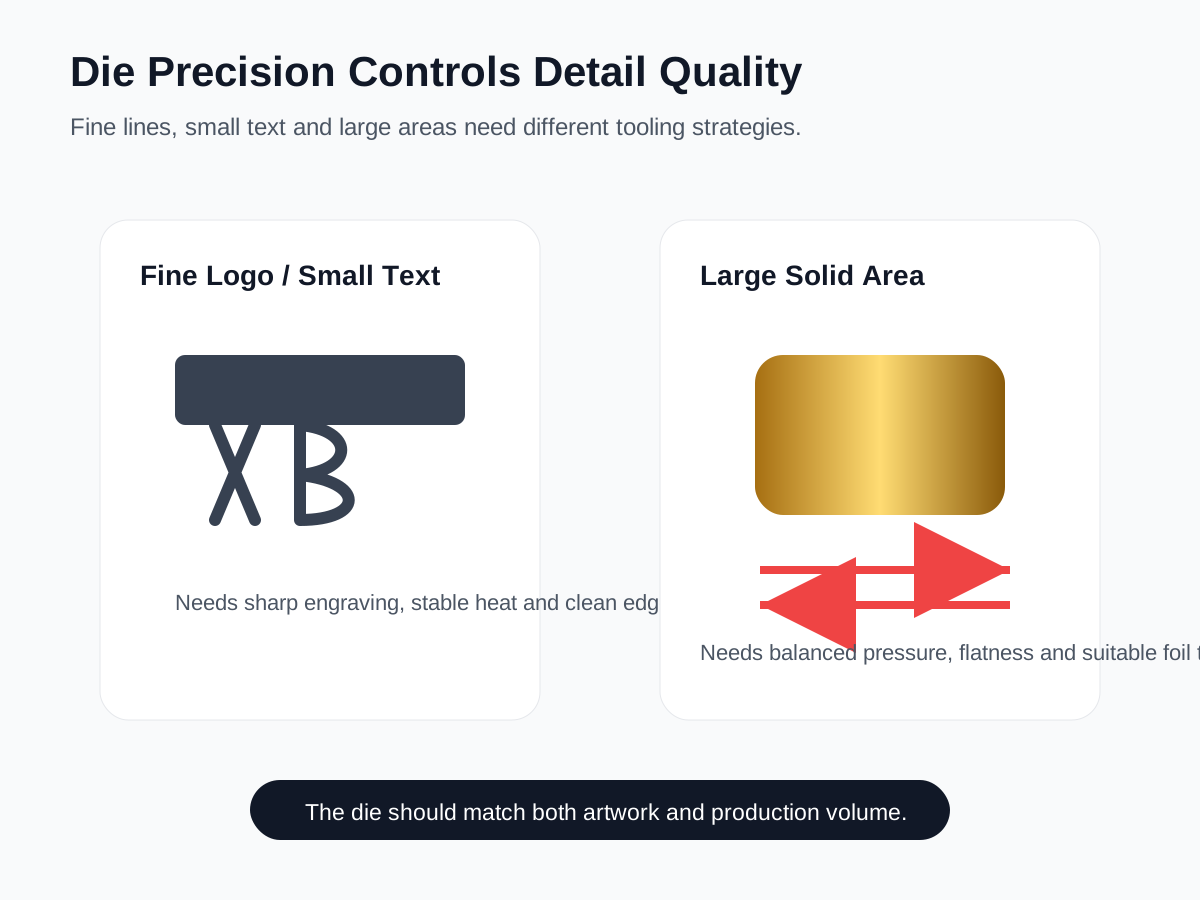
The die is the heated tool that presses the foil onto the product surface. It directly controls the shape, edge sharpness and detail quality of the hot stamped artwork.
A simple logo, a thin line, small text and a large solid area do not require the same die design. The more detailed the artwork, the more important die precision becomes.
For fine logos, small letters and thin lines, the die must have clean engraving, accurate relief height and sharp edges. If the die is not precise enough, the stamped result may appear blurred, broken or filled in. Small text can lose readability. Thin lines can become uneven. Corners may look rounded instead of crisp.
For large area stamping, the challenge is different. A large logo or solid block needs balanced pressure and good die flatness. If pressure is not distributed evenly, one side may transfer well while another side looks incomplete. Large solid areas may also require higher machine pressure, longer dwell time or careful foil selection to avoid pinholes and cloudy patches.
Common die materials include magnesium, copper and brass. The best choice depends on the artwork, production quantity and quality requirement.
Magnesium dies are often used for simple artwork or short-run applications because they are cost-effective and fast to produce. However, they may wear faster and may not be ideal for demanding fine detail or long production runs.
Copper dies generally offer better durability and heat transfer than magnesium. They can be suitable for medium-level detail and medium-volume work.
Brass dies are commonly preferred for high-quality packaging hot stamping, especially when the artwork requires sharp detail, stable edges and longer die life. Brass is durable and can be machined with high precision, making it suitable for premium logos, cosmetic packaging and repeated batch production.
For curved, uneven or irregular surfaces, a rigid metal die may not always be the best solution alone. Silicone dies, silicone pads or specially designed tooling can help compensate for slight surface variation, depending on the product shape and machine structure.
For a deeper comparison of material and manufacturing routes, use PackFinish's hot stamping die material guide for magnesium, copper, brass and silicone.
When evaluating a die, consider:
- Artwork size and complexity
- Minimum line width and spacing
- Small text readability
- Large solid area coverage
- Product surface flatness or curvature
- Required production volume
- Die material and expected life
- Heat transfer and temperature stability
- Alignment with fixture and machine stroke
A high-quality die is not only about engraving the logo. It is about making the artwork manufacturable for hot stamping. Sometimes a small adjustment to line width, spacing or stamping area can greatly improve the final result.
3. Fixtures: the Hidden Factor Behind Positioning and Consistency
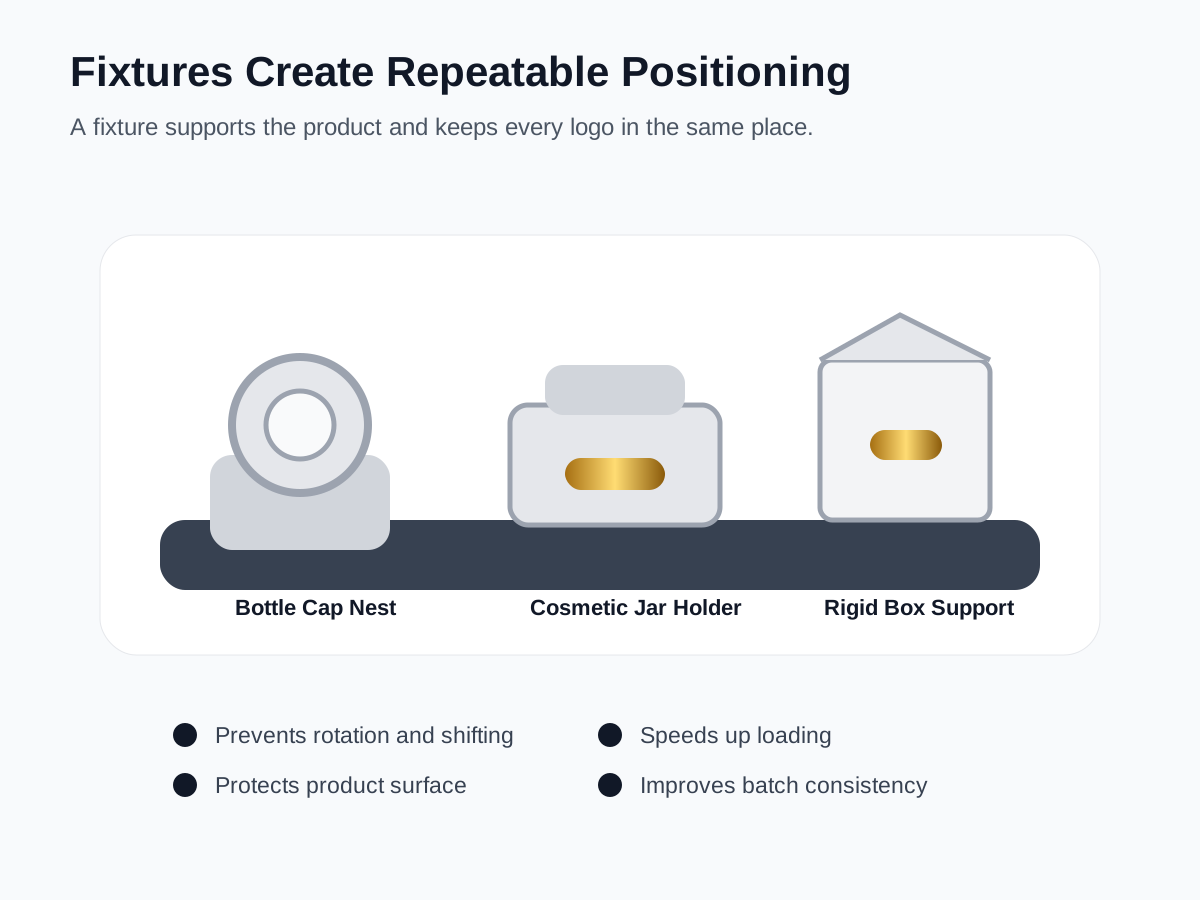
Many customers focus on the machine and foil first, but in batch packaging production, the fixture is often what determines speed and consistency.
A fixture, also called a jig or product holder, keeps the package in the correct position during stamping. It supports the product, controls the loading angle, protects the surface and helps the operator repeat the same position cycle after cycle.
For flat paper cards, a simple positioning plate may be enough. But for bottle caps, cosmetic jars, rigid boxes, formed trays, tubes, irregular plastic parts or assembled components, a proper fixture becomes critical.
Without a good fixture, the operator may need to adjust each product manually. This increases cycle time and creates inconsistent positioning. Even if the machine is stable, the stamped logo can shift from piece to piece. In high-volume production, this leads to rejects, rework and wasted foil.
A good hot stamping fixture should do four things:
- Hold the product securely without scratching or deforming it.
- Position the stamping area accurately under the die.
- Allow fast loading and unloading by the operator.
- Maintain repeatability across the entire production batch.
Fixture design may use aluminum, steel, engineering plastic, silicone support, 3D printed prototypes or replaceable inserts depending on the product. For delicate packaging surfaces, contact points should be designed carefully to avoid marks. For round parts such as bottle caps, the fixture must prevent rotation. For formed boxes, the fixture may need internal support to avoid collapse during pressure.
Fixtures are especially important for cosmetic and luxury packaging because the decoration position is part of the perceived quality. A logo that shifts slightly may still be technically stamped, but visually it can make the product look less premium.
4. When Do You Need a Custom Die or Custom Fixture?
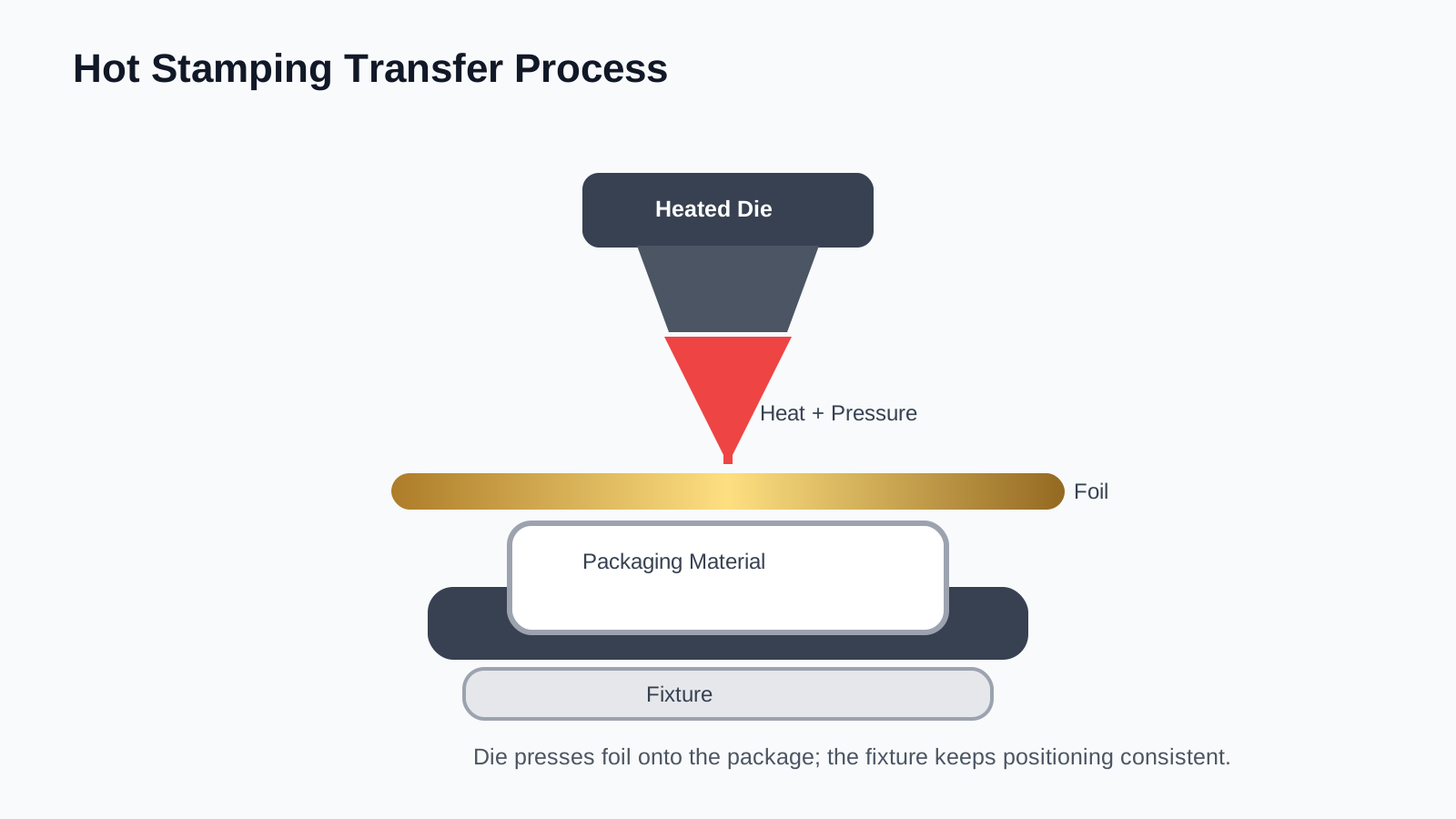
Not every project requires custom tooling, but many packaging hot stamping projects do. The need for customization usually depends on product shape, artwork requirement and production expectation.
A custom die is usually needed when the logo, pattern or text is unique to the customer. It is also needed when the artwork contains fine details, special line structures, brand-specific typography or large solid coverage. Standard dies cannot reproduce a custom brand logo accurately.
A custom fixture is recommended when:
- The product is not flat
- The product has an irregular or curved surface
- The stamping position must be very accurate
- The product is small and difficult to hold by hand
- The product may rotate or shift during stamping
- Multiple sides or multiple positions need to be stamped
- Batch consistency is important
- Operators need faster loading and unloading
- The product surface can be scratched, pressed or deformed easily
- The project is moving from sample testing to mass production
For example, a round bottle cap may need a nest fixture that fixes its outer diameter and prevents rotation. A rigid gift box may need a support fixture inside the box to keep the stamping surface flat. A cosmetic jar may need a fixture that aligns the front logo position with the cap or label direction. An irregular plastic component may need a custom holder that matches the product contour.
In some cases, the fixture can be adjustable to fit several similar product sizes. In other cases, a dedicated fixture for each SKU gives better stability and faster production.
5. A Practical Selection Workflow for Packaging Hot Stamping
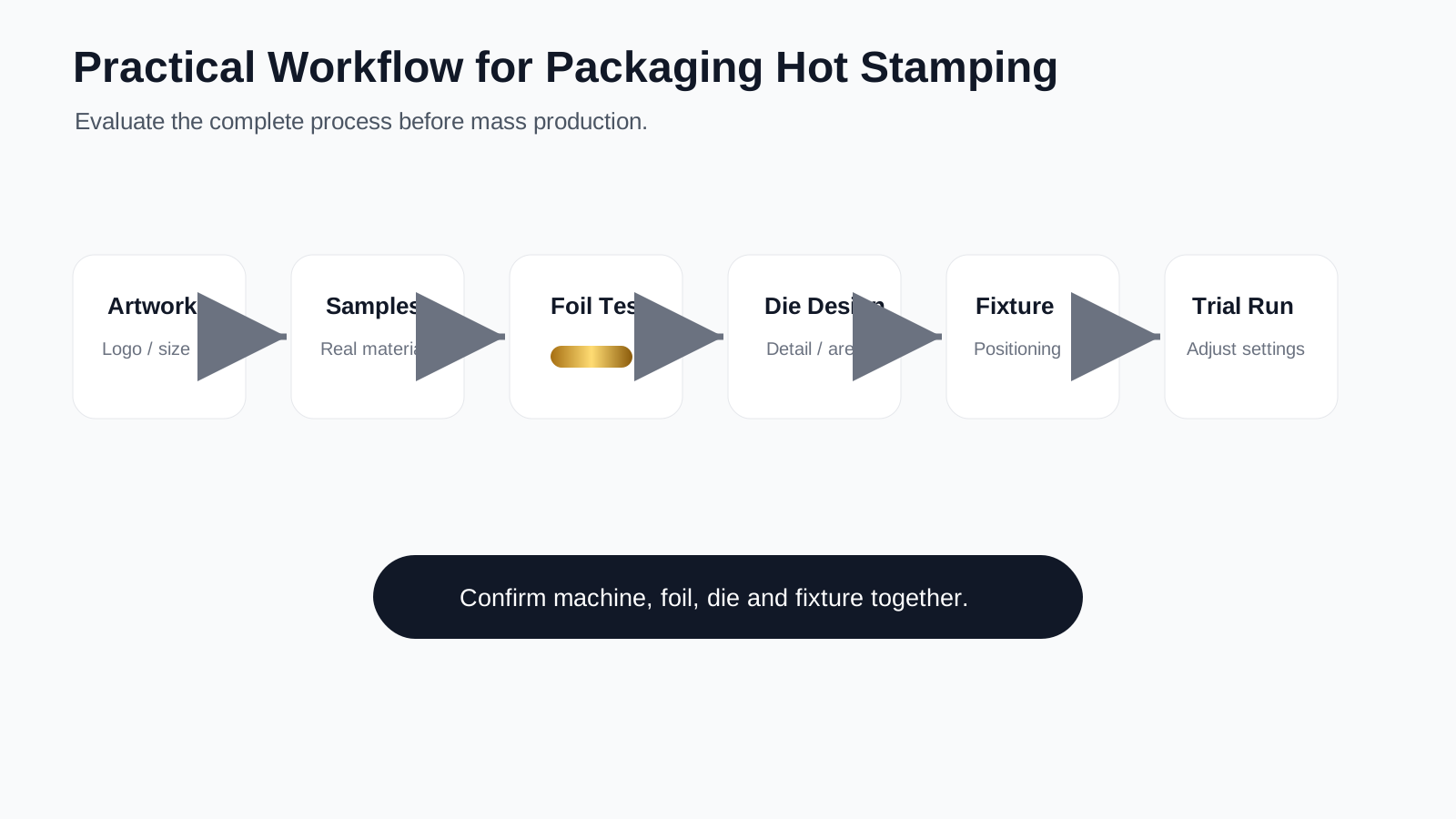
The best way to choose foil, dies and fixtures is not to guess from pictures. It is to evaluate the actual product and production target.
A practical workflow includes the following steps:
Step 1: Confirm the Product Material and Surface
Start with the real packaging sample. Identify the material, coating, surface finish and shape. A glossy coated paper box, matte laminated box, PP cap, PET bottle and painted cosmetic jar all behave differently under heat and pressure.
Step 2: Review the Artwork
Check logo size, line thickness, text size, spacing, solid area and stamping position. If the artwork is too fine or too large for the product surface, the die design or artwork may need adjustment.
Step 3: Select Candidate Foils
Choose several foil options based on color, finish and substrate compatibility. Do not choose by color alone. Adhesion and transfer stability are just as important as appearance.
Step 4: Design the Die
Select the die material and engraving method according to the artwork and production volume. Fine logos and premium packaging usually need higher precision dies.
Step 5: Design the Fixture
Create a fixture that supports the product and aligns the stamping area. For irregular products, a prototype fixture may be tested before final production tooling.
Step 6: Run Sample Tests
Test the complete setup: machine, foil, die, fixture and product. Check transfer quality, edge clarity, adhesion, positioning, surface marks and repeatability.
Step 7: Adjust Before Mass Production
Fine-tune temperature, pressure, dwell time, foil feed, product support and operator loading. Small changes at this stage can reduce rejects during batch production.
6. Common Mistakes to Avoid
One common mistake is choosing foil only by color. A gold foil may look beautiful on a supplier sample card but fail on the real packaging material. Always test on the actual product surface.
Another mistake is using the same die approach for every artwork. Fine text, thin lines and large solid areas have different requirements. The die must match the design.
A third mistake is ignoring the fixture during early evaluation. A sample may be stamped manually with careful positioning, but mass production needs repeatability. If the fixture is not considered early, the final process may be slow or inconsistent.
A fourth mistake is testing only one perfect sample. Real production includes product tolerance, surface variation and operator movement. A reliable solution should work across multiple samples, not only one ideal piece.
7. Build a Complete Hot Stamping Solution, Not Just a Machine
For packaging hot stamping, the machine is the foundation, but it is not the whole solution. Foil affects color, shine and adhesion. Dies affect detail, edge quality and coverage. Fixtures affect positioning, speed and batch consistency. The product material determines what temperature, pressure and foil chemistry can work safely.
When these elements are evaluated separately, problems often appear later in production. When they are evaluated together, the process becomes easier to control and the final result becomes more stable.
PackFinish can help evaluate machine, foil, die and fixture requirements together. By reviewing your artwork, product samples, material information and production target, PackFinish can recommend a more complete hot stamping direction instead of only recommending a machine model.
If you are preparing a packaging hot stamping project, send PackFinish your logo file, product photos, product samples and expected production quantity. Our team can help you judge what type of machine, foil, die and fixture may be required for clean, consistent and premium packaging decoration.
Need help choosing foil, die and fixture for your packaging?
Send PackFinish your artwork, product samples, material details, desired foil effect and target production quantity. The useful recommendation is not only a machine model, but the full process setup around machine, foil, die, fixture and sample testing.
Request Hot Stamping Evaluation
FAQ
What information should I provide before choosing a hot stamping solution?
Provide the product material, product samples, clear photos, artwork file, stamping size, desired foil color, production quantity and positioning requirement. If the product is curved or irregular, videos or 3D drawings are also helpful.
Can one hot stamping foil work on all packaging materials?
No. Foil must match the substrate and surface coating. A foil that works on paper may not transfer well on plastic, painted metal or laminated surfaces.
Which die material is best for premium packaging hot stamping?
For premium packaging with fine details and repeated production, brass dies are often preferred because they provide good durability, precision and edge quality. The final choice still depends on the artwork and production target.
Why is a fixture important for hot stamping?
A fixture controls product positioning and repeatability. It helps the operator load products faster and keeps the stamped logo consistent across the production batch.
Do I need to send real samples for testing?
Yes, real samples are strongly recommended. The actual surface material, coating, shape and tolerance can all affect the stamping result.