
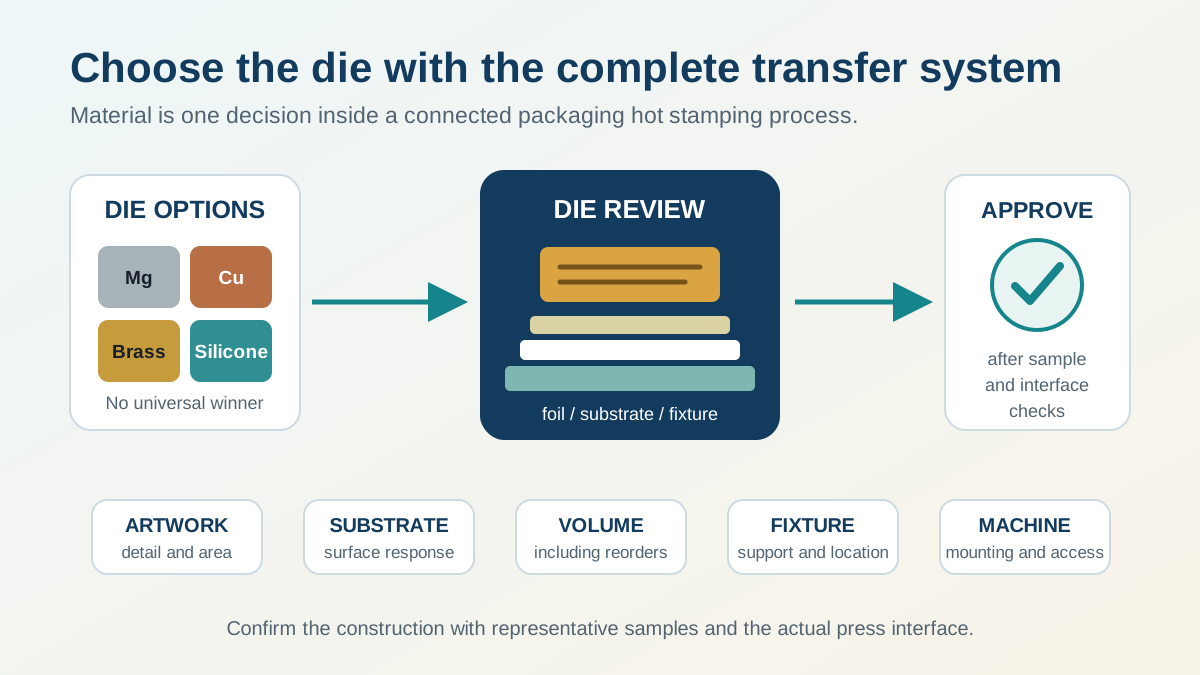
Choosing a hot stamping die material is not a simple ranking of magnesium, copper, brass, and silicone. The right choice depends on the artwork, stamping area, substrate, surface geometry, expected production volume, die-making method, fixture, and machine interface.
For a short flat-paperboard job, a photoetched magnesium die may be a practical choice. Fine etched detail or repeated production may justify copper. Machined brass can be valuable when durability, shoulder geometry, repairability, or multi-level work matters. Silicone is a different contact solution: its controlled compliance can help on certain molded or contoured parts, but it must be matched to the product and fixture.
The die is only one part of the transfer system. Foil, substrate, temperature, pressure, dwell time, mounting accuracy, and fixture support still determine whether the result is acceptable. Use this material guide alongside PackFinish's broader explanation of how foil, dies, and fixtures work together.
Start with the Job, Not the Price of One Die
Initial die cost is easy to compare, but it does not describe total production fit. A lower-cost die can be appropriate for sampling or a limited order. The same choice can become inefficient if the artwork changes, the die wears before likely reorders, setup must be corrected repeatedly, or a replacement cannot be mounted consistently.
Start by asking:
- What is the smallest text, line, gap, or reverse element in the artwork?
- Is the image a small mark, separated elements, or a large solid area?
- Is the substrate flat, textured, coated, molded, or slightly contoured?
- What quantity is expected, including likely repeat orders?
- How will the die be made, mounted, heated, and aligned?
- What fixture supports the product directly below the stamping area?
This prevents material labels from replacing engineering review. A material that works well in one die-making process, press, or application should not be treated as a universal rule for another.
Quick Comparison of Hot Stamping Die Materials
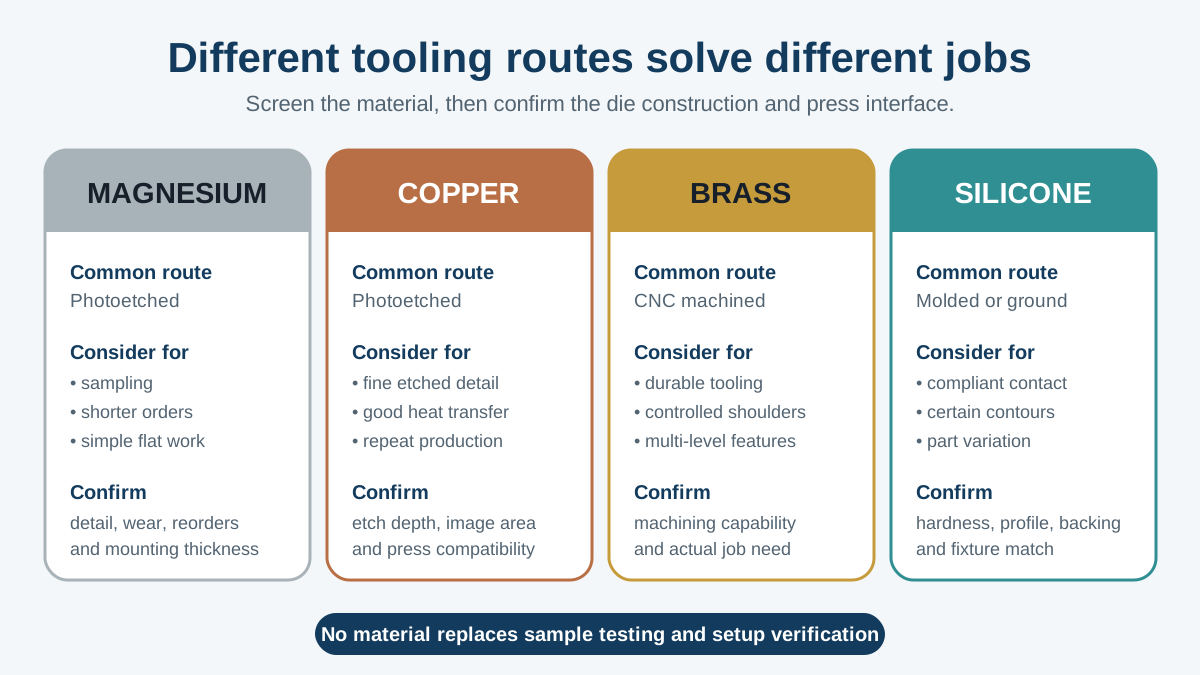
| Die material | Common route | Reasons to consider it | Main checks before approval |
|---|---|---|---|
| Magnesium | Often photoetched | Lower initial tooling cost, relatively quick preparation, straightforward flat work, samples, and shorter orders | Artwork detail, relief and shoulder quality, wear allowance, storage, reorders, and mounting thickness |
| Copper | Often photoetched | Fine etched detail, good heat transfer, and better wear resistance than magnesium in many applications | Etch quality, relief depth, image area, cost against expected volume, and press compatibility |
| Brass | Commonly CNC engraved or machined | Durability, controlled shoulders, repairable tooling in some workflows, repeated production, and sculpted or multi-level features | Machining capability, artwork interpretation, investment, heating behavior, mounting, and whether the job actually needs engraved brass |
| Silicone | Molded, ground, or engraved rubber on a backing | Controlled compliance for certain flat, contoured, or dimensionally variable rigid parts | Hardness, thickness, backing, face profile, heat behavior, compression, artwork distortion, product support, and fixture match |
This table is a screening guide, not a purchase specification. Die suppliers use different alloys, etching or machining methods, relief capabilities, thicknesses, and quality controls. Confirm the final construction with the supplier who will make the die and with the actual machine interface.
Five Inputs to Confirm Before Choosing Hot Stamping Die Material
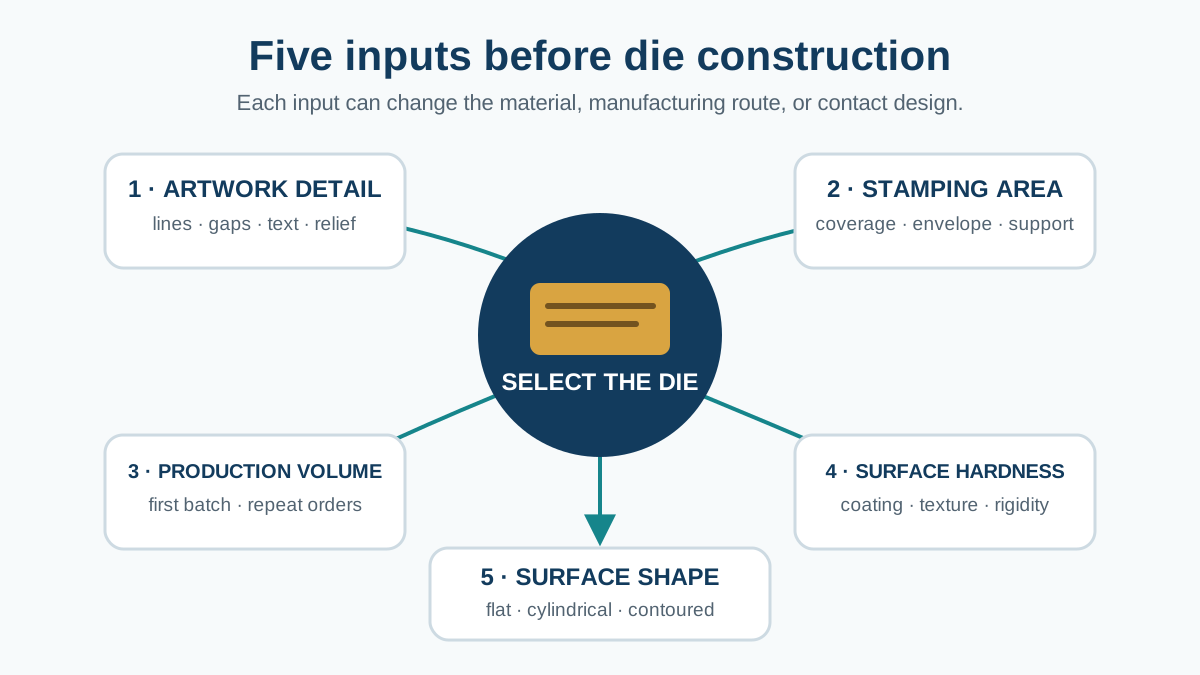
1. Artwork detail
Fine text, narrow rules, small reverse areas, and closely spaced elements require a die-making route that can preserve the intended gaps and edges. A bold mark does not create the same requirement as a detailed pattern or small serif lettering.
Ask the die supplier to review the vector file rather than relying only on a low-resolution image. Minimum line width, spacing, relief profile, shoulder shape, and the relationship between adjacent elements all matter.
2. Stamping area and pattern structure
A small mark concentrates load differently from a large solid area. A broad image needs controlled flatness, heat distribution, pressure distribution, and support below the product. Separate elements spread across a large envelope may also require a larger die and work area even when the actual foil coverage is modest.
When equipment is still being selected, compare the artwork envelope with the hot stamping machine sizing checks for area, press capacity, and worktable.
3. Expected production volume
Include repeat orders, not only the first batch. A sampling die can be the sensible low-risk choice while the artwork and substrate are still changing. Once the application is validated, a more durable die may reduce replacement and setup variation over repeated production.
Do not convert production volume into a universal impression-life promise. Die life changes with material, artwork, die-making quality, pressure, temperature, substrate abrasiveness, handling, cleaning, and storage.
4. Substrate and surface hardness
Coated paper, laminated board, textured paper, and molded plastic parts do not respond identically under heat and pressure. A softer packaging surface may conform under a rigid die; a harder or dimensionally variable part may need a different contact strategy and more deliberate support.
The substrate must also be tested with the intended foil. PackFinish's guide to packaging material hot stamping tests explains why a material name or product photo is not enough to confirm transfer and adhesion.
5. Flat or contoured contact
A flat, supported panel is generally easier to contact uniformly. A curve, raised edge, recess, near-edge position, or part-to-part variation can leave one region under-contacted and another over-compressed.
Do not assume that a softer die will correct the whole geometry. The die face, product contour, fixture, machine motion, and loading reference must be evaluated together.
Magnesium Dies: Practical for Controlled, Lower-Risk Starts
Magnesium dies are commonly photoetched and are often selected when initial tooling economy, preparation speed, and a straightforward flat image are important. They can be appropriate for samples, artwork approval, short orders, and applications that do not justify a more expensive die at the first stage.
Magnesium should not be described as incapable of detail. A properly made die can reproduce useful detail, but magnesium is softer than copper or brass and generally offers less resistance to wear or accidental damage. The artwork, relief depth, die thickness, storage, and expected production conditions determine whether it is a sensible choice.
For a buyer, the useful question is not "Is magnesium good enough?" It is "What must this specific die reproduce, how long must it remain stable, and what happens if the job is reordered?" The material-selection guidance published by OWOSSO likewise emphasizes that several interacting factors should determine the choice rather than one material label.
Copper Dies: Fine Etched Detail and Repeat Production
Copper dies are often photoetched. They are commonly considered when the artwork needs fine etched detail, when good heat transfer matters, or when expected wear is beyond the intended role of a magnesium die.
Copper is not automatically the middle option between magnesium and brass. Manufacturing route matters. A supplier may recommend etched copper for closely spaced fine lines or small type, while machined brass may be chosen for a different shoulder, depth, or multi-level requirement. Universal Engraving's hot stamping die guide describes copper, brass, and magnesium as distinct tooling routes and notes the detail and durability advantages of copper and brass over softer magnesium.
Confirm etch depth, relief, image size, die thickness, mounting, and how the die will reach operating temperature on the actual machine. A durable copper die still cannot correct an unsuitable foil, unsupported product, or uneven press contact.
Brass Dies: Durable, Machinable, but Not Automatically Superior
Brass dies are commonly CNC engraved or machined. This can support controlled shoulders, deep or sculpted features, combination foil-and-emboss work, and repair or rework in workflows where the die maker provides those services. Brass is often considered for repeated production and demanding tooling constructions.
The trade-off is not only higher initial cost. Machining capability, artwork interpretation, material grade, face condition, heating behavior, and mounting accuracy all affect the result. A flat foil job with very fine etched detail may lead a supplier toward copper instead. A simple short order may not use the extra capability of brass at all.
Profoil's tooling material guide illustrates why the decision should be connected to the manufacturing route: it distinguishes etched copper's fine-detail capability from the different benefits of brass tooling. Treat supplier guidance as application context, then confirm the choice against your artwork and production conditions.
Silicone Dies: A Contact Solution for Specific Surfaces
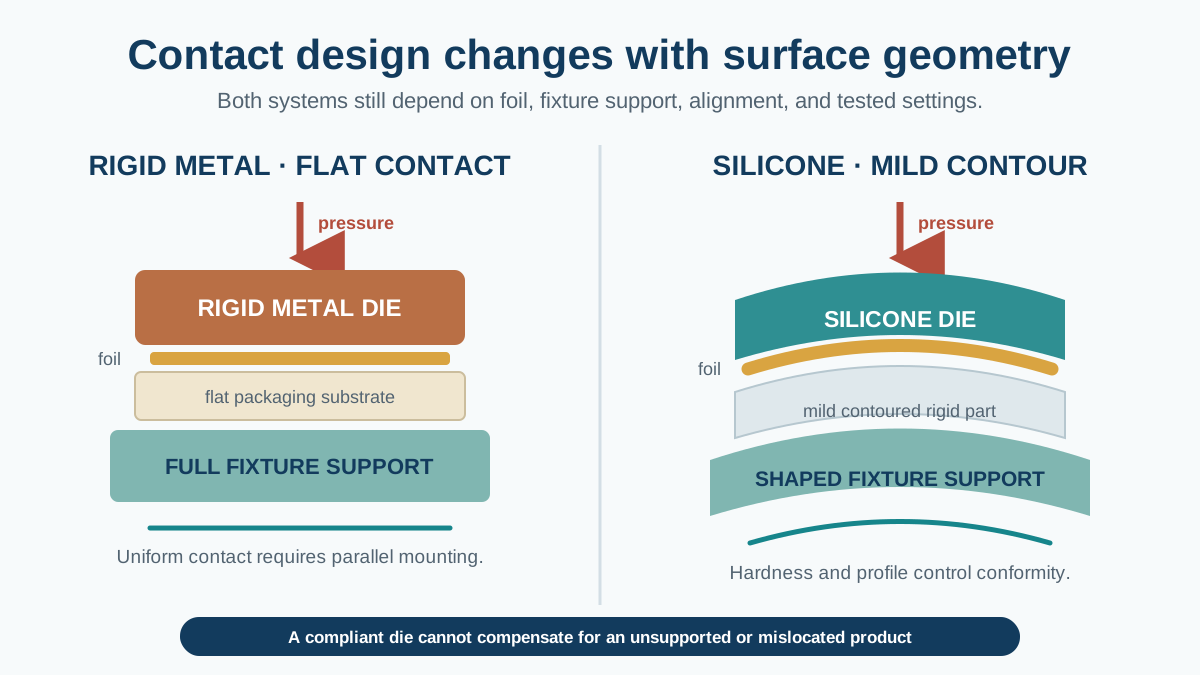
A heat-resistant silicone die or pad can conform to certain surface variations that a rigid metal face cannot follow uniformly. Flat, contoured, and roller constructions are used in different hot stamping applications, especially on molded parts and cylindrical or mildly curved surfaces.
Silicone is not a universal curved-surface answer. Hardness, thickness, backing, face profile, and compression must match the product. A die that is too compliant may spread pressure or distort fine artwork; a die that is too firm may not provide the conformity the application needs. Heat transfer, recovery, foil release, and substrate sensitivity must be re-established during testing.
The fixture remains essential. The curved-surface die maker TokuAbe explicitly treats the die and jig as a matched set, while Swift Silicone describes separate flat, contoured, and roller constructions with selectable hardness and backing. Use these design principles to frame the review, then confirm the construction with the die supplier, product, fixture, and machine.
For a broader view of geometry and machine motion, review PackFinish's guide to flat, cylindrical, and curved-product hot stamping.
Match Fine Lines and Large Solids to the Complete Process
Fine lines and small reverse areas need clean edges and controlled foil release. Large solids need uniform contact, flatness, stable heat, and support across the image. These demands can influence material choice, but they also expose problems elsewhere in the process.
Before changing die material, check:
- whether the artwork is manufacturable at the intended size;
- whether the die face is clean, undamaged, and mounted parallel;
- whether the fixture supports the stamping zone without rocking or collapse;
- whether the foil is suited to the substrate and image structure;
- whether temperature, pressure, and dwell time are inside a tested range;
- whether the loading method preserves the same position and support each cycle.
If the setup is not repeatable, a more expensive die may only reproduce the same process problem more consistently.
Confirm the Die with the Machine and Fixture
Die thickness, backing, mounting holes or clamps, image orientation, heated-plate size, available working height, and access around the product must be confirmed before the die is made. A correct artwork engraved into the wrong mounting format is still unusable.
For formed boxes and rigid parts, the fixture should reference the product consistently and support the area below the die. If the part can rotate, rock, collapse, or vary in height, the contact pattern will change. PackFinish's guide to custom fixture requirements for packaging hot stamping covers this boundary in more detail.
Run tests on representative samples before approving production tooling. Record the die identification, foil, substrate or lot, fixture, machine, and accepted process range so that a replacement die or repeat order can be compared with the approved setup.
What to Send for a Die Review
Provide:
- Vector artwork, with fonts outlined where appropriate.
- Exact artwork dimensions, including the smallest lines, gaps, and text.
- Product material and finish, including coatings, laminates, textures, or molded resin when known.
- Surface geometry, including flat, cylindrical, curved, raised, recessed, or near-edge positions.
- Expected quantity and likely reorders.
- Representative physical samples for contact, transfer, and adhesion testing.
- Machine interface information, including available die area, mounting dimensions, die height or backing requirement, fixing method, working orientation, and heated-plate constraints.
- Fixture information, including how the product is located and supported.
Photos can support an initial discussion, but they cannot confirm coating behavior, foil release, part variation, contact pressure, or machine compatibility. PackFinish's sample preparation checklist explains what to send before equipment and tooling decisions are finalized.
Send PackFinish your vector artwork, product samples, expected production volume, surface geometry, and machine mounting information for a die and process review. Use the PackFinish contact page to start the evaluation.
FAQ
Is a brass die always better than a magnesium die?
No. Brass can offer durability and machining options that suit repeated or complex work, but magnesium may be the practical choice for sampling or a short, straightforward order. Artwork, die-making route, volume, substrate, machine, and setup determine the better choice.
When should a copper die be considered?
Copper is often considered when a job needs fine etched detail, good heat transfer, and more wear resistance than the intended magnesium option. Confirm the choice against artwork, image area, expected production, die thickness, and mounting.
Can a silicone die stamp every curved product?
No. Silicone can help with certain contours and surface variation, but hardness, profile, backing, product rigidity, fixture support, foil, machine motion, and process settings must be tested. Severe or changing geometry may require shaped tooling and a dedicated fixture.
Can die material be selected from a product photo?
A photo supports initial discussion, but it cannot confirm substrate sensitivity, coating behavior, foil release, contact pressure, part variation, or machine mounting. Vector artwork, dimensions, samples, production volume, and interface information provide a better basis.