
Product geometry can determine machine structure before material selection does. The same plastic may be straightforward to stamp on a flat cap top but require a different hot stamping machine for packaging when the decoration moves to the cap sidewall. The difference is how the die, foil, and product must meet and move during each cycle.
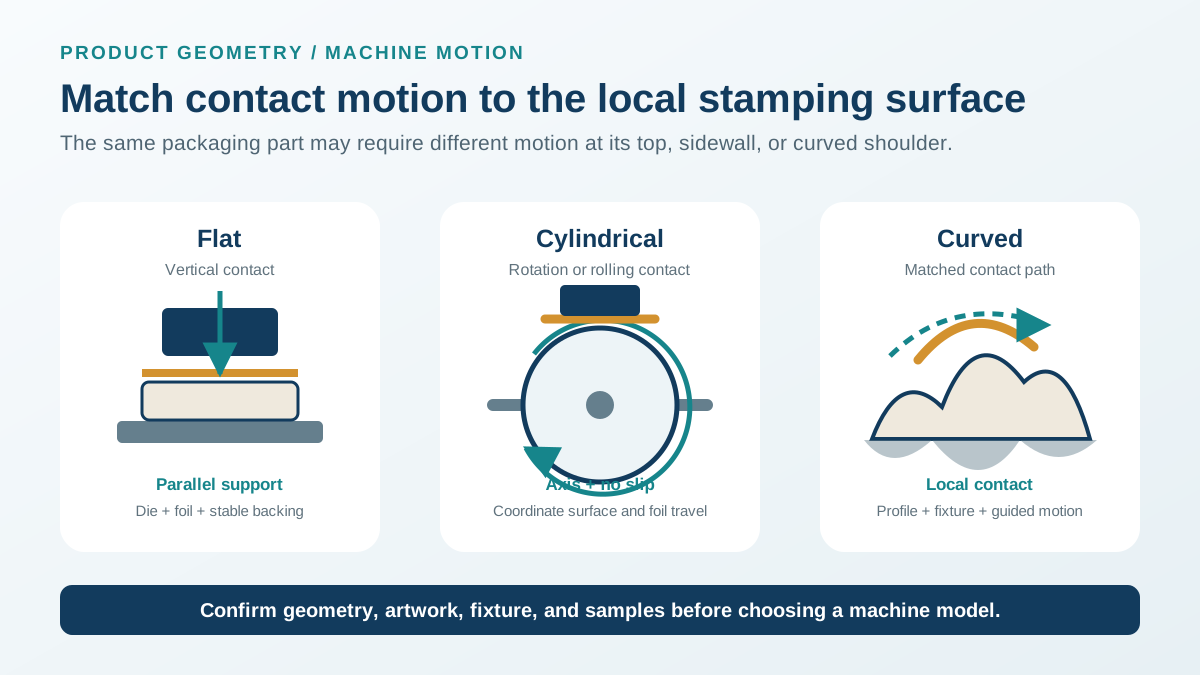
Buyers should first ask: What relative motion is required at the stamping area? Flat products generally need controlled vertical contact. Cylindrical surfaces often need product rotation or rolling contact. Curved and irregular parts may need a matched die, dedicated fixture, and guided motion path. Machine, foil, die, fixture, substrate, temperature, pressure, dwell time, and testing must be evaluated as one system. If the overall equipment category is still undecided, start with the broader guide to choosing a hot stamping machine for packaging products.
Product Shape May Decide the Machine Structure First
A product name does not define its stamping geometry. A bottle cap may have a flat top, straight wall, tapered skirt, domed shoulder, or several surfaces on one component. Each stamping position changes the contact direction and pressure distribution.
The local stamping surface matters more than the product category. A round part with a flat top may suit a flat-surface process, while its sidewall may need rotary movement. A logo on a compound curve may require localized contact and a fixture that controls the presentation angle and motion path.
Before comparing models, define the exact stamping surface, local radius, artwork orientation, stamping area, loading method, and whether the part can rotate or withstand clamping without slipping or deforming.
| Local stamping surface | Typical relative motion to evaluate | Fixture priority | Evidence needed before selection |
|---|---|---|---|
| Flat top, panel, sheet, or box lid | Controlled vertical contact | Parallel support and repeatable location | Stamping-area dimensions, artwork, product thickness, and real samples |
| Straight or near-constant-radius sidewall | Rotation, rolling, or synchronized linear/rotary contact | Axis control, axial stop, and anti-slip support | Diameter, decorated arc, taper, artwork orientation, and sample variation |
| Domed, changing-radius, or irregular surface | Localized contact along a matched path | Shaped nest, anti-rotation features, and support near the contact zone | 2D/3D geometry, local radii, contact start/end, artwork, and physical samples |
This table is a screening guide, not a machine specification. The final structure still depends on the artwork, material response, tooling, loading method, and sample test.
What a Flat-Surface Hot Stamping Machine for Packaging Needs
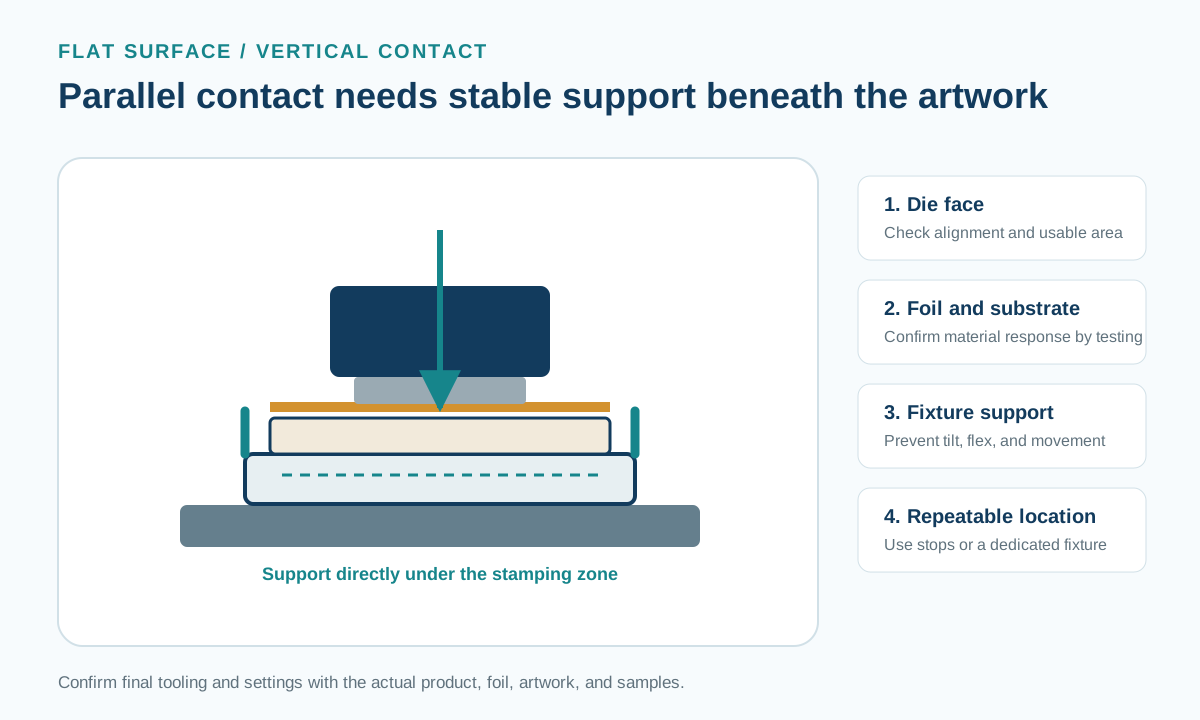
Typical flat applications include paperboard, rigid box lids, labels, panels, and flat cap tops. The usual action is direct contact between a heated stamping die and a supported surface, with hot stamping foil between them.
Key factors are platen parallelism, worktable rigidity, pressure distribution, and repeatable positioning. A machine can have adequate force yet produce uneven foil release if the die and product are not parallel or the fixture allows tilt. Large solid areas reveal pressure variation, while fine lines and small text reveal registration and die-alignment errors.
The fixture should locate the product consistently, support the stamping zone, and prevent movement. Assembled boxes and hollow parts may need support beneath the contact area to limit deformation.
Flat does not mean universally easy. Coated paper, laminated paper, textured paper, plastics, and painted surfaces may require different foil and settings. Review how material and surface construction affect hot stamping, then use production-representative samples to confirm foil release, adhesion, edge definition, and repeatability.
Cylindrical Products Need Rotation or Rolling Contact
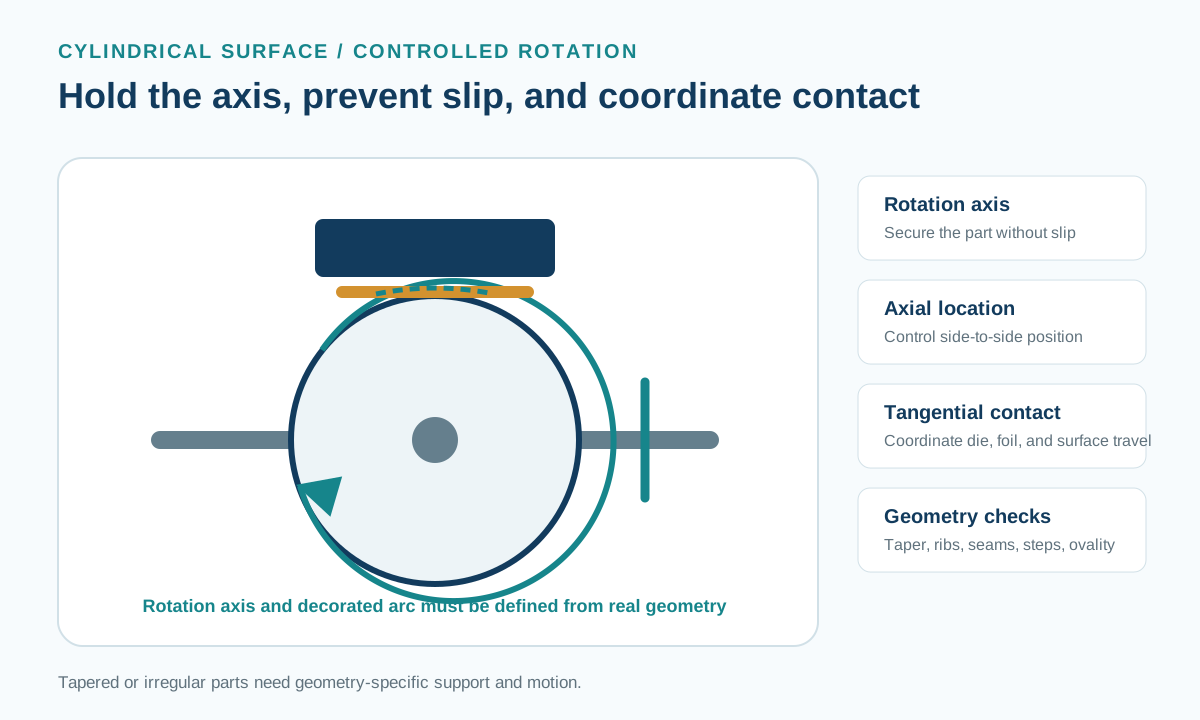
Cylindrical applications include tubes, round containers, cap sidewalls, and packaging parts with a constant or near-constant radius. A flat die pressed directly against a cylinder creates only a narrow contact line. Transferring a wider design generally requires controlled relative movement.
The system may use a rotating spindle or mandrel, a rolling or rocking action, synchronized linear and rotary movement, or a compliant contact element suited to the surface and artwork. The surface speed, foil movement, and die contact must remain coordinated so the design does not stretch, compress, skew, or overlap.
The fixture must hold the axis securely, control axial position, and prevent slip. Thin or hollow parts may need internal support. Buyers should also confirm whether the “cylinder” has taper, ovality, ribs, seams, steps, or flanges. A tapered cap skirt should not automatically be treated like a straight tube; these features can change the die profile, fixture, and motion.
For closures, the exact decoration zone is especially important. PackFinish's bottle cap decoration equipment guide explains how a top logo, side band, partial wraparound mark, and molded registration feature create different positioning and automation requirements.
Curved and Irregular Products Need a Matched Motion Path
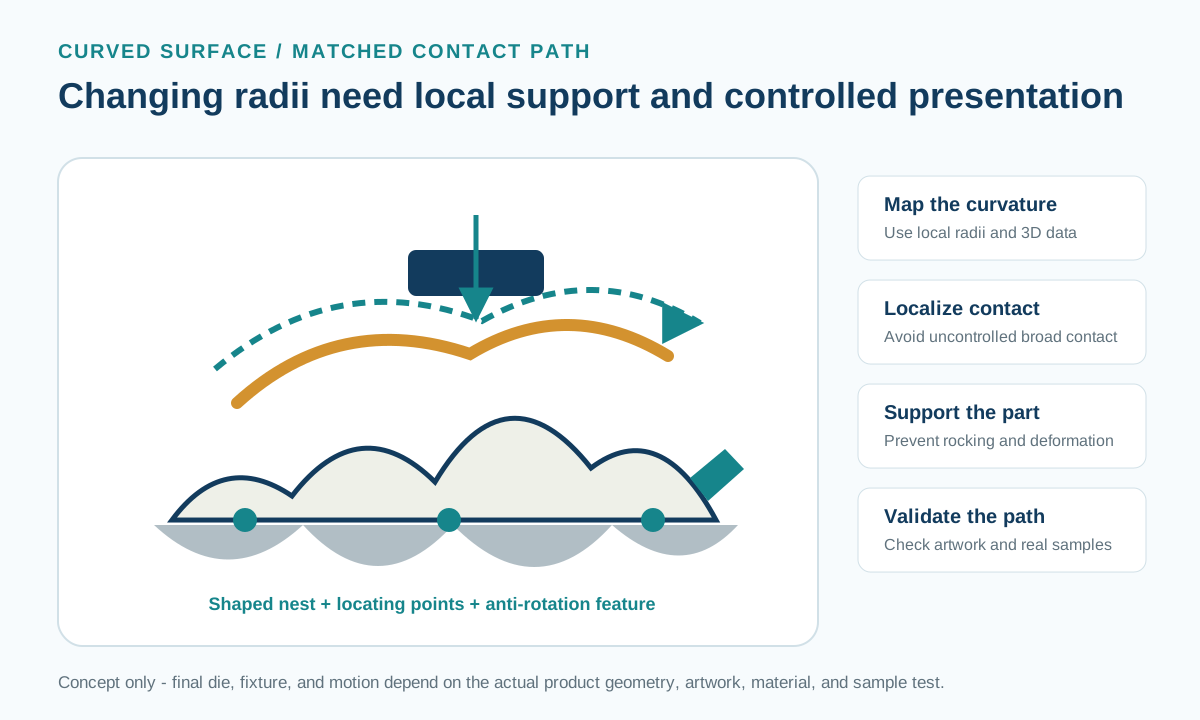
Domed caps, shoulders, cosmetic packaging parts, handles, and irregular housings may have changing radii. Unlike a straight cylinder, their contact direction and contact area can change across the artwork.
Evaluation should cover whether the curvature is single-radius or compound, how the radius changes, whether the design crosses a ridge or transition, the instantaneous contact area, die compliance, fixture support, and the required trajectory.
A flexible or compliant die can help with some curves, but it is not a universal correction for poor geometry matching. Excessive conformity may reduce edge definition or alter fine details. A rigid die can give sharper definition in a limited area but demand more accurate alignment. The correct choice depends on artwork, surface shape, substrate response, and appearance requirements.
The fixture may need multiple locating points, anti-rotation features, internal support, or a shaped nest. If the product rocks, flexes, or sits at different angles, process settings alone will not create stable registration.
The custom hot stamping fixture guide provides more detail on when a standard worktable, a simple jig, or a dedicated shaped fixture is likely to be needed.
Why Curved-Surface Projects Cannot Be Judged from Machine Photos
A machine photo shows the frame and general mechanism, not whether it can produce a specific result on a buyer's curved component. The decisive elements may be outside the photo: die profile, fixture geometry, support method, product axis, foil path, and motion sequence.
For curved work, the machine, stamping die, and fixture must operate as a matched system. A suitable general motion can still perform poorly if the fixture presents the part at the wrong angle or the die contacts too much area at once. Possible effects include incomplete transfer, blurred edges, double images, unstable registration, and slow loading.
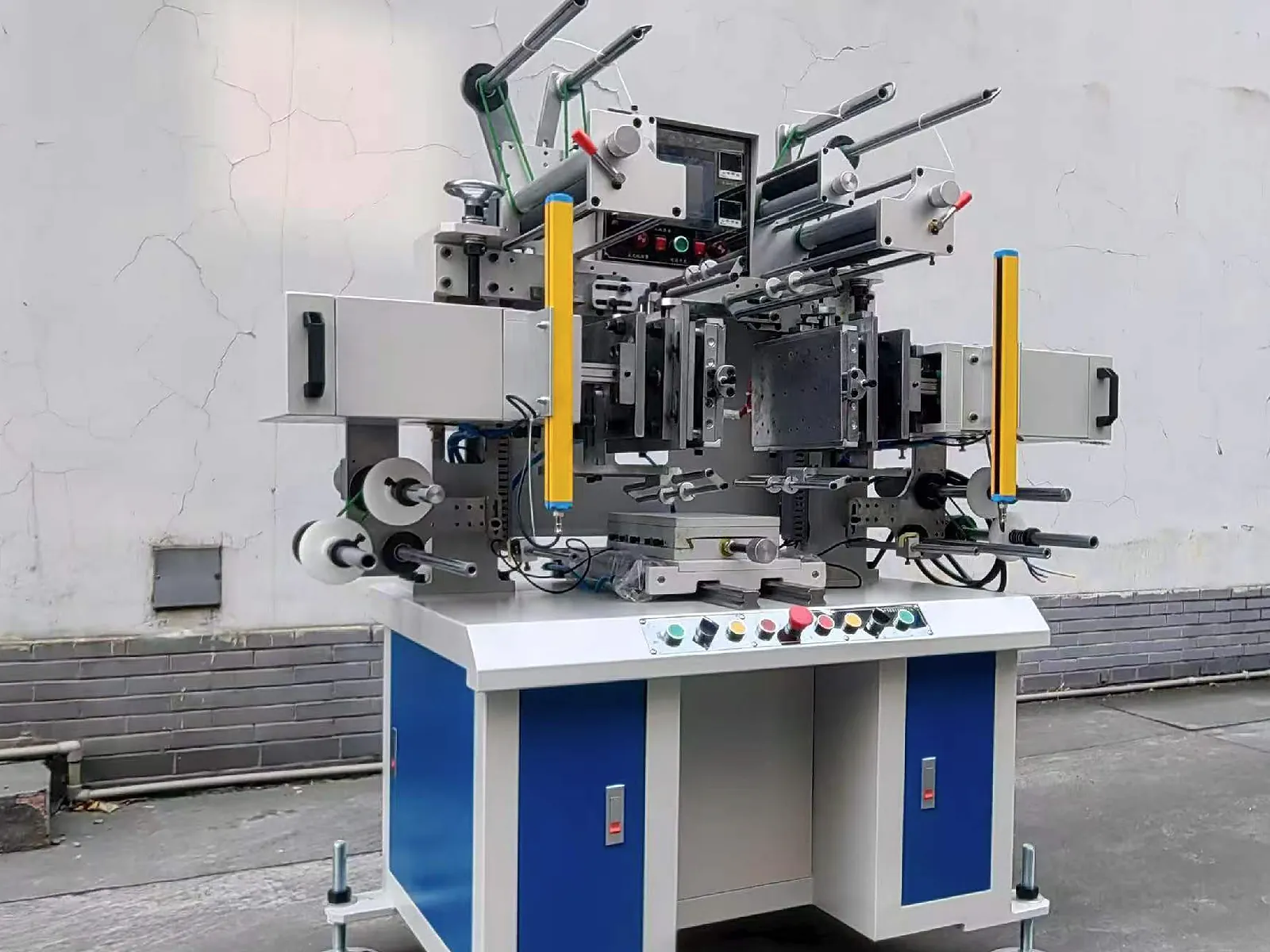
This PackFinish workshop photo provides equipment context only. It does not prove that this exact configuration, tooling, or handling system fits a particular curved product. The current Heat Transfer and Hot Stamping Machine page can help buyers understand the product category, but physical testing is still needed to assess the actual part, foil, artwork, fixture, and motion.
Finished-sample photos are also inconclusive unless the material, surface treatment, geometry, artwork, foil, and process are comparable. A foil mark on one curved plastic part does not prove compatibility with every plastic or coating.
What Geometry Information Should Buyers Submit?
A useful evaluation should include:
- Front and side views showing the component and stamping location.
- Dimensioned 2D drawings with overall size, local radii, wall thickness, taper, and relevant tolerances.
- 3D files for curved or irregular products.
- Artwork at actual size, including orientation, fine lines, text, and solid areas.
- Photos or video showing handling and assembly.
- Physical samples, ideally representing normal production variation.
- Material and surface details, including coatings, paint, lamination, texture, or pretreatment.
- Output requirements, loading method, automation expectations, and changeover needs.
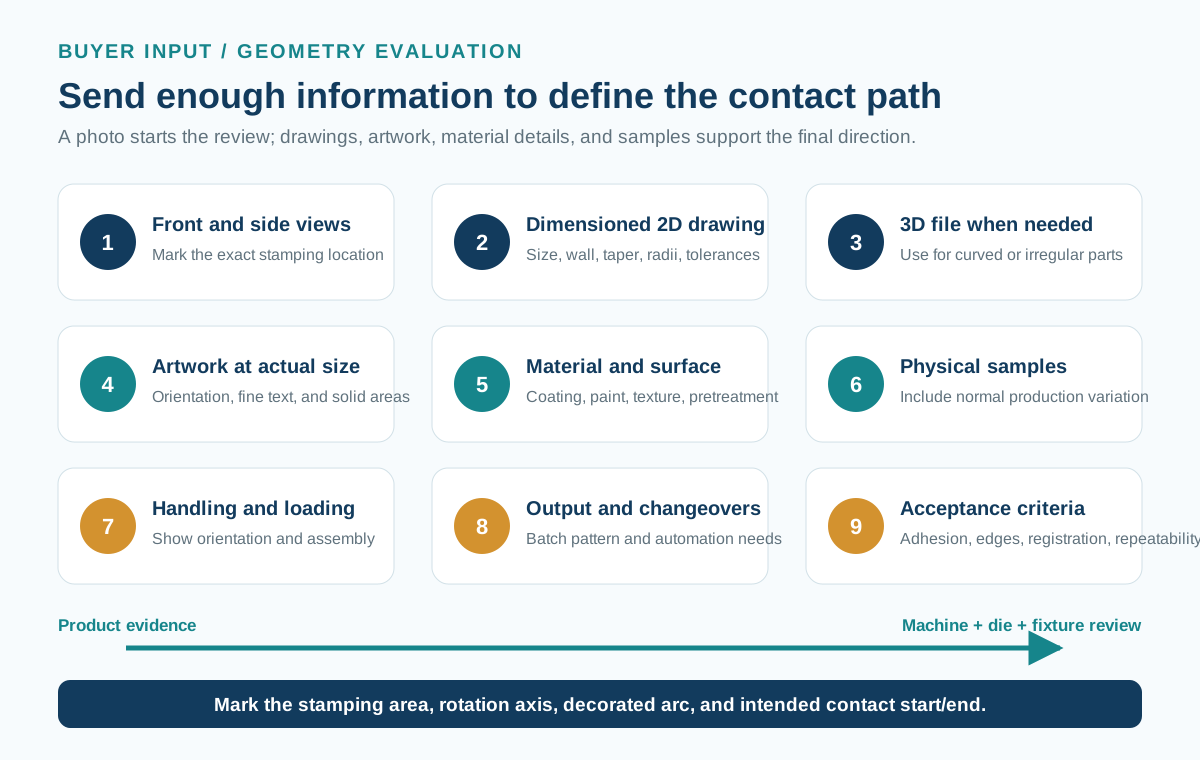
Mark the stamping area directly on the drawing or sample. For cylindrical parts, identify the rotation axis and decorated arc. For compound curves, indicate the intended start and end of contact. The hot stamping machine sample-preparation guide explains how to organize physical samples, artwork, and acceptance information for a controlled trial.
Confirm Product Motion Before Choosing a Machine Model
Do not group all caps, tubes, boxes, or packaging parts under one equipment requirement. Start with the local geometry, then determine how the product and die must move relative to each other. Only then should buyers compare machine size, actuation, controls, tooling, and production configuration. The usable work envelope should also be checked with the installed fixture and product, as explained in the hot stamping machine sizing guide.
The result is not decided by machine structure alone. It also depends on foil, stamping die, fixture, substrate, positioning, temperature, pressure, dwell time, operating method, and sample validation.
Send PackFinish your 2D drawings, 3D files, artwork, photos, or physical samples, together with material and output requirements. PackFinish can then evaluate the required product motion, die concept, fixture structure, and suitable machine direction before recommending a model.
FAQ
Can one machine stamp both flat cap tops and cylindrical sidewalls?
Possibly, but the two surfaces usually need different motion and tooling. The geometry, stamping position, artwork, fixture, and samples must be reviewed before the machine configuration can be confirmed.
Is a round product always a cylindrical hot stamping application?
No. The local stamping surface may be flat, cylindrical, tapered, or domed, even on the same part.
Why is a fixture necessary for curved products?
It establishes position, orientation, and support while preventing rocking, slip, and deformation through the contact path.
Can a flexible die solve every curved-surface project?
No. Die profile, compliance, artwork detail, contact area, substrate, and motion must be matched. Too much conformity can reduce definition.
How should a buyer confirm the machine structure?
Provide dimensioned drawings, 3D data when available, artwork, material details, output requirements, and samples. Testing should verify foil release, adhesion, registration, edge definition, and repeatability.