
A decorating machine for bottle caps should be selected from the closure, artwork, decoration zone, loading method, and acceptance criteria - not from a machine photo or headline speed. A flat top logo, a side band, and a mark aligned to a molded feature are three different handling problems, even when the caps use the same material.
For an initial PackFinish review, send production-representative caps, a dimensioned drawing, artwork at final size, the required decoration position, and the intended batch pattern. Photos can start the conversation, but real samples are needed to check support, access, surface response, and repeatability.
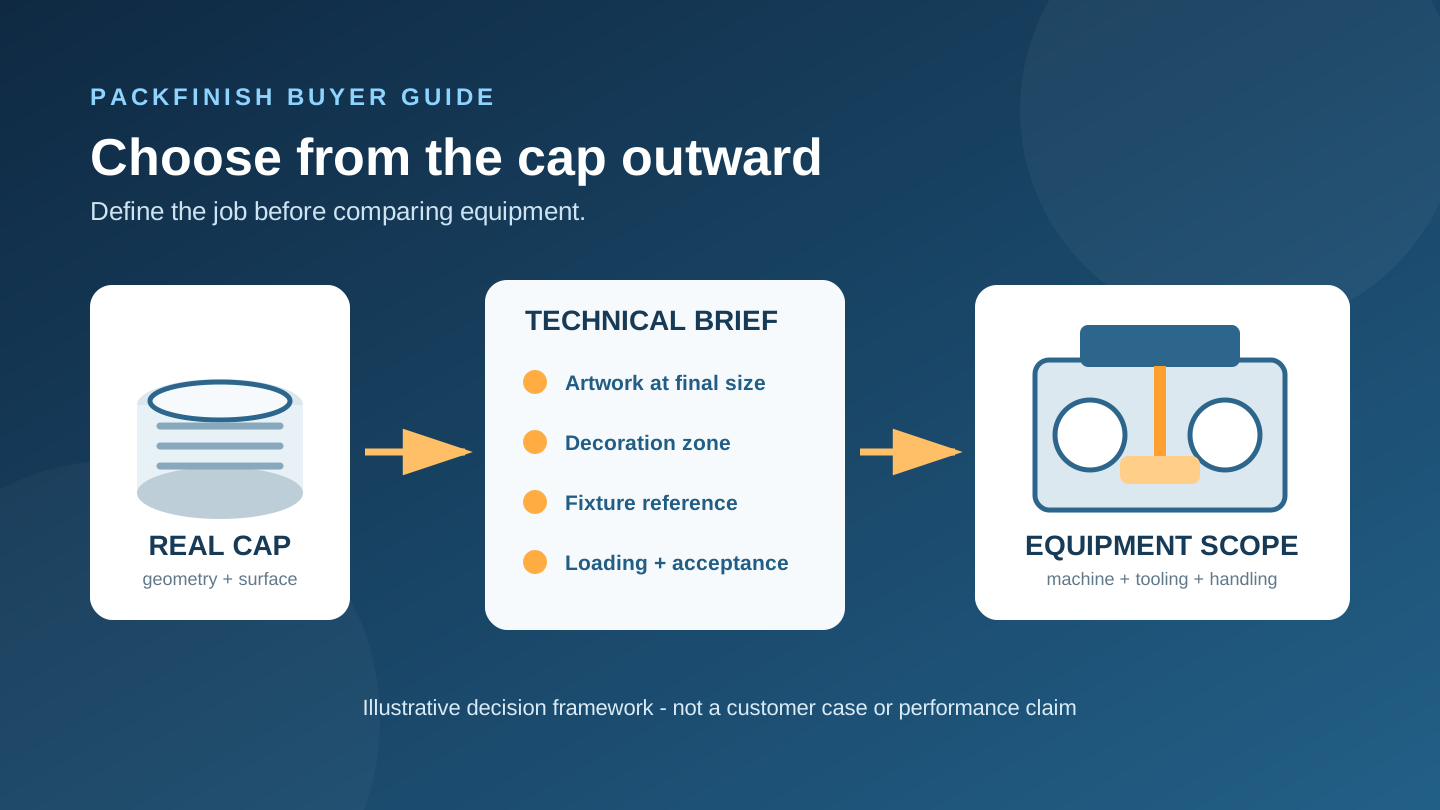
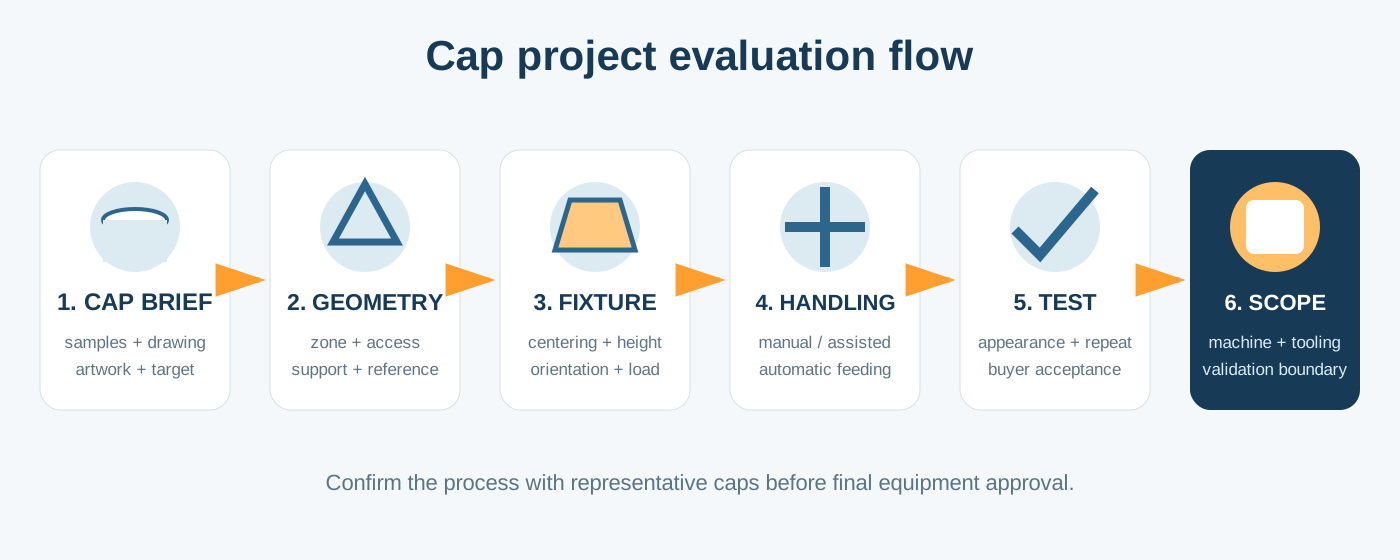
Start With a One-Page Cap Decoration Brief
Before comparing machine types, define the job in a compact technical brief. This prevents the quotation from being based on assumptions and helps the supplier separate standard equipment from custom tooling or feeding work.
Include these inputs:
- Closure material, color, coating, and surface treatment when known.
- Top, side, and bottom photos plus a dimensioned drawing.
- Target decoration zone and artwork at final physical size.
- Intended visual effect: metallic mark, single-color print, multicolor graphic, ring, or partial wraparound pattern.
- Expected batch size, changeover frequency, and production rhythm.
- Number of cap models and the dimensional range one machine should cover.
- Required alignment to molded features, seams, ribs, or existing print.
- Buyer-defined appearance, rubbing, handling, or filling-line checks.
- Available operator workflow, floor space, utilities, and preferred automation level.
Do not reduce the brief to “plastic cap, 30 mm diameter.” Diameter alone does not describe wall taper, top recess, ribbing, part stiffness, orientation features, or the exact area that must contact the decorating tool.
Confirm the Cap Geometry and Decoration Position
A bottle cap may have a flat top, recessed center, raised rim, tapered side, ribs, knurling, a shoulder, or a flexible wall. Each feature changes access and support.
| Decoration zone | Main handling question | Typical risk to check |
|---|---|---|
| Flat top | Can the cap be supported directly below the artwork? | Tilt, wall deformation, or uneven contact |
| Recessed top | Can the tool reach the artwork without touching the rim? | Incomplete edges or unwanted rim contact |
| Side wall | Can the cap rotate or move through a controlled contact path? | Slippage, taper mismatch, or drifting registration |
| Rim or narrow edge | Can height and pressure be held across a small area? | Broken lines or inconsistent transfer |
| Partial wraparound area | Can the cap be oriented before the decorating cycle? | Artwork start/end mismatch |
| Ribbed or interrupted area | Is the artwork compatible with the changing surface? | Missing transfer across high and low points |
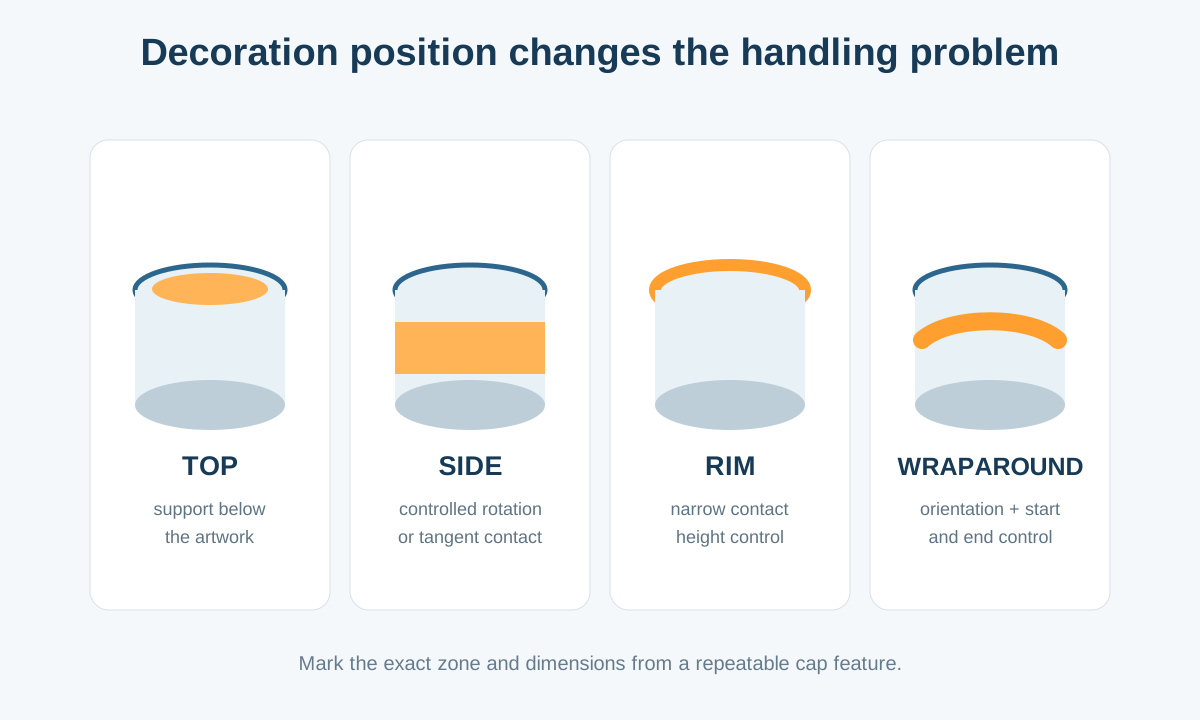
The decoration zone should be marked on the drawing with dimensions from a repeatable cap feature. A visual mockup is useful, but a dimensioned location is better for fixture, tool, and registration planning.
For a broader comparison of vertical contact, controlled rotation, and changing-radius contact paths, review how product geometry changes hot stamping machine structure.
If the process itself is still undecided, use the PackFinish comparison of bottle cap hot stamping and heat transfer. That guide addresses process choice; this article focuses on the machine brief, positioning, loading, and production-fit questions that follow.
Match the Artwork to the Contact Method
Artwork affects tooling and machine motion. A small metallic top logo, fine text, a broad solid area, a multicolor graphic, and a side band do not create the same contact or registration requirement.
Review these details before machine selection:
- Final artwork width and height, not only the logo file.
- Minimum line width and smallest characters that must remain legible.
- Solid coverage versus isolated details.
- Required distance from a rim, recess, rib, seam, or molded reference.
- Whether the design must register to an existing printed or molded feature.
- Whether multiple colors or processes will be applied in sequence.
For hot stamping, the foil, die, cap surface, support, heat, pressure, dwell time, and operating method form one system. Full-color or wider graphics may point toward another process. A process name should not be chosen only because it produced a similar-looking image on a different cap.
Treat the Fixture as Part of the Decorating Machine
Bottle caps are small and round, so the fixture or nest often determines whether the part can be loaded quickly and held repeatably. The fixture should locate the cap without damaging it, support the decoration area during contact, and allow practical removal after the cycle.
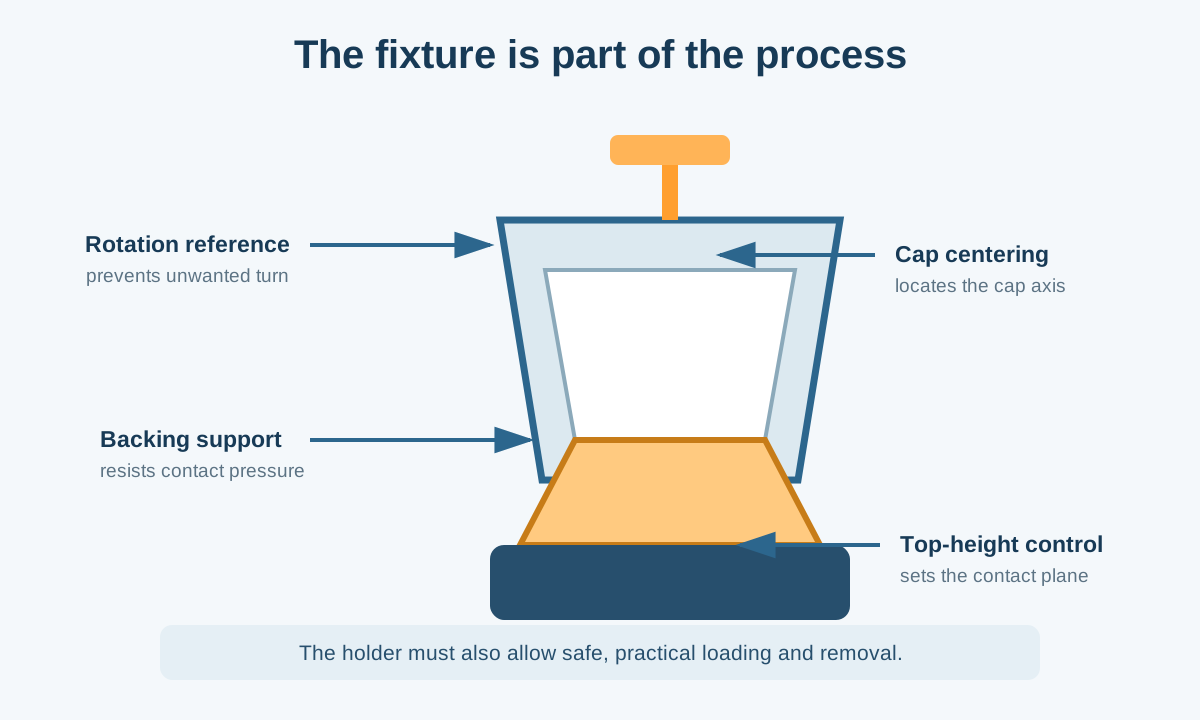
A fixture review should answer:
- What feature centers the cap?
- What surface controls top height?
- What prevents unwanted rotation?
- Is the wall supported behind the decoration zone?
- Can the operator load the cap in only one orientation?
- Can change parts be replaced without losing the approved position?
- Do several cap models need separate nests or an adjustable fixture?
The PackFinish custom fixture guide explains why tooling for shaped packaging is part of the process solution rather than an optional accessory. An adjustable fixture may cover a narrow family of similar closures, but forcing very different caps into one holder can increase setup time and reduce repeatability.
Choose Manual, Semi-Automatic, or Automatic Loading From the Real Workflow
The best automation level depends on cap consistency, orientation, batch pattern, changeover frequency, inspection method, and the stability of the decoration process.
| Production mode | Good starting point when | Questions before approval |
|---|---|---|
| Manual loading | Samples, small batches, frequent product changes, or early process development | Is loading safe, obvious, and repeatable? Can the operator inspect each cap? |
| Semi-automatic | The decoration cycle is stable but flexible hand loading is still useful | Does the fixture prevent misloading? Is operator pace compatible with the intended rhythm? |
| Automatic feeding | Cap dimensions, orientation, and process conditions are stable over repeat runs | Can caps separate, orient, feed, and reject reliably? What happens after a jam or changeover? |
| Continuous or rotary system | A validated high-volume application justifies dedicated handling | Are infeed, registration, decoration, inspection, and outfeed controlled as one line? |
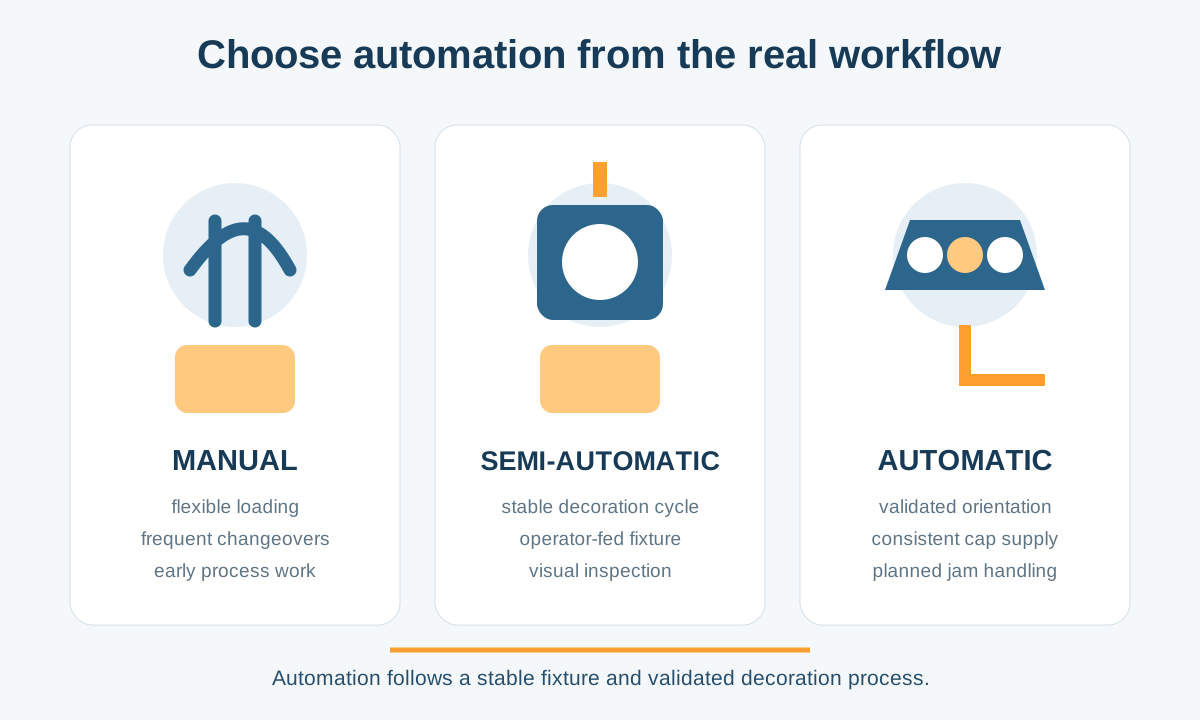
Automatic feeding does not repair an unstable fixture or an unproven decoration process. Before investing in a dedicated feeder, confirm that production caps are consistent enough to separate and orient, and that the accepted process window is repeatable.
For a current enclosed-line example, see PackFinish's fully automatic bottle cap hot stamping machine development update, which covers conveying, positioning, tooling, controls, and commissioning inputs without publishing unverified cycle-time claims.
When several cap models share one line, document the change parts, adjustment points, reference settings, and first-piece approval procedure. Changeover time can matter as much as nominal cycle speed in short or mixed batches.
Use Real Caps to Confirm Material and Surface Response
Material names are useful inputs, but they do not confirm decoration compatibility. Resin grade, colorant, recycled content, molding condition, coating, paint, surface treatment, and storage history can change adhesion and appearance.
For a representative test, send caps from the intended supplier and production condition. The PackFinish sample preparation guide explains how to prepare materials, artwork, and acceptance information for a machinery trial.
Check more than one visually acceptable sample. A useful evaluation considers:
- Adhesion or transfer completeness across the approved area.
- Edge definition and small-detail clarity.
- Registration to the specified cap feature.
- Gloss change, dents, distortion, or other heat and pressure marks.
- Consecutive-part repeatability.
- Buyer-defined rubbing, handling, moisture, transport, or filling-line checks.
One successful cap shows possible feasibility. It does not prove that future batches, consumables, settings, operators, or cap suppliers will behave identically.
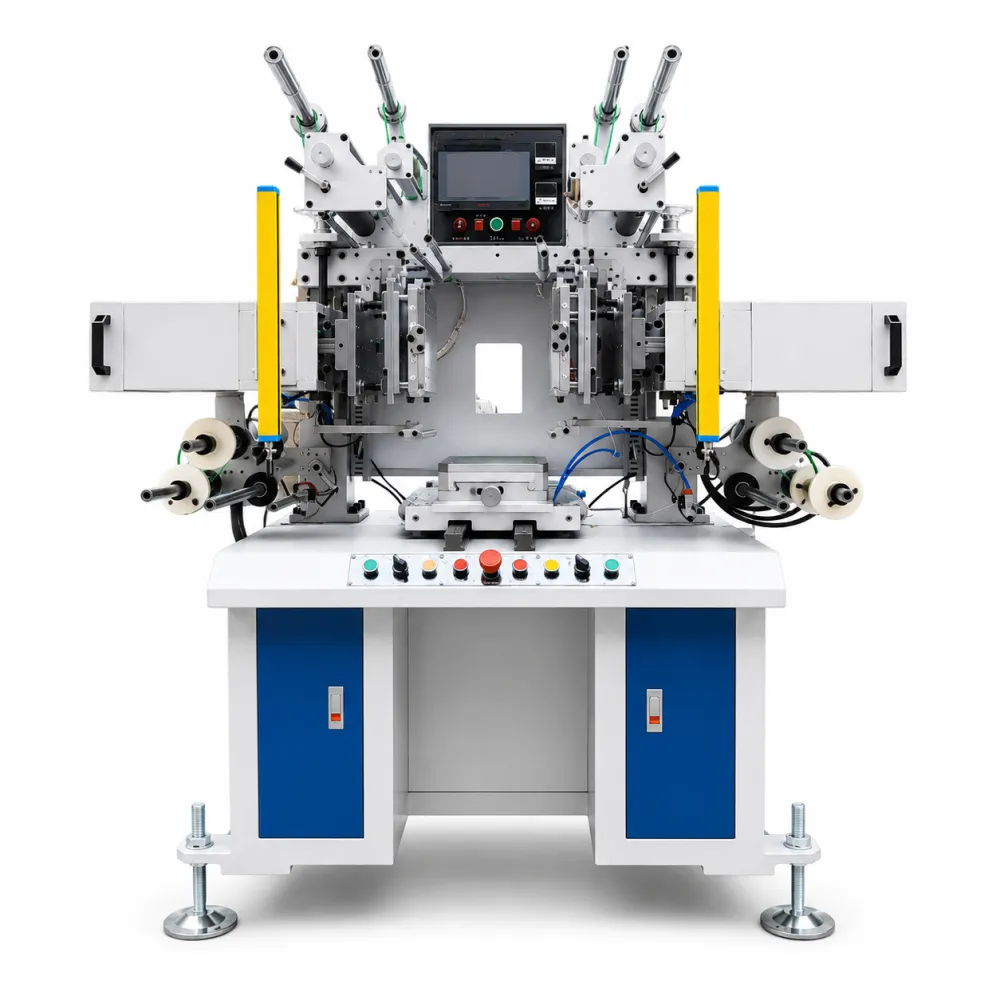
This machine category can support heat-transfer or hot-stamping applications. Cap tooling, decoration area, feeding method, and production setup are selected after sample review. See the current Heat Transfer and Hot Stamping Machine page for product details.
Ask for a Quotation That Separates the Machine, Tooling, and Validation Scope
A useful quotation should make the project boundary visible. Ask the supplier to identify which items are standard, which are custom, and which remain subject to sample approval.
The scope may need to distinguish:
- Base machine and applicable decorating process.
- Cap fixture, nest, rotary support, or change parts.
- Die, printing plate, screen, or other artwork tooling.
- Foil, transfer film, ink, or other trial consumables.
- Manual loading, assisted positioning, or feeding equipment.
- Sample-test quantity and buyer acceptance method.
- Supported cap range and required changeover parts.
- Utilities, voltage, operator access, guarding, and workshop constraints.
- Training, spare tooling, and documentation that are actually included.
Do not treat an estimated output as a guaranteed production rate. Actual throughput depends on cap loading, decoration area, cycle settings, inspection, rejects, changeovers, operator workflow, and the validated process window.
Information to Send PackFinish
Use this sequence for a faster technical review:
- Send production-representative cap samples and a dimensioned drawing.
- Mark the exact decoration zone and provide artwork at final size.
- State the desired effect and any approved reference sample.
- Describe batch size, cap variants, changeover pattern, and automation preference.
- Define how appearance, registration, and durability will be judged.
- Confirm destination, voltage, utilities, and workshop constraints.
Contact PackFinish with the cap brief. The machine, fixture, consumables, handling method, and sample-test plan can then be reviewed as one production system.
FAQ
Can one decorating machine handle different bottle caps?
Possibly, when the caps share a similar size range, geometry, decoration zone, and process. Separate nests, change parts, settings, or machine structures may be required when the caps differ substantially.
Is hot stamping suitable for every plastic closure?
No. Suitability depends on the surface, coating, geometry, foil, die contact, fixture support, heat, pressure, dwell time, and operating method. Test production-representative caps before approval.
Does side decoration require a different setup from top decoration?
Usually. A flat top commonly uses a vertical contact and supporting nest. A side or wraparound decoration may require controlled rotation, tangent pressure, orientation, and a different fixture or machine motion.
When should automatic cap feeding be considered?
Consider it after the cap can be oriented and decorated repeatably. The production volume, cap consistency, batch length, changeover frequency, reject handling, and line workflow should justify the additional dedicated equipment.
What is the minimum information needed for an initial review?
Send cap photos, material when known, key dimensions, the marked decoration position, artwork, target effect, expected batch pattern, and preferred automation level. Physical samples are still required before a reliable final recommendation.
Final Recommendation
Choose a bottle cap decorating solution by working from the real cap toward the machine. First define geometry, artwork, decoration position, fixture reference, loading method, and acceptance criteria. Then validate the process with representative samples. This order makes it easier to compare standard equipment, custom tooling, and automation without hiding unresolved production risks.