
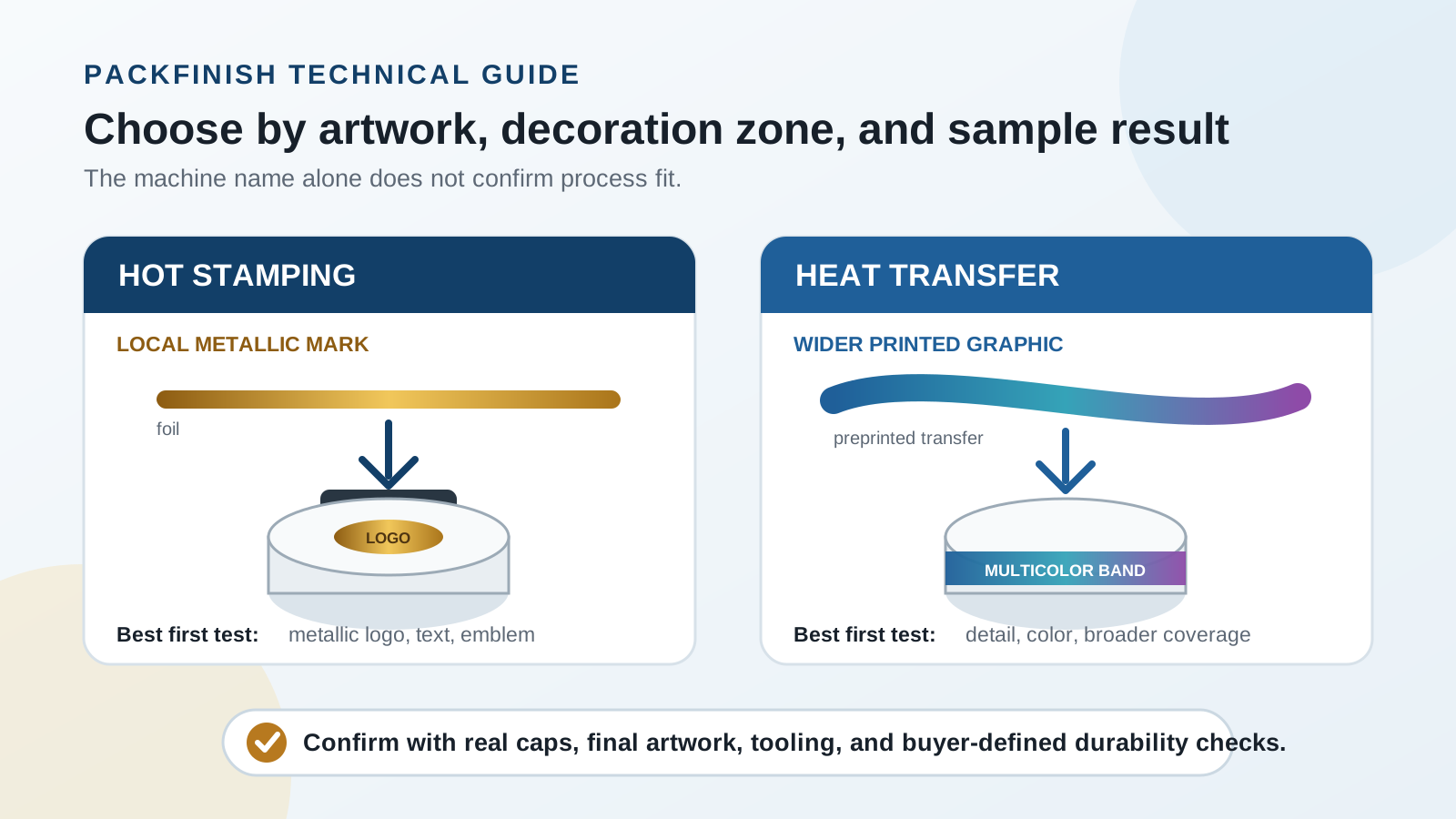
A bottle cap hot stamping machine is usually the better starting point for a precise metallic logo, short text, or a small premium highlight. Heat transfer is usually the stronger candidate for multicolor artwork or wider printed coverage. That distinction is useful, but it is not enough to select equipment.
Cap material, coating, top and side geometry, artwork, fixture support, production volume, and the required wear test can all change the answer. A cap that looks simple in a photo may have ribs, a recessed top, a soft wall, or a coating that changes how heat and pressure reach the decoration area. The safest decision comes from testing production-representative caps with the intended foil or transfer film.
The Short Decision: Bottle Cap Hot Stamping Machine or Heat Transfer?
Start with hot stamping when the design is mainly a local metallic mark and the cap can be supported consistently under the die. Start with heat transfer when the design carries several colors, fine printed detail, or a broader side graphic that comes from a preprinted transfer.
Use this as a screening rule, not a purchase specification:
- Choose hot stamping for a metallic logo, brand name, border, emblem, or other defined local area.
- Compare heat transfer for multicolor graphics, gradients, detailed printed artwork, or wider side decoration.
- Review both processes when the cap needs a metallic top logo and a printed side band.
- Stop and test before selecting a process when the surface is ribbed, sharply curved, recessed, soft, coated, or difficult to hold.
The existing PackFinish guide to hot stamping vs heat transfer for packaging explains the general process difference. This article narrows the decision to bottle caps and closures, where top-versus-side geometry and cap support often decide whether a promising sample can become a repeatable production process.
Hot Stamping and Heat Transfer Use Different Artwork Carriers
Both processes use controlled heat, pressure, contact, and part positioning, but the graphic reaches the cap in a different way.
| Decision point | Hot stamping | Heat transfer | What the buyer must verify |
|---|---|---|---|
| Artwork carrier | The die carries the image and transfers a selected foil layer | The preprinted transfer carries the graphic | Artwork size, registration datum, and cap orientation |
| Typical visual strength | Metallic, pigment, or special-effect local marks | Single- or multicolor printed graphics and broader decoration | Approved visual standard under real lighting |
| Common decoration zone | Cap top, local side mark, border, or band | Side graphic, wider printed area, or detailed image | Whether the tool can maintain contact across the full zone |
| Main tooling focus | Image-bearing die, foil path, cap nest, and pressure support | Transfer film path, compliant pad or roller, cap support, and film registration | Tooling matched to the actual cap geometry |
| Main sample risks | Incomplete release, weak adhesion, blurred edges, heat marks, or shifted position | Incomplete transfer, registration drift, wrinkles, edge lift, or surface marking | A repeatable test window, not only one acceptable sample |
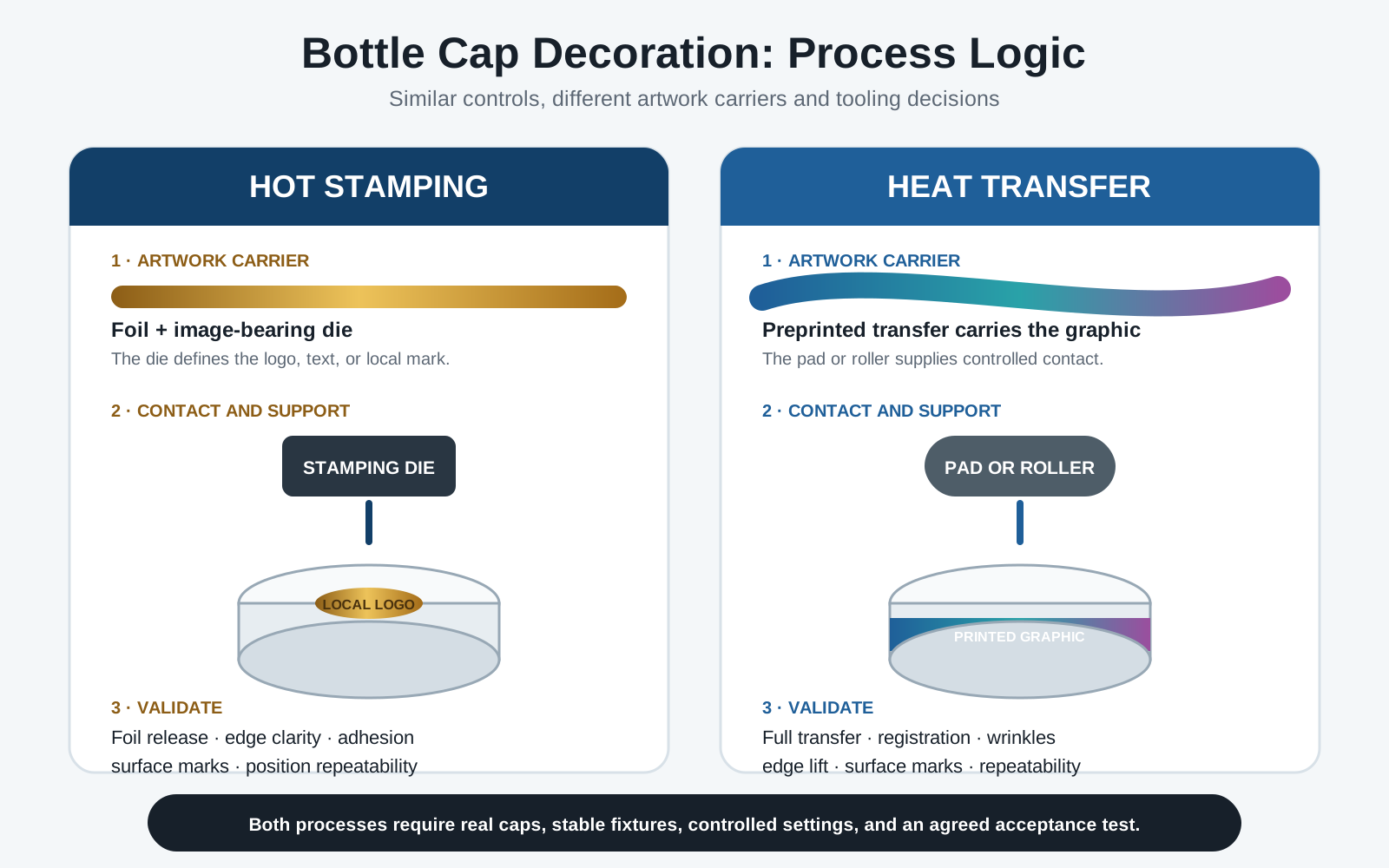
The visual distinction is important: heat transfer often uses a preprinted multicolor label, while hot stamping is commonly selected for metallic decoration. The die requirement also differs. In hot stamping, the die normally defines the graphic; in heat transfer, the image is carried by the transfer itself. Machine configuration still depends on the cap and the chosen consumables.
Cap Geometry Often Decides the Process Before Production Volume Does
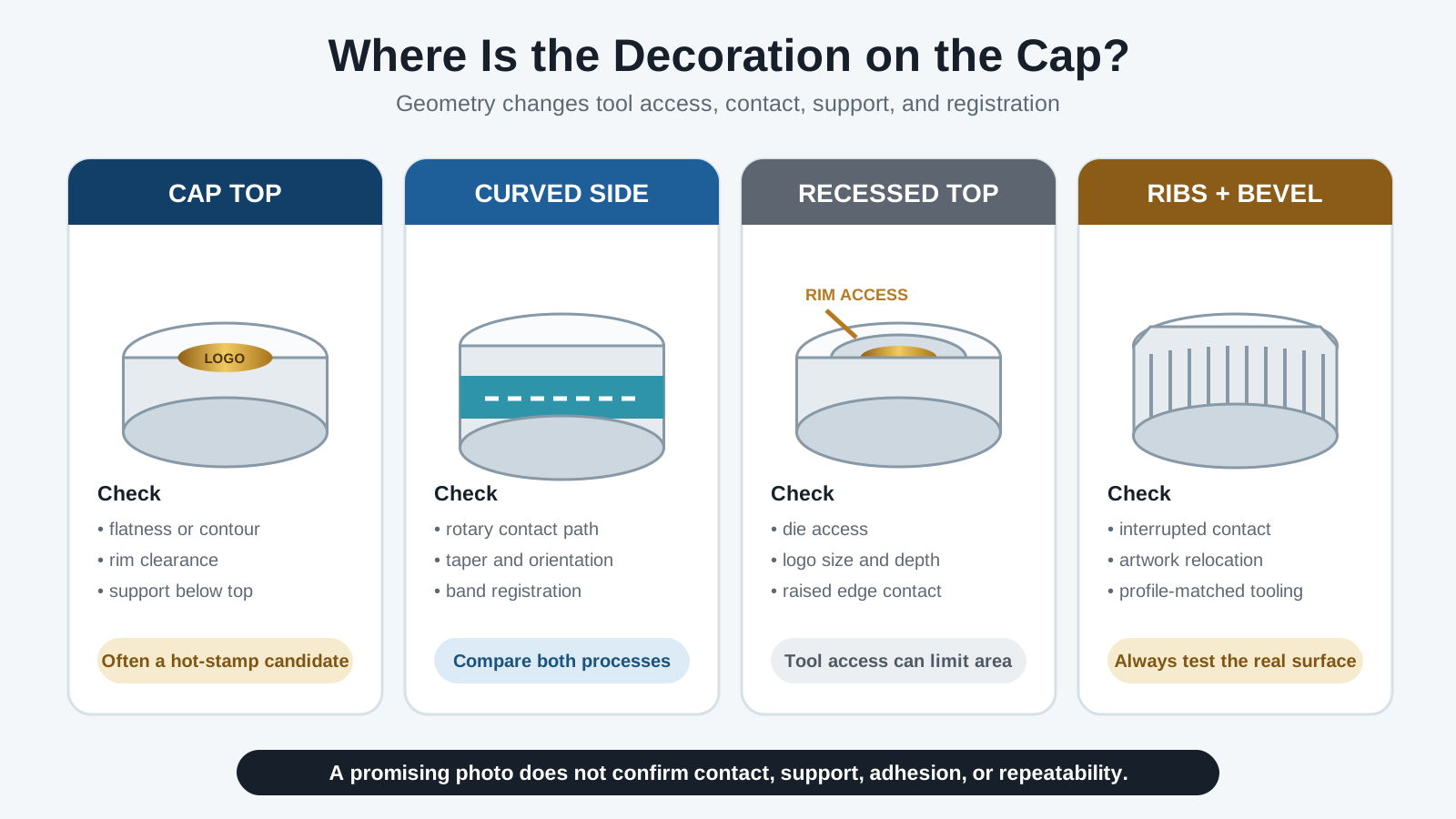
Bottle caps are not simply small cylinders. A closure may have a flat top, recessed center, raised rim, tapered side, ribs, knurling, bevels, shoulders, or a soft wall. Each feature changes the contact area and the way the cap must be supported.
Flat or slightly contoured cap tops
A top logo is often a practical hot-stamping application when the decoration area is accessible and the fixture supports the cap without distortion. Metallic logos, short text, and simple emblems are good candidates. A recessed center or raised rim can limit die access, so the drawing and a top-view photo should be checked against the real sample.
Curved cap sides
Side decoration usually needs a controlled rolling or peripheral contact method. The cap must rotate or move in a stable relationship with the foil or transfer film. A small local side mark may still suit hot stamping, while a wider multicolor band may point toward heat transfer. The correct direction depends on the available contact path, artwork width, taper, and registration requirement.
Ribs, knurling, bevels, and interrupted surfaces
Raised or recessed texture breaks uniform contact. A design that crosses ribs or a sharp shoulder may not transfer evenly with either process. Moving the artwork, reducing its width, changing the tool profile, or choosing a different decoration zone can be more practical than forcing the original artwork onto an unsuitable surface.
Material Names Alone Do Not Confirm Adhesion
Two caps described with the same general plastic name can behave differently because of resin grade, colorant, recycled content, molding condition, surface treatment, coating, paint, or storage history. PackFinish should therefore treat material information as an input to testing, not as proof of process compatibility.
For hot stamping, the foil release system and adhesive layer must match the cap surface and the intended process window. For heat transfer, the transfer construction and surface compatibility also need confirmation. In both cases, the buyer should define how the decoration will be judged after production. Appearance immediately after transfer is only the first check.
Useful acceptance questions include:
- Does the decoration adhere across the full approved area?
- Are edges and small details clear at the intended viewing distance?
- Does the cap show gloss change, dents, distortion, or other heat and pressure marks?
- Does registration remain within the buyer's approved visual tolerance?
- What rubbing, moisture, handling, filling-line, or transport checks represent the cap's real use?
Do not copy an arbitrary abrasion method from another product. Agree on the test method, conditioning time, and pass/fail reference before equipment approval.
The Machine, Fixture, and Consumables Must Be Evaluated as One System
A bottle cap is small, but repeatable positioning can be demanding. The fixture or nest must hold the part at the correct height and angle, prevent unwanted rotation, and support the decoration area during contact. This is especially important for thin walls, tapered sides, and artwork that must align with a molded feature.
The PackFinish custom fixture guide explains why a stable nest is part of the decoration solution rather than an optional accessory. The selected machine also needs a suitable foil or film path, heating method, contact tool, loading method, and operator access for the real cap.
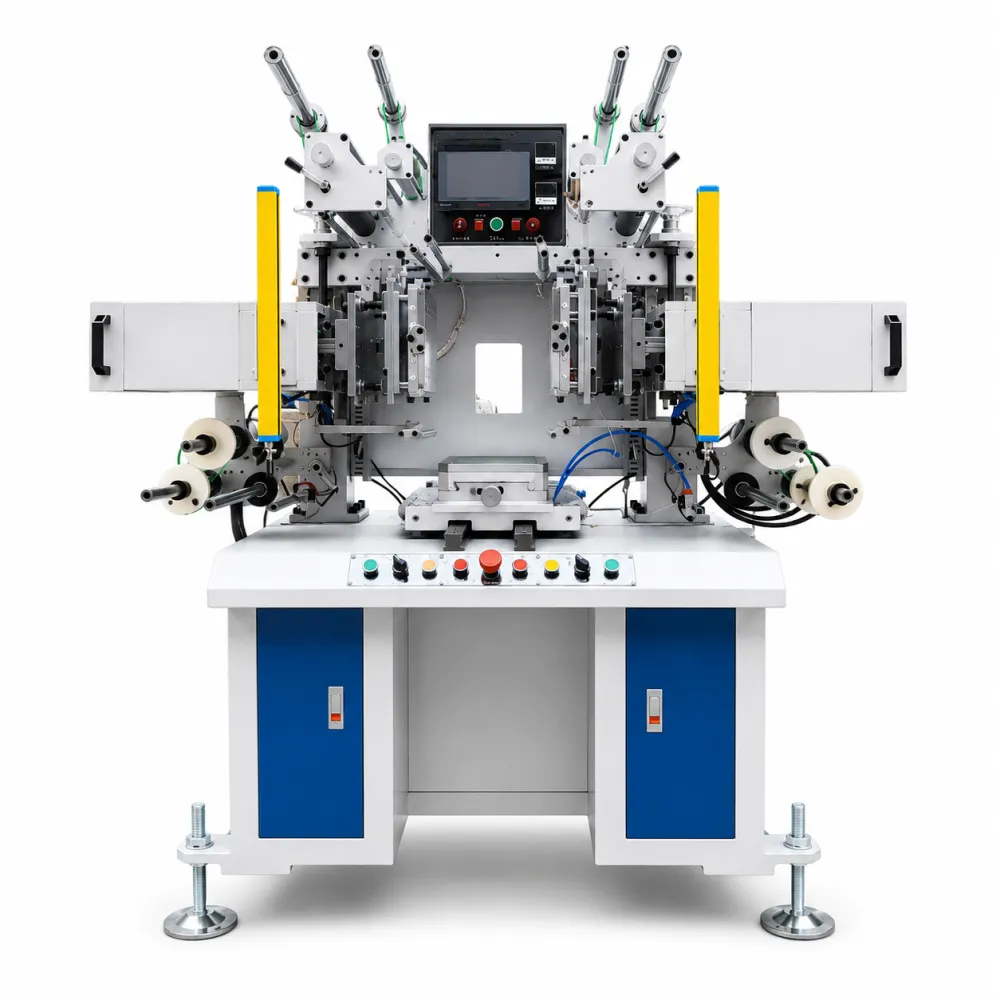
This machine category can support heat-transfer or hot-stamping applications. Cap tooling, decoration area, feeding method, and production setup are selected after sample review. See the Heat Transfer & Hot Stamping Machine page for product details.
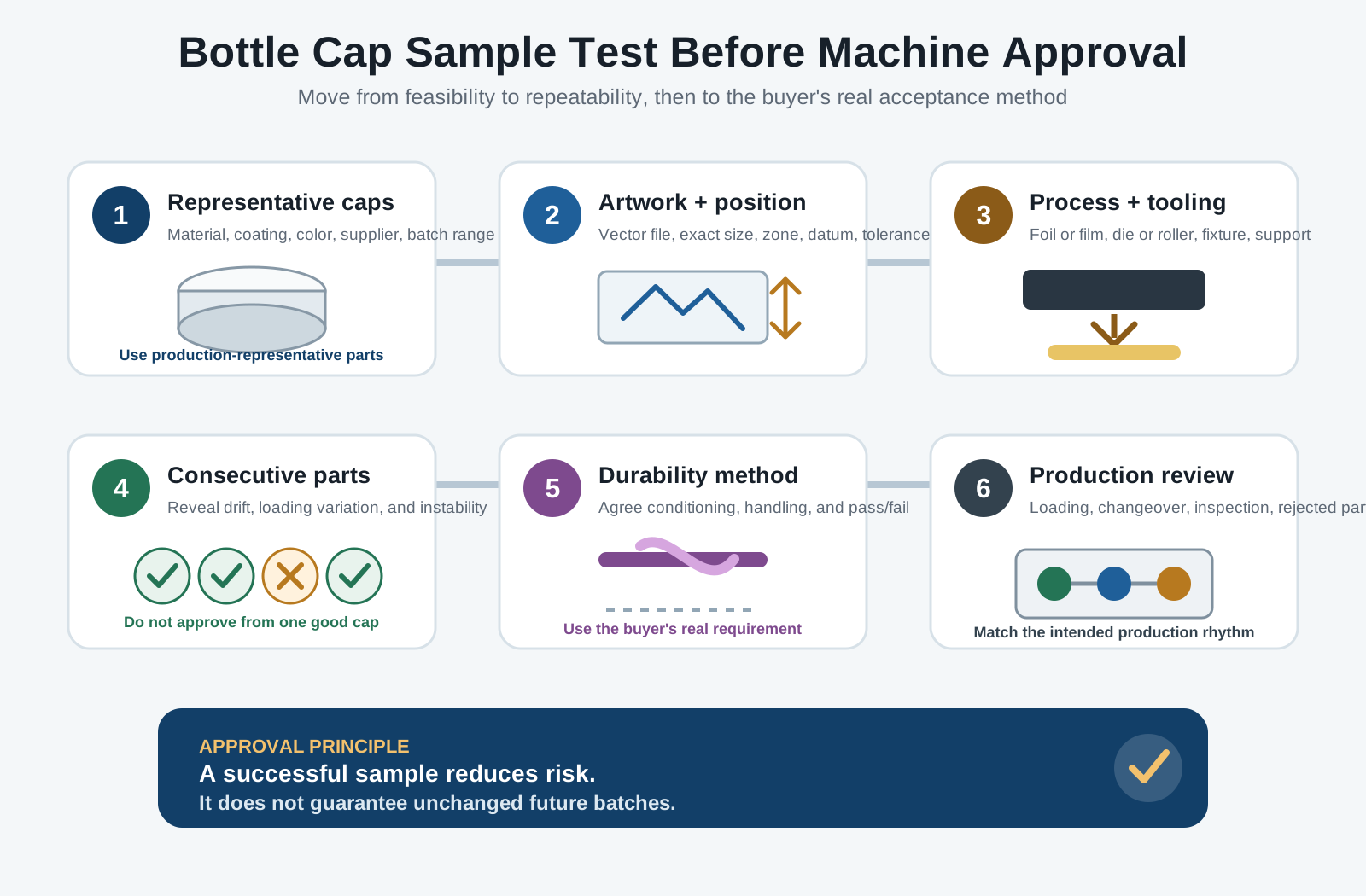
Use a Three-Stage Sample Test Before Machine Approval
The PackFinish sample preparation guide covers the information needed for a machinery test. For bottle-cap projects, organize the trial in three stages.
1. Feasibility screening
Use real caps, final artwork dimensions, and candidate foil or transfer film to check whether the target zone can be decorated without obvious surface damage. This stage identifies basic incompatibility and may lead to an artwork or decoration-zone change.
2. Process-window and repeatability check
Do not approve a process from one good cap. Run enough consecutive parts to reveal loading variation, temperature drift, registration movement, incomplete transfer, and operator sensitivity. Record the tooling, consumable batch, machine settings, and cap batch used for the test.
3. Buyer-defined durability and production review
Condition the samples as agreed, then apply the buyer's handling or wear checks. Review changeover, cap loading, rejected-part handling, inspection method, and the intended production rhythm. A successful lab sample reduces risk; it does not guarantee future batches if materials, tooling, settings, or operating methods change.
If defects appear, use the PackFinish guide to missing foil, blurred edges, poor adhesion, and positioning problems to separate material, consumable, tooling, and process variables.
Can One Bottle Cap Use Both Processes?
Yes, if the cap design and production sequence support it. A closure might use hot stamping for a metallic top emblem and heat transfer for a multicolor side band. The combined route should be treated as two controlled processes, not as one automatic machine feature.
Before choosing a combined route, check:
- Whether the first decoration is affected by the heat, pressure, or contact of the second process.
- Whether the cap can be referenced to the same molded feature for both operations.
- Whether handling between operations can scratch or contaminate the first decoration.
- Whether the extra tooling, work-in-process, inspection, and changeover are justified by the visual result.
Information to Send for a Bottle Cap Decoration Recommendation
Provide a compact technical brief instead of only asking for a machine price:
- Cap material, color, coating, and surface treatment when known.
- Dimensioned drawing plus top, side, and bottom photos.
- Production-representative blank caps from the intended supplier and batch range.
- Artwork in vector format when available, with exact size and decoration position.
- Target effect: metallic logo, single-color mark, multicolor graphic, band, or combined decoration.
- Approved visual sample or clear acceptance image, if one exists.
- Expected batch quantity and production rhythm without turning an estimate into a guaranteed capacity.
- Registration, appearance, and buyer-defined durability requirements.
- Destination country, voltage, workshop constraints, and preferred loading or automation level.
For a structured equipment inquiry, use the PackFinish guide to prepare a bottle cap decoration machine brief, including the decoration zone, fixture reference, loading method, cap variants, and quotation scope.
Buyers evaluating a dedicated line can also review PackFinish's automatic bottle cap hot stamping machine development update for the cap-handling, positioning, foil-stamping, HMI, and acceptance-test questions that need to be defined before final machine release.
Contact PackFinish with the samples and brief so the process, fixture, consumables, and machine direction can be reviewed together.
FAQ
Is hot stamping suitable for every plastic bottle cap?
No. Suitability depends on the cap surface, geometry, coating, foil compatibility, die contact, fixture support, heat, pressure, and dwell time. Real sample testing is needed before the process and machine configuration are confirmed.
Is heat transfer always better for bottle-cap side decoration?
No. Heat transfer is a strong candidate for multicolor or wider side graphics, but cap taper, ribs, artwork width, film construction, contact method, and registration can still make the application difficult. A small local side mark may suit hot stamping.
What is the main process difference for the artwork?
In hot stamping, the die normally carries the image that is transferred from foil. In heat transfer, the image is carried by the preprinted transfer. That difference affects tooling, registration, and changeover planning.
Can PackFinish select a machine from cap photos only?
Photos and drawings support an initial review, but they cannot confirm surface response, cap stiffness, adhesion, or repeatability. Production-representative caps, artwork, the target decoration, and production requirements are needed for a reliable recommendation.
Does one successful sample confirm mass-production quality?
No. A good first sample shows that the process may be feasible. Approval should also consider consecutive-part repeatability, cap and consumable variation, agreed durability checks, operator loading, inspection, and the intended production rhythm.
Final Recommendation
Choose the decoration process by the cap and the artwork, not by the machine name alone. Hot stamping is usually the first process to test for a precise metallic logo or local premium mark. Heat transfer is usually the first process to compare for multicolor artwork or broader printed coverage. When the cap geometry, coating, or acceptance standard is uncertain, test both directions with real samples before confirming equipment and tooling.