
Product development update
A new enclosed platform for automatic cap handling and foil stamping
PackFinish is developing a new fully automatic bottle cap hot stamping machine for packaging and closure-decoration projects that need more integrated cap handling, positioning, foil stamping, and operator control.
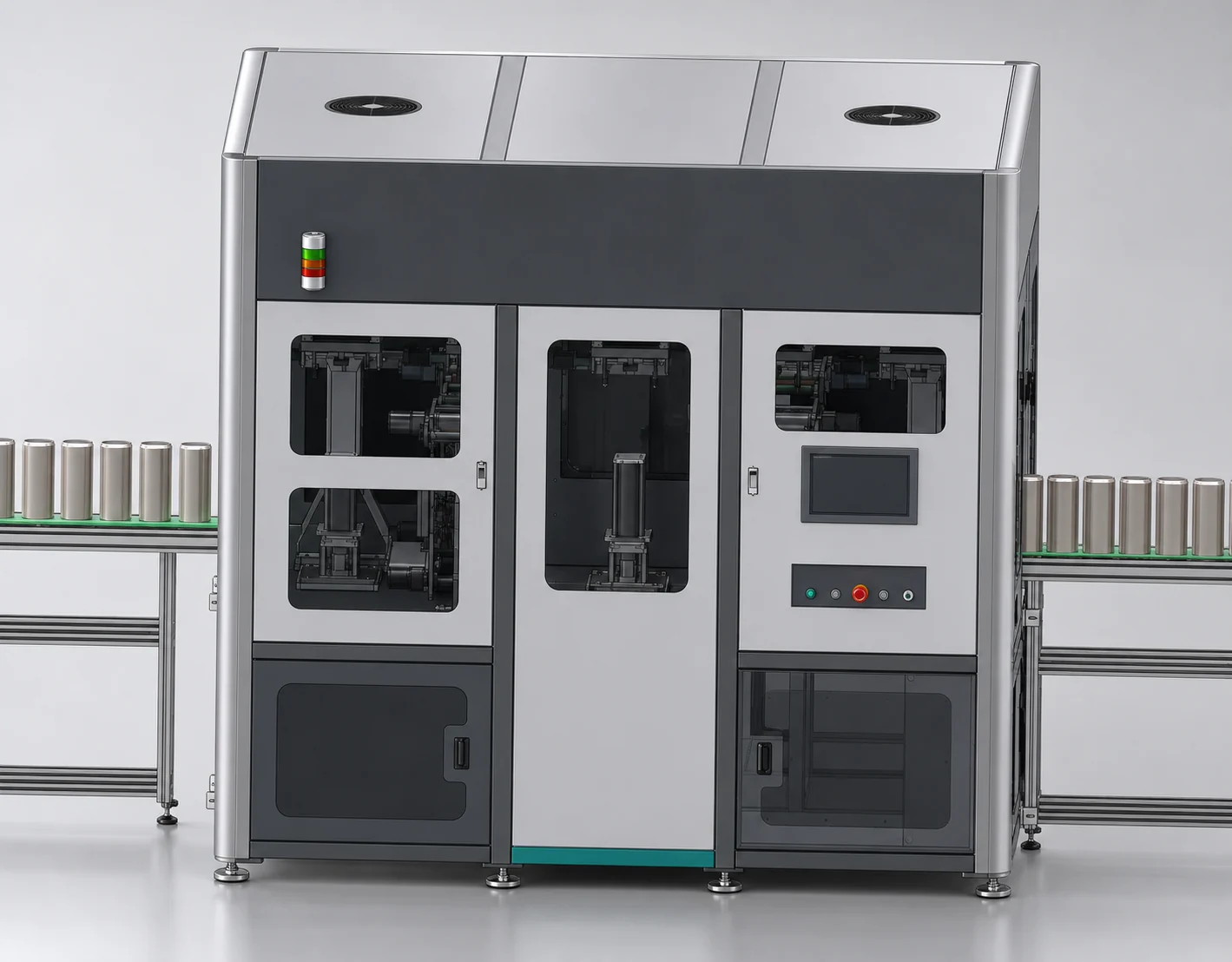
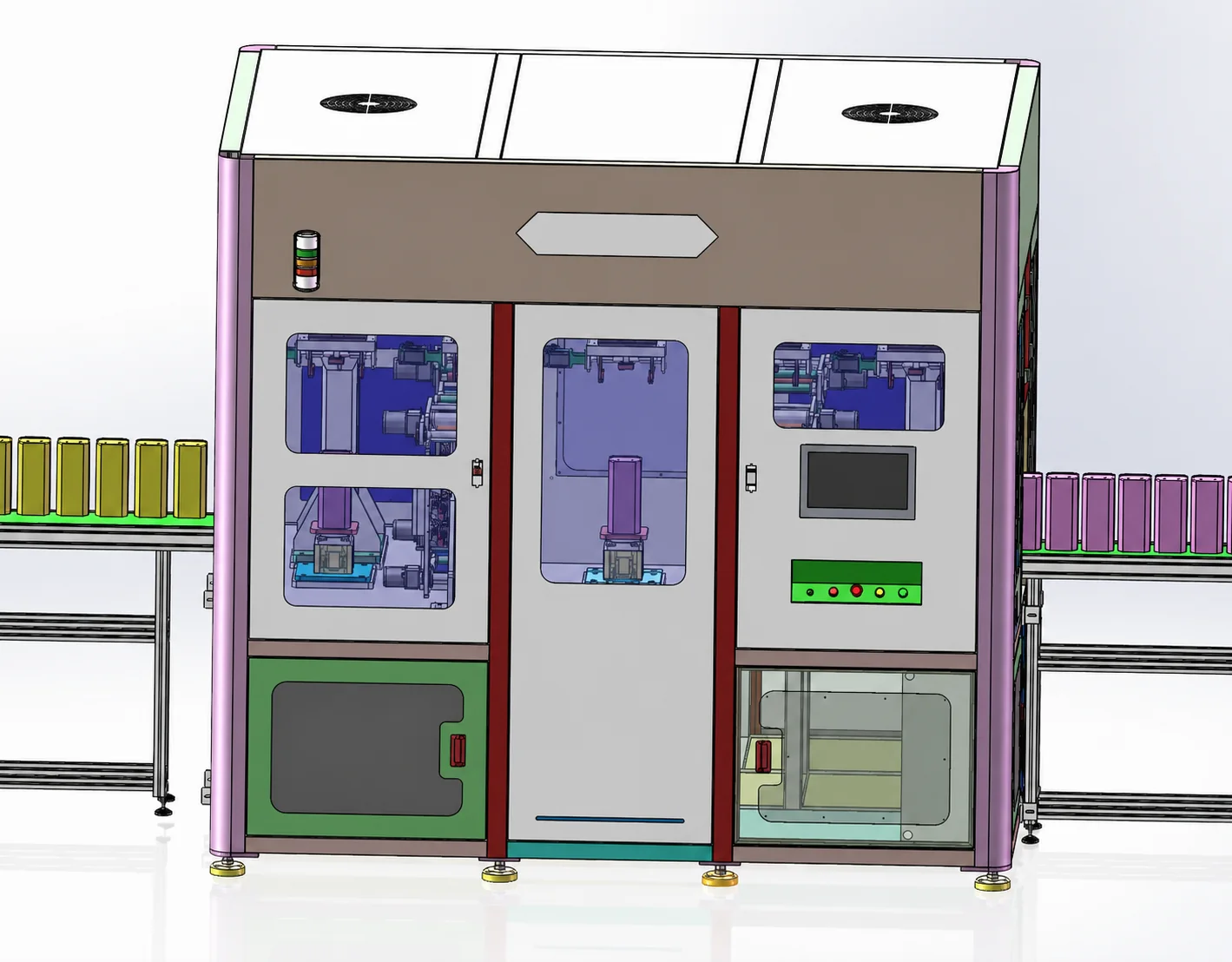
The project has moved from design into frame fabrication, machining, and enclosure construction. The current engineering concept shows a large enclosed machine platform with left and right conveyors, three front access zones, observation windows, a dedicated HMI and control area, and a heavy welded base with machined mounting surfaces.
The machine is still under development. Final production speed, compatible cap dimensions, electrical configuration, tooling, decoration position, feeding method, inspection options, and acceptance criteria will be confirmed only after the target bottle cap, artwork, foil, and production requirements have been reviewed and tested.
Why develop a fully automatic bottle cap hot stamping machine?
Bottle caps and plastic closures look simple, but automatic decoration requires several processes to work together. A stable result depends not only on the hot stamping unit. The cap must also be separated, oriented, transported, located, supported, stamped, released, and discharged without damaging the part or shifting the artwork position.
For repeated closure orders, a fully automatic bottle cap hot stamping machine can reduce the manual movement between these steps. It can also provide a platform for more consistent cap positioning, foil indexing, process timing, operator access, and production monitoring.
This type of bottle cap foil stamping machine is most relevant when:
- the cap design and decoration area are stable enough for dedicated tooling;
- the order volume supports automatic feeding and changeover work;
- manual loading has become a production constraint;
- repeatability, handling consistency, or operator workload needs improvement;
- the buyer can provide real caps, vector artwork, target foil, and acceptance samples for testing.
Automation is not automatically the right answer for every closure. Highly variable products, frequent artwork changes, small sample runs, unstable incoming dimensions, or unconfirmed materials may be better evaluated on a manual or semi-automatic platform first. PackFinish's bottle cap decorating machine guide explains the earlier process-selection questions.
What the current engineering structure shows
The current design and fabrication images provide a clear view of the machine architecture without requiring unsupported performance claims.
Enclosed machine platform
The finished concept uses a full-height enclosure around the working area. Front doors and observation windows provide access to multiple internal zones while keeping moving components separated from the normal operator area. The final safety interlock, guarding standard, extraction, and electrical layout still need to be confirmed during engineering review.
Left-to-right conveying
The front design shows conveyors entering and leaving the enclosure. In an automatic cap hot stamping line, the final handling sequence may include cap feeding, spacing, orientation, indexing, fixture loading, stamping, transfer, inspection, and discharge. The exact sequence for this machine will depend on the cap geometry and the approved production scope.
Three front service and process zones
The three-part front layout supports separation between internal mechanisms and maintenance access. This can help engineering teams organize cap handling, hot stamping, tooling access, electrical components, and discharge functions. It should not be interpreted as a fixed number of stamping stations until the final configuration is released.
HMI and operator controls
The right-front control area is designed for a touch-screen HMI and physical controls. A production-ready PLC/HMI control system may manage operating modes, alarms, temperature control, foil advance, sensor feedback, timing, and maintenance prompts. The controller brand and software functions remain to be confirmed.
Heavy base and machined mounting surfaces
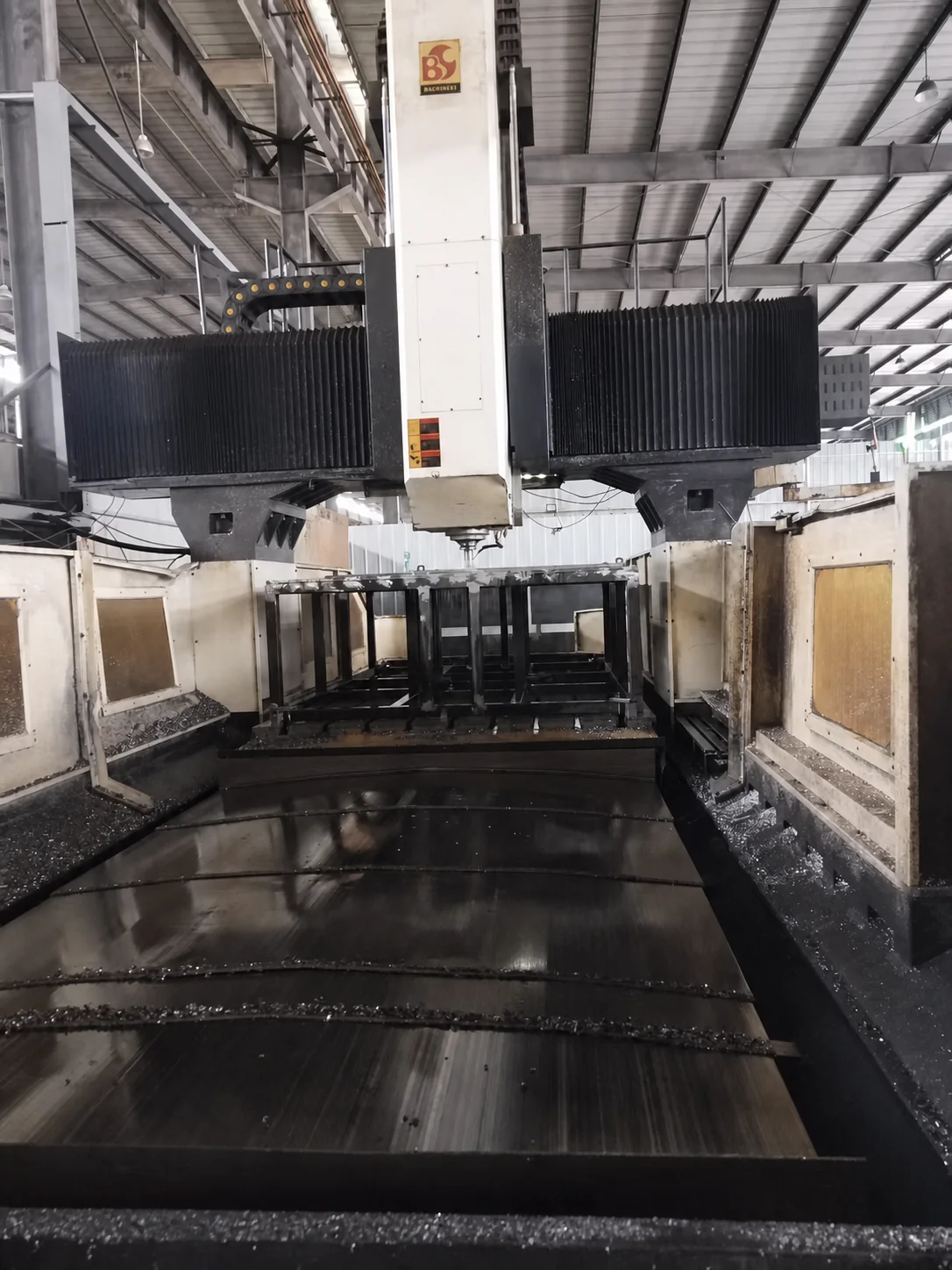
The fabrication images show a welded steel base and a large machined platform. These elements provide the structural foundation for locating the internal mechanism. During commissioning, alignment, frame stiffness, mounting datums, vibration, and access for adjustment should be checked together with the actual stamping process.
Technical keywords that matter in bottle cap hot stamping automation
Buyers often search for an automatic bottle cap hot stamping machine, plastic cap hot stamping machine, cap foil stamping machine, closure decoration machine, or automatic cap printing machine. These terms can describe very different equipment. The correct configuration depends on the decoration process and the cap itself. Buyers comparing foil stamping with transferred multicolor graphics can also review bottle cap hot stamping versus heat transfer.
| Engineering area | Technical terms to define | Why it matters |
|---|---|---|
| Cap and surface | Resin, coating, molded texture, surface energy, heat response | Material names alone do not confirm foil adhesion or cosmetic quality. |
| Geometry | Diameter, height, wall thickness, top profile, sidewall, ribs, threads | The part shape determines orientation, support, access, and contact motion. |
| Decoration | Cap top, sidewall, partial circumference, artwork size, registration | Different decoration zones require different dies, fixtures, and motion. |
| Hot stamping process | Foil, die, temperature, pressure, dwell time, release, contact path | A stable process window is more useful than one successful sample. |
| Material handling | Feeding, orientation, accumulation, conveyor spacing, indexing, anti-jam logic | Automatic stamping cannot remain stable if caps arrive inconsistently. |
| Controls and quality | PLC, HMI, sensors, alarms, interlocks, inspection, reject criteria | Each option needs a defined function and production acceptance method. |
These keywords should lead to engineering questions, not automatic claims. For example, servo positioning is useful only when the selected motion and tooling need it. Vision inspection is useful only when the defect definition, lighting, camera view, and reject logic are specified. "High-speed bottle cap hot stamping" has no practical meaning until speed is measured with the actual cap, foil, artwork, feeding method, and acceptance standard.
A practical automatic cap hot stamping workflow
- Cap loading and separation: caps enter the feeding system without excessive scratching or nesting.
- Orientation and spacing: each cap reaches the next station in a controlled direction and pitch.
- Positioning and support: a fixture, mandrel, nest, or other locating method supports the decoration area.
- Foil stamping: heat, pressure, dwell time, foil advance, and contact motion are controlled for the approved artwork.
- Release and transfer: the cap leaves the tooling without sticking, deformation, or damage.
- Inspection and discharge: the system moves accepted parts to the outfeed and handles rejected or uncertain parts according to the agreed scope.
Not every machine needs every function in this list. The production line should be defined from the sample and output requirement rather than from a long automation checklist.
Process development before final machine release
The hot stamping result should be developed before the buyer and engineering team lock the final machine specification.
First, test the real bottle cap material and surface. PP, PE, ABS, coated plastic, painted parts, and metallized finishes can respond differently to heat, pressure, foil release, and pretreatment. Material names alone are not enough because additives, coatings, molding conditions, and surface texture can change adhesion.
Second, confirm the decoration position and motion. A cap-top logo uses a different contact strategy from sidewall hot stamping. A cylindrical side may require rotary or rolling contact, while a top surface may use a more direct pressing motion. Compound curves, ribs, tapers, or interrupted surfaces require additional evaluation.
Third, build a stable hot stamping process window. The goal is not one successful sample at one setting. The goal is a practical range of temperature, pressure, dwell time, foil behavior, and fixture support that continues to produce acceptable parts.
Fourth, validate positioning repeatability and registration accuracy. The fixture datum, cap geometry, feeding orientation, part-to-part variation, and tooling alignment all influence where the artwork lands.
Finally, define a production-representative acceptance run. The test should use the agreed cap, foil, artwork, tooling, handling sequence, target rate, inspection method, and defect limit. Only then can the team confirm cycle time, changeover method, operator tasks, maintenance access, and final machine scope.
What buyers should send for evaluation
- physical cap samples from normal production;
- cap material, dimensions, drawings, and known dimensional tolerances;
- clear photos of the cap top, side, inside, thread, and decoration area;
- vector artwork with the exact stamping size and position;
- desired foil color, finish, and any approved foil reference;
- current manual or semi-automatic process information, if available;
- expected hourly or shift output, order size, and changeover frequency;
- acceptable and unacceptable sample examples;
- preferred feeding method, upstream and downstream connections, and available floor space;
- plant voltage, frequency, compressed-air conditions, and applicable safety requirements.
This information helps determine whether the project should use top hot stamping, side hot stamping, rotary contact, a compliant tool, a dedicated cap fixture, automatic feeding, orientation control, inspection, or another configuration.
Current project status
The new machine has reached the visible frame fabrication, platform machining, and enclosure-construction stages. The finished-product rendering presents the intended product direction, while the engineering images record the current build architecture.
PackFinish will continue reviewing tooling, handling, controls, guarding, process settings, and commissioning requirements before final specifications are released. Buyers with a stable bottle cap project can contact PackFinish with samples and production details for an application review.
Frequently asked questions
Is the fully automatic bottle cap hot stamping machine ready for standard orders?
The project is under development. Final specifications, lead time, available options, and production acceptance criteria must be confirmed against the buyer's cap, artwork, foil, target output, and plant requirements.
Can the machine hot stamp both the top and side of a bottle cap?
Top and side decoration require different tooling, support, and motion. The correct direction depends on cap geometry, decoration area, foil, artwork, and sample results. Do not assume both positions are included in one standard configuration.
What is the production speed?
No fixed speed is published at this stage. A meaningful cycle-time target must include cap feeding, orientation, positioning, stamping, transfer, inspection scope, and the agreed defect standard using real production samples.
Which plastic caps can be hot stamped?
Many plastic closures can be evaluated, but material name alone does not confirm suitability. The actual molded surface, coating, additives, heat response, foil system, tooling, and required adhesion should be tested before the machine is finalized.