
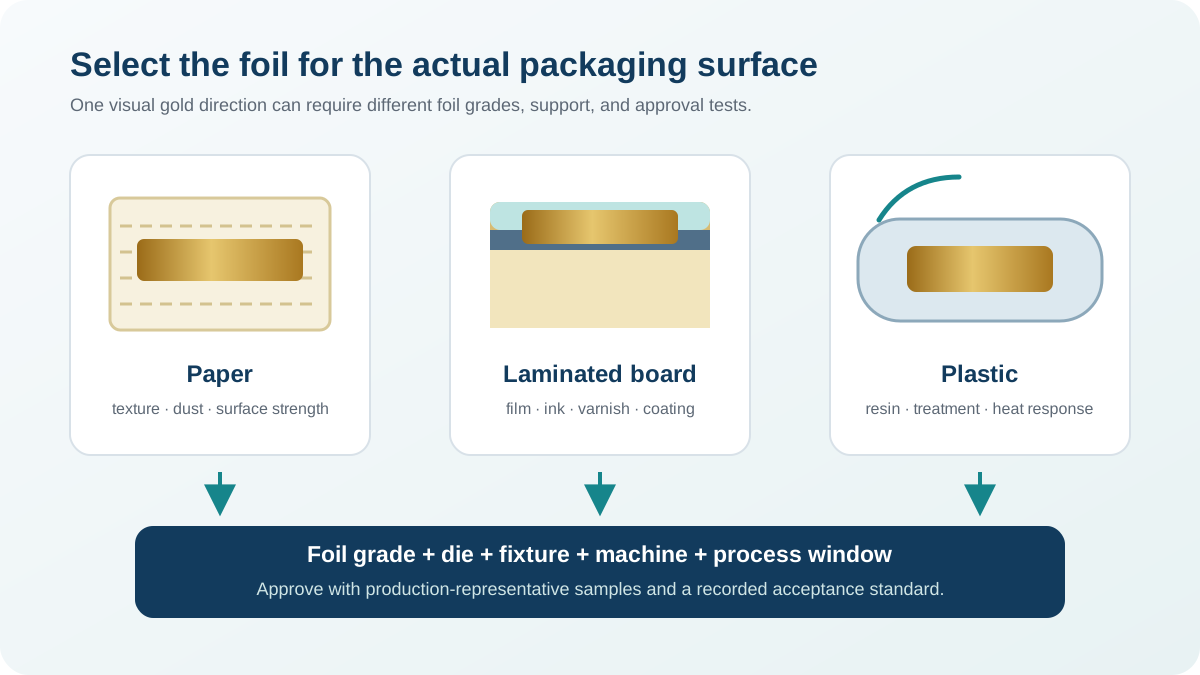
Selecting hot stamping foil for packaging is not simply a color decision. Two gold foils can look almost identical on the roll and still release, cover, and adhere differently on paper, laminated board, printed coatings, and plastic.
The result comes from the complete stamping system: foil, top surface, artwork, die, fixture, machine, temperature, pressure, dwell time, positioning, and operating method. Approve that combination on production-representative samples. A color card or photograph can start the discussion, but it cannot confirm transfer quality or batch repeatability.
If material eligibility is still unclear, begin with PackFinish's guide to testing packaging materials before equipment and foil selection. Then use the process below to narrow the foil grade and approval plan.
The Same Gold Appearance Does Not Mean the Same Foil Performance
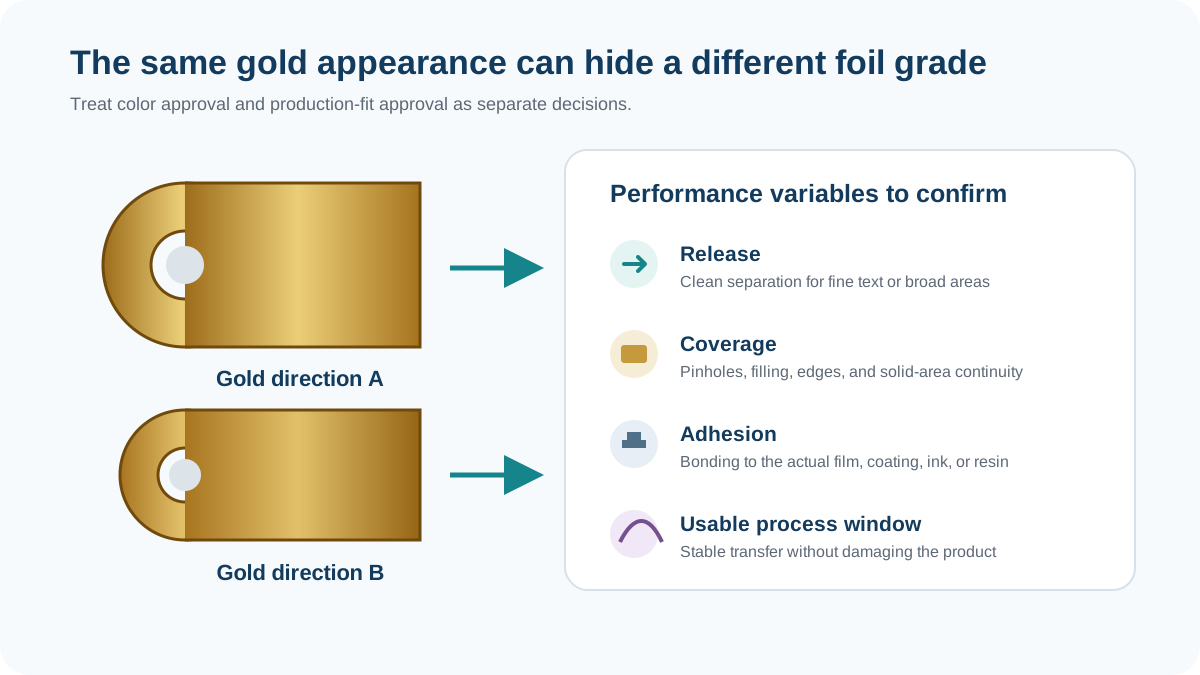
Hot stamping foil uses a carrier with functional transfer layers. The visible metallic or pigment layer creates much of the appearance, while the release and bonding behavior influence how the image separates from the carrier and attaches to the product.
Foil series can be optimized for fine text, medium coverage, broad solids, particular coatings, or particular plastics. Supplier literature makes the distinction visible: the Crown Roll Leaf product recommendation chart separates grades by coverage range and application surface, while UNIVACCO's 717 foil page identifies specific paper, varnish, plastic, and laminate applications and treats swatches as selection guidance. These documents are useful screening inputs, not approval of another supplier's product or of a PackFinish process.
For purchasing and production control, record the supplier, series or grade, color reference, and roll or batch identification when available. A color name such as “bright gold” is not a repeatable production specification.
What to Confirm Before Selecting Hot Stamping Foil for Packaging
| Information to confirm | Why it changes the foil decision |
|---|---|
| Substrate and construction | Coated paper, textured paper, laminated board, and different plastics present different bonding surfaces and heat responses. |
| Actual top surface | Ink, varnish, coating, lamination film, paint, or treatment can be the layer that contacts the foil. |
| Artwork and active area | Fine lines, small text, reverse areas, and large solids place different demands on release, die quality, and pressure distribution. |
| Product geometry and stamping position | Flat, curved, recessed, near-edge, or assembled products may need different dies, fixtures, support, and machine motion. |
| Production method | Machine control, loading method, cycle pattern, and batch size affect the usable process window and repeatability checks. |
| Acceptance criteria | Shade, gloss, edge definition, opacity, folding, rubbing, and handling expectations determine what must be tested. |
Provide final-material samples, vector artwork, stamping dimensions and location, target appearance, and expected production pattern. The PackFinish guide to selecting the machine, foil, die, and fixture as one system explains why these inputs should be reviewed together.
Paper and Paperboard: Check Contact, Surface Strength, and Cleanliness
Paper is not one uniform substrate category. Smooth coated stock can provide more continuous contact than heavily textured paper, while loose fibers, absorbency, or weak surface layers can change transfer and edge quality. Board flatness, warpage, and the support directly below the stamping area also affect pressure distribution.
Paper dust, anti-set-off powder, contamination, or an existing ink or varnish can interrupt bonding. Fine lines need clean release and separation. Large solid areas reveal uneven pressure, surface variation, and incomplete contact. Test several samples from the intended material batch and inspect edge definition, coverage, and adhesion rather than approving one acceptable impression.
Laminated or Printed Board: Evaluate the Actual Top Layer
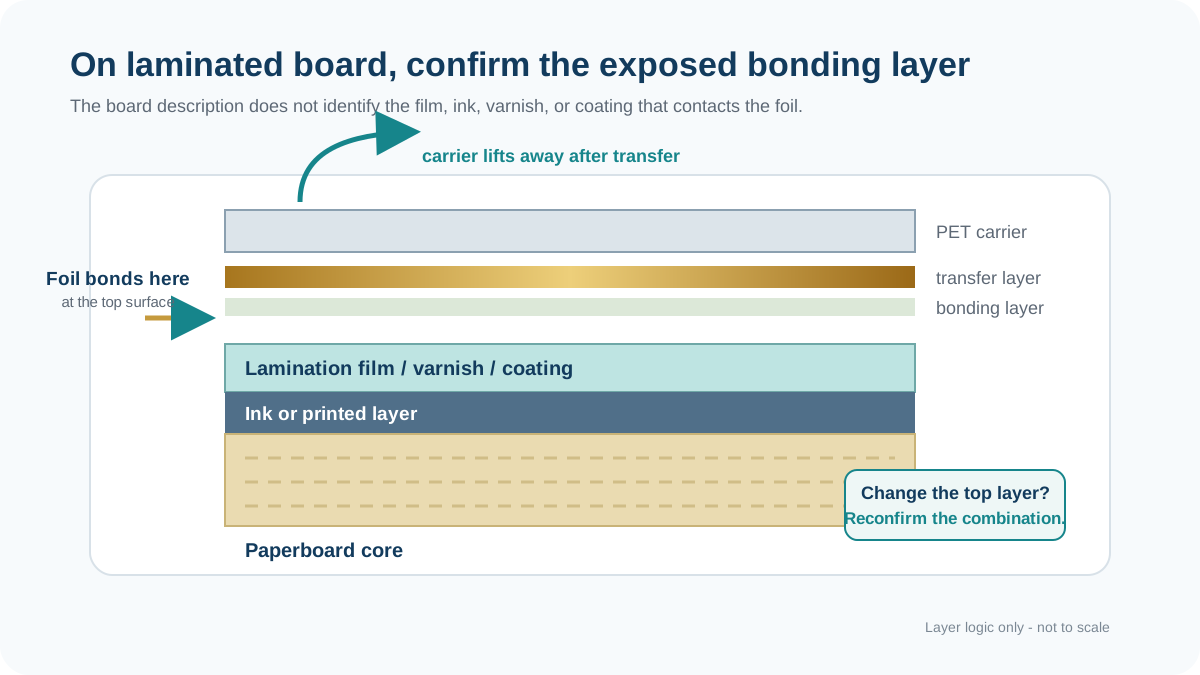
On laminated or printed board, the foil normally contacts the top film, ink, varnish, or specialty coating rather than the paperboard core. This distinction matters for rigid boxes, gift boxes, wine boxes, and other decorated packaging.
A foil that performs well on bare coated board can behave differently after gloss or matte lamination, soft-touch treatment, anti-scratch film, UV varnish, or another finish. Visually similar boards can also use different films, coatings, or curing conditions.
Test the final construction in production-ready condition. Printing, coating, lamination, and curing should match the planned order of operations. Check initial transfer, edge definition, adhesion, and relevant handling, folding, or assembly. If the film, ink, varnish, or curing process changes, treat it as a new foil-substrate combination. PackFinish's test plans for paper boxes, laminated surfaces, and plastic parts show how the evidence plan changes by substrate.
Plastic Surfaces: Identify the Resin, Treatment, Geometry, and Heat Response
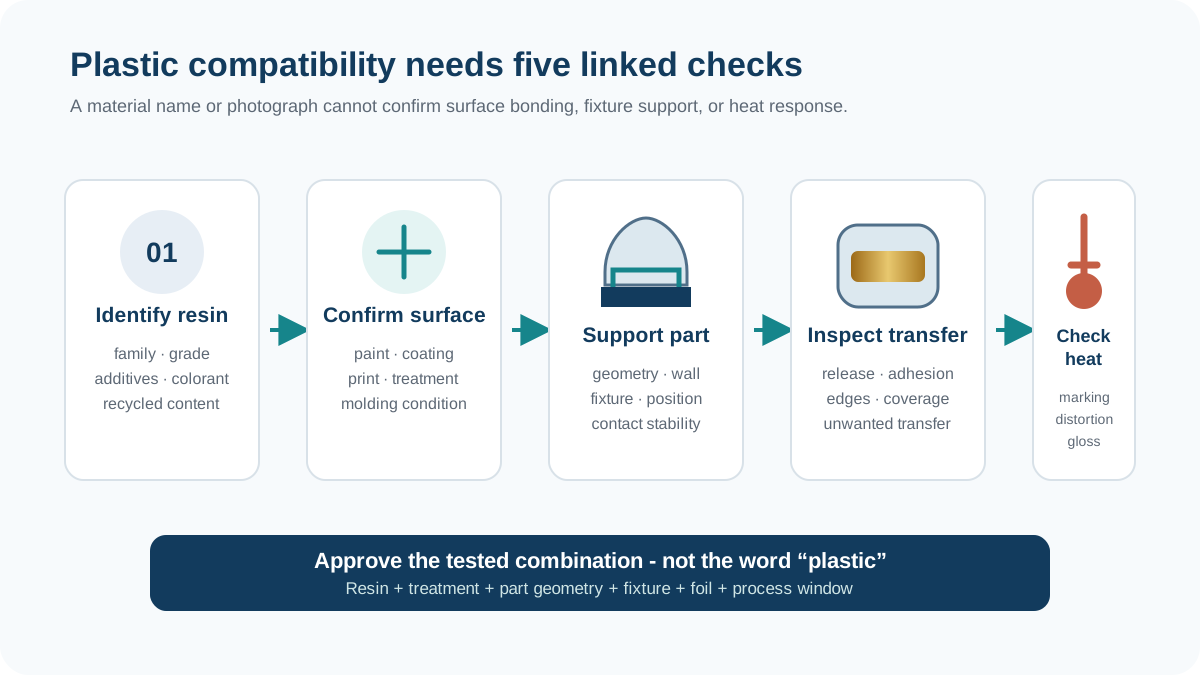
“Plastic” is not a sufficient material description. Resin family, additives, colorants, recycled content, molding condition, coatings, and surface treatments can change adhesion and heat response. Confirm the material type and whether the surface has been painted, coated, printed, corona treated, flame treated, plasma treated, or otherwise modified.
Geometry matters as much as chemistry. Flat sheets, curved components, molded parts, and thin-wall products need suitable support. A surface may accept foil but the part can still deform, mark, lose gloss, or move under unsuitable heat and pressure. Conversely, a lower temperature chosen to protect the part may not provide adequate release and bonding.
Test production-representative parts with the intended surface treatment, artwork, fixture, and operating conditions. No foil or machine should be assumed to work on every plastic.
Separate Color Approval from Performance Approval
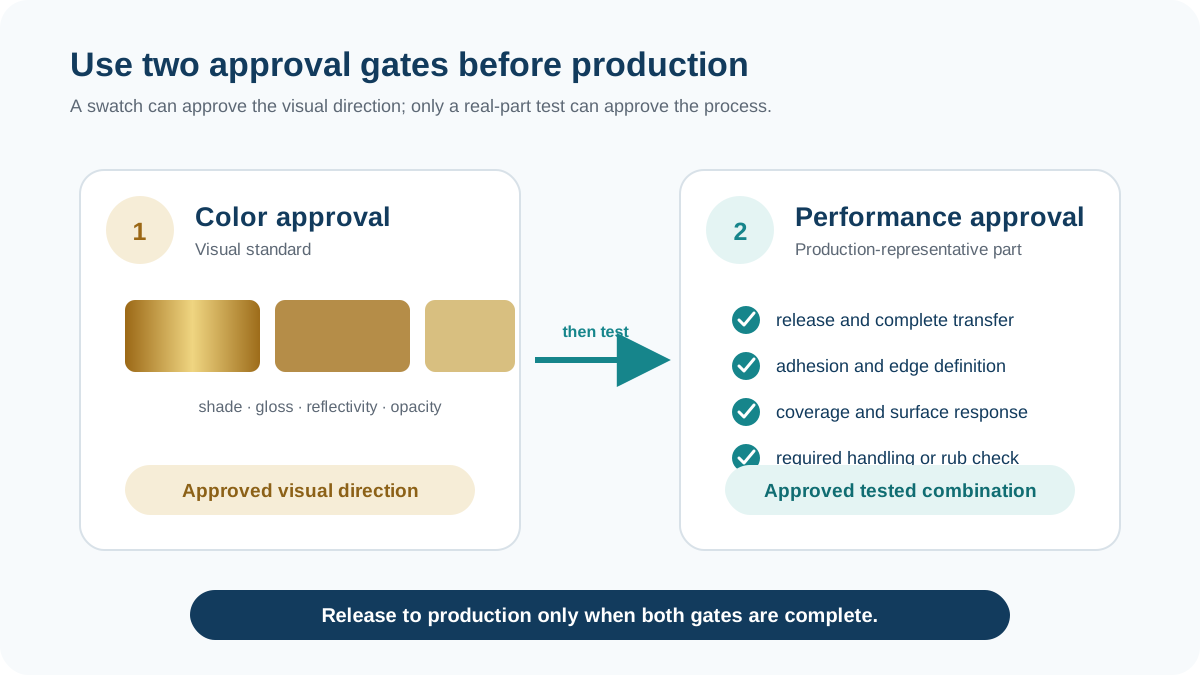
A foil swatch is useful for choosing a visual direction, but it cannot confirm production performance. Manage appearance and process approval as separate gates.
For appearance approval, compare shade, gloss, reflectivity, and opacity under agreed viewing conditions. The same foil can look different on smooth, textured, light, dark, matte, or glossy surfaces.
For performance approval, stamp the real product and inspect:
- complete release and transfer;
- adhesion to the actual top surface;
- fine-line clarity and edge definition;
- coverage in large solid areas;
- pinholes, filling, bridging, or unwanted transfer;
- surface marking, distortion, or gloss change; and
- resistance to the handling, folding, or rubbing expected for the package.
If the test produces missing foil, blurred edges, or weak adhesion, use PackFinish's hot stamping defect troubleshooting guide to separate material, foil, tooling, fixture, and process variables. Do not correct every defect by raising temperature.
Build a Foil-Substrate-Parameter Matrix for Batch Consistency
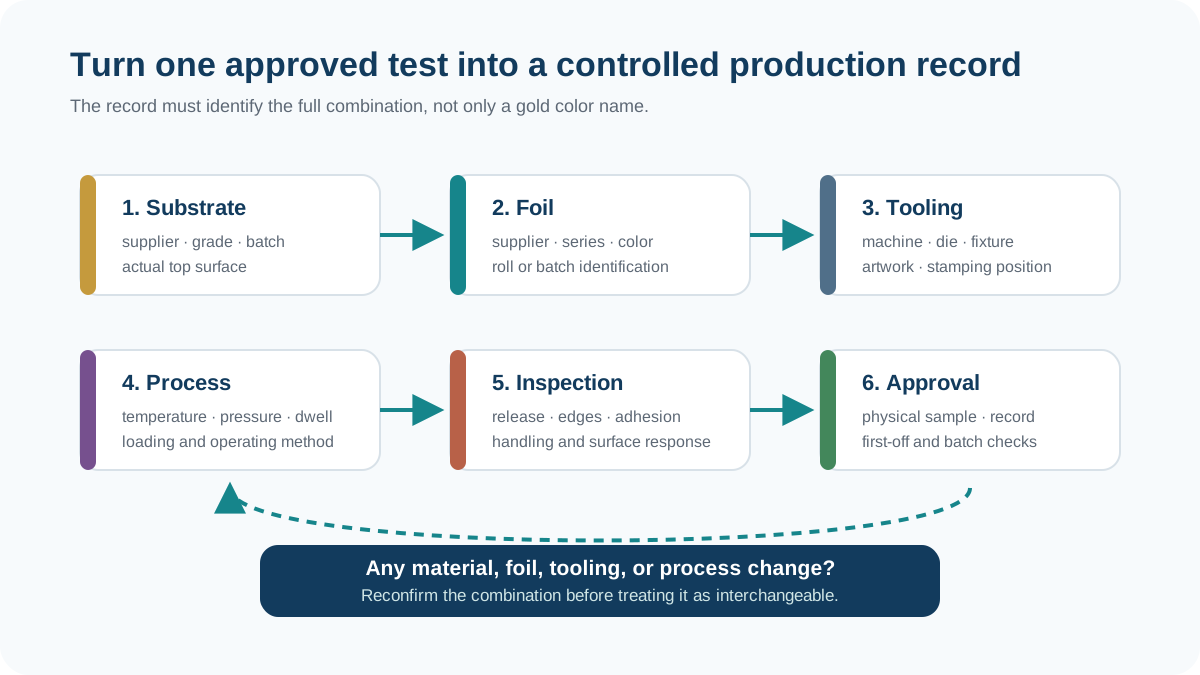
Convert an approved test into a production record. Include the substrate supplier, grade, batch, and top surface; foil supplier, series, color, and roll identification; machine, die, fixture, artwork type, and stamping position; temperature, pressure, dwell time, and loading method; acceptance criteria; and the approved physical sample.
Do not assume that another foil with the same color is interchangeable. A change in substrate, lamination film, coating, ink, curing, die, fixture, or machine can require confirmation testing. When a combination is promising but unstable, map a controlled temperature, pressure, and dwell-time process window rather than preserving one unexplained setting.
Frequently Asked Questions
Can one hot stamping foil be used on paper, laminated board, and plastic?
Possibly, but do not assume compatibility from color or a general product description. Test each actual top surface with the intended die, fixture, machine, and process settings.
Why can foil work on bare board but fail after lamination?
After lamination, the foil bonds to the exposed film or coating rather than the board underneath. That surface may require another foil grade, preparation method, or process window.
Can a foil swatch confirm final color and adhesion?
A swatch confirms a visual direction. Final shade, gloss, edge definition, coverage, adhesion, and handling performance must be approved on the real product construction.
What should be sent for a compatibility review?
Send production-representative substrate or parts, vector artwork, stamping dimensions and location, the target foil effect, product geometry, surface construction, and production requirements. Include the current foil reference and failed samples when available.
Send Samples for a Foil Compatibility Review
Send PackFinish the final surface construction, production-representative samples, artwork, stamping position, product geometry, and expected production pattern. PackFinish can then review the application as one system and identify the foil, die, fixture, machine, and test questions that should be resolved before production. Contact PackFinish with your sample brief.