
Bringing hot stamping in-house can shorten sample loops and give a packaging supplier more control over scheduling, setup knowledge, and repeat jobs. It is not automatically cheaper than outsourcing, and it should not begin with a machine quotation. The safer decision starts with real order records, complete process costs, sample testing, and a pilot that proves the work can be repeated by the intended team.
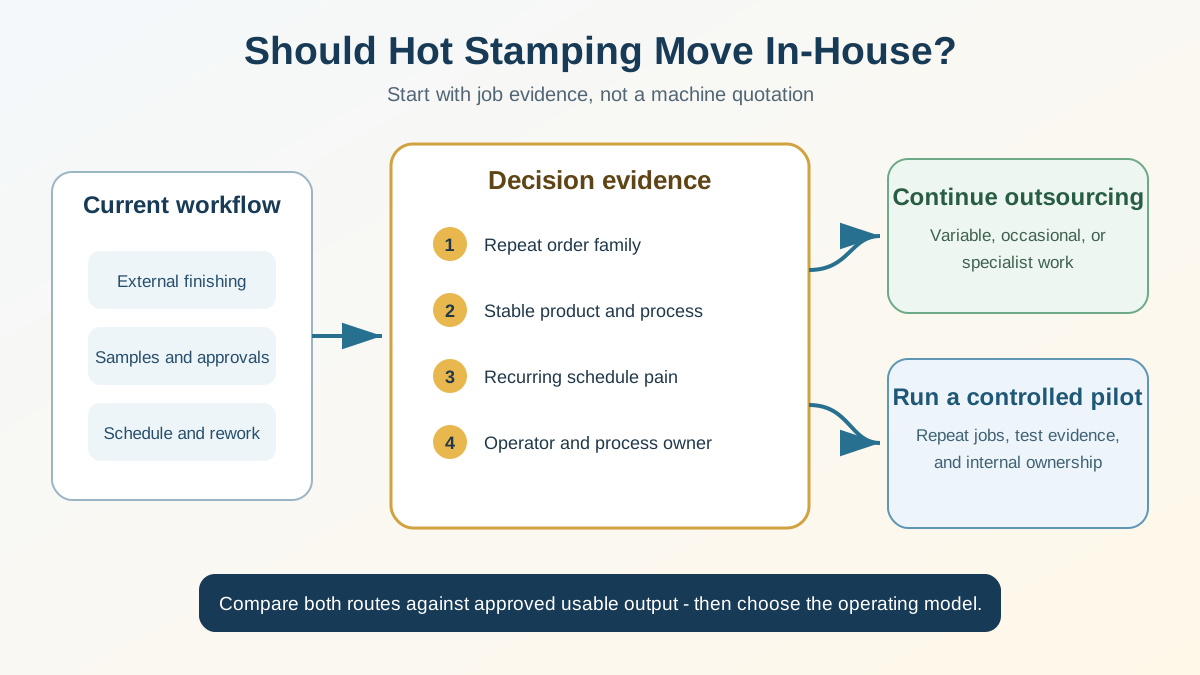
Treat This as a Make-or-Buy Decision, Not a Machine-Type Decision
The first question is not whether a manual, pneumatic, semi-automatic, or automatic machine looks affordable. It is whether the supplier has a repeatable group of jobs that should be owned internally.
Review completed orders and active quotations. Record the product type, substrate and surface treatment, box dimensions, artwork size, stamping position, order frequency, changeover pattern, approval time, outsourced cost, transport between suppliers, and rework history. Keep confirmed repeat demand separate from isolated requests.
This review should identify the business problem. A supplier may need faster samples, more predictable scheduling, better control of artwork changes, or a way to reduce repeated external setup. Those are different problems, and they do not all justify the same equipment or the same level of automation.
Build a Comparable Baseline From Actual Jobs
Compare outsourcing and an in-house pilot using the same product family and the same acceptance criteria. A machine price alone cannot be compared with an outsourced unit price because each option includes different work.
| Decision signal | What to record | Usually favors continued outsourcing | May justify an in-house pilot |
|---|---|---|---|
| Order pattern | Repeat frequency, product family, artwork changes | Irregular one-off jobs across many formats | Recurring jobs with a stable product family |
| Process stability | Substrate, coating, foil, die, fixture, position | Materials and positions change before each order | Samples and setup can be repeated and documented |
| Scheduling pain | Sample delay, queue time, transport, approval loops | External timing is acceptable | Delays repeatedly affect quotations or delivery planning |
| Internal readiness | Process owner, operator time, inspection method | No trained owner or quality standard | A named team can run, inspect, and record the pilot |
| Upgrade evidence | Setup time, usable output, rework, bottleneck | No reliable operating data | A measured constraint remains after the pilot stabilizes |
The table is a screening tool, not a universal ROI rule. Product geometry, stamping area, surface behavior, registration tolerance, and fixture support can change the decision.
Know Which Work Should Stay Outsourced
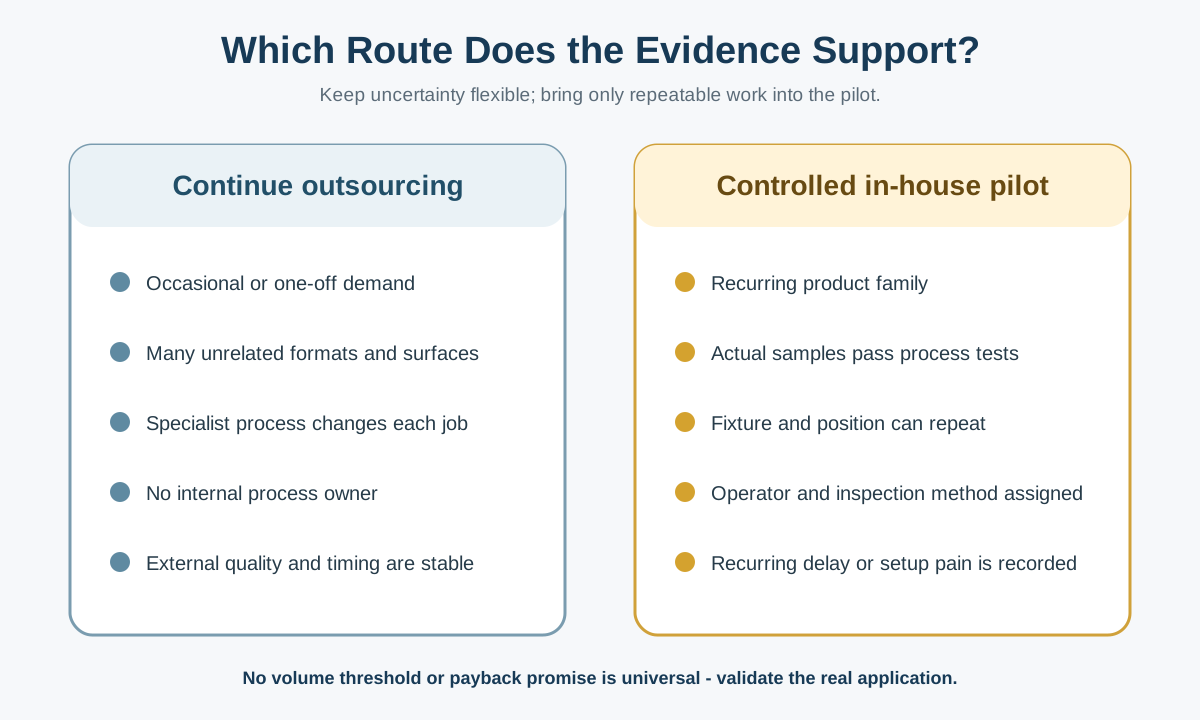
Outsourcing can remain the better operating choice when hot stamping demand is occasional, product formats vary widely, or specialist suppliers already handle unusual jobs reliably. It can also protect the packaging supplier from buying dies, fixtures, foil, and equipment for work that may not repeat.
Keep a job external while any of these conditions remain unresolved:
- The order depends on an unconfirmed quotation or a single customer request.
- The substrate or coating has not passed a real sample test.
- Every project needs a different support method, stamping position, or specialty process.
- No employee owns setup records, inspection, maintenance, and operator training.
- The planned budget excludes dies, fixtures, foil, trial material, rework, workspace, and maintenance.
- The current external supplier meets the required quality and schedule without a recurring operational problem.
Outsourcing is not a failure to invest. It is a flexible capacity choice when demand or process knowledge is still uncertain.
Look for Evidence That Supports a Controlled Pilot
An in-house pilot becomes more reasonable when several repeat jobs share similar products, substrates, artwork conditions, and positioning methods. The strongest signal is not a high forecast. It is a documented group of jobs that the same process can serve.
Useful pilot evidence includes approved samples, repeat orders, known stamping positions, a workable fixture concept, available operator time, and an inspection method for registration, adhesion, edge definition, and surface damage. If this information is missing, prepare samples before choosing the equipment direction. PackFinish's guide to preparing samples for a hot stamping machine test explains what to send.
Compare the Complete Cost of Each Route
For outsourcing, record more than the supplier invoice. Include sample charges, dies or plates paid externally, transport, minimum-order effects, communication time, approval loops, schedule buffers, rejected pieces, and the cost of repeating a setup after an artwork change.
For in-house production, include the machine, dies, fixtures or jigs, foil for each tested substrate, electrical or air requirements, workspace, handling, operator training, setup loss, trial material, inspection, maintenance, wear parts, and the time required to document and control the process.
Hot stamping quality depends on the complete system: machine, hot stamping foil, stamping die, fixture, substrate, temperature setting, pressure distribution, dwell time, positioning method, and operator control. PackFinish's guide to foil, dies, and fixtures for packaging hot stamping provides the process context behind these cost items.
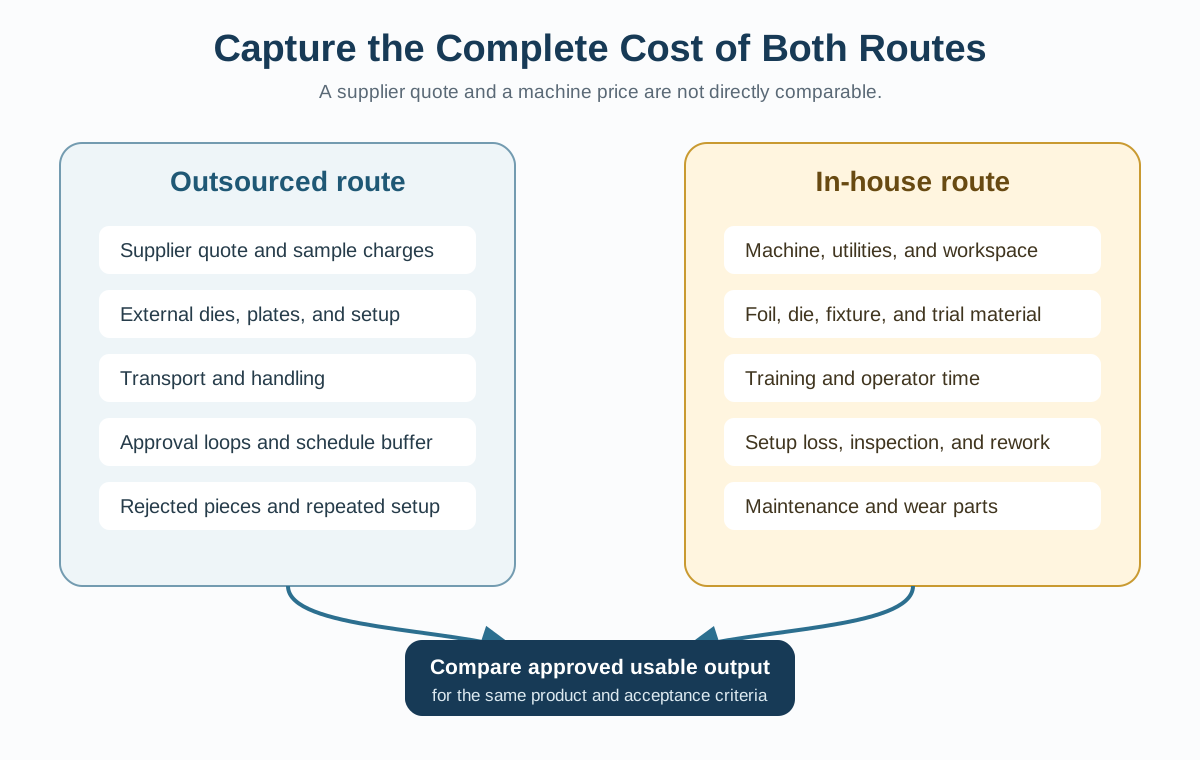
Compare both routes against approved, usable output. Do not assume that a lower machine price, a lower outsourced piece price, or a faster theoretical cycle settles the decision.
Use Four Gates for an In-House Hot Stamping Pilot
Gate 1: Application fit. Select one or two repeat product families. Confirm the actual substrate, surface treatment, artwork, stamping area, position, and acceptance criteria.
Gate 2: Process repeatability. Test the real product with a suitable foil, die, and fixture. Record the working setup and inspect several pieces for registration, adhesion, edge definition, surface response, and consistency.
Gate 3: Operating ownership. Assign an operator and process owner. Document setup, changeover, inspection, maintenance, and the action to take when the result moves outside the accepted sample.
Gate 4: Expansion evidence. Track setup time, usable output, rework, foil consumption, operator load, and queue pressure. Consider a higher automation level only when a stable workflow has a measured bottleneck.
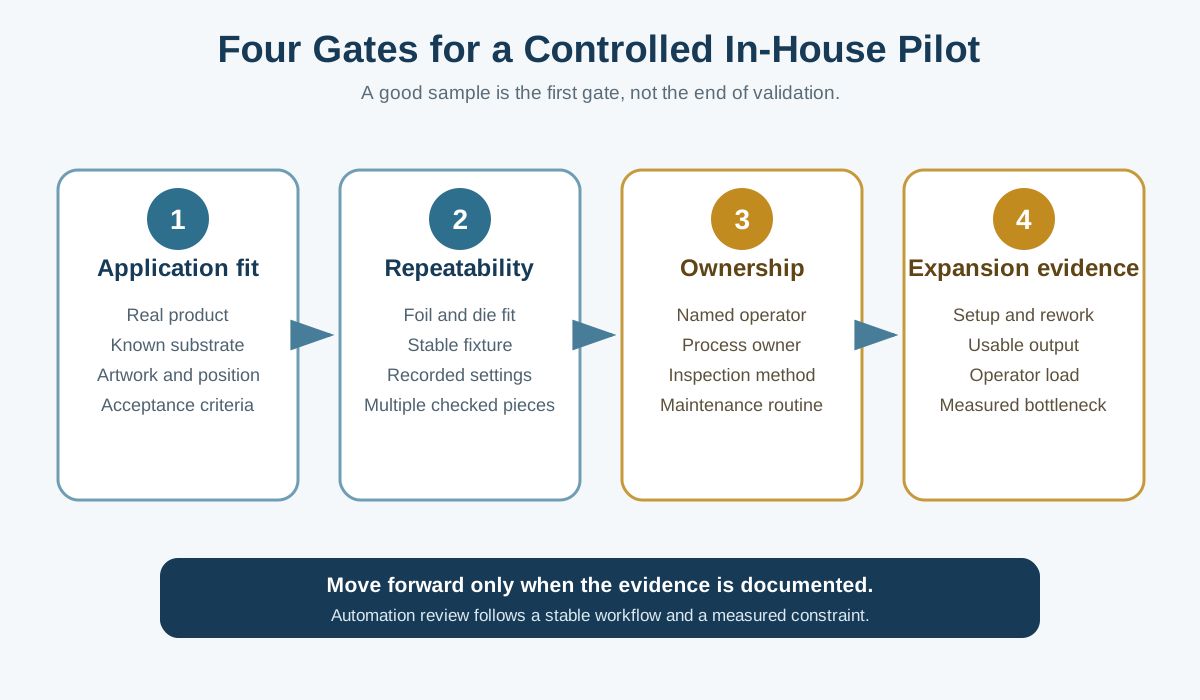
These gates prevent a successful sample from being mistaken for a ready production capability. One good piece proves feasibility; repeatable records and controlled output support an operating decision.
Choose the Machine Level After the Pilot Scope Is Clear
Manual or compact pneumatic equipment may support samples, mixed low-volume work, and frequent changeovers. Semi-automatic or automatic equipment becomes more relevant when repeat orders, product geometry, fixtures, loading, and inspection are stable enough to keep it productively used.
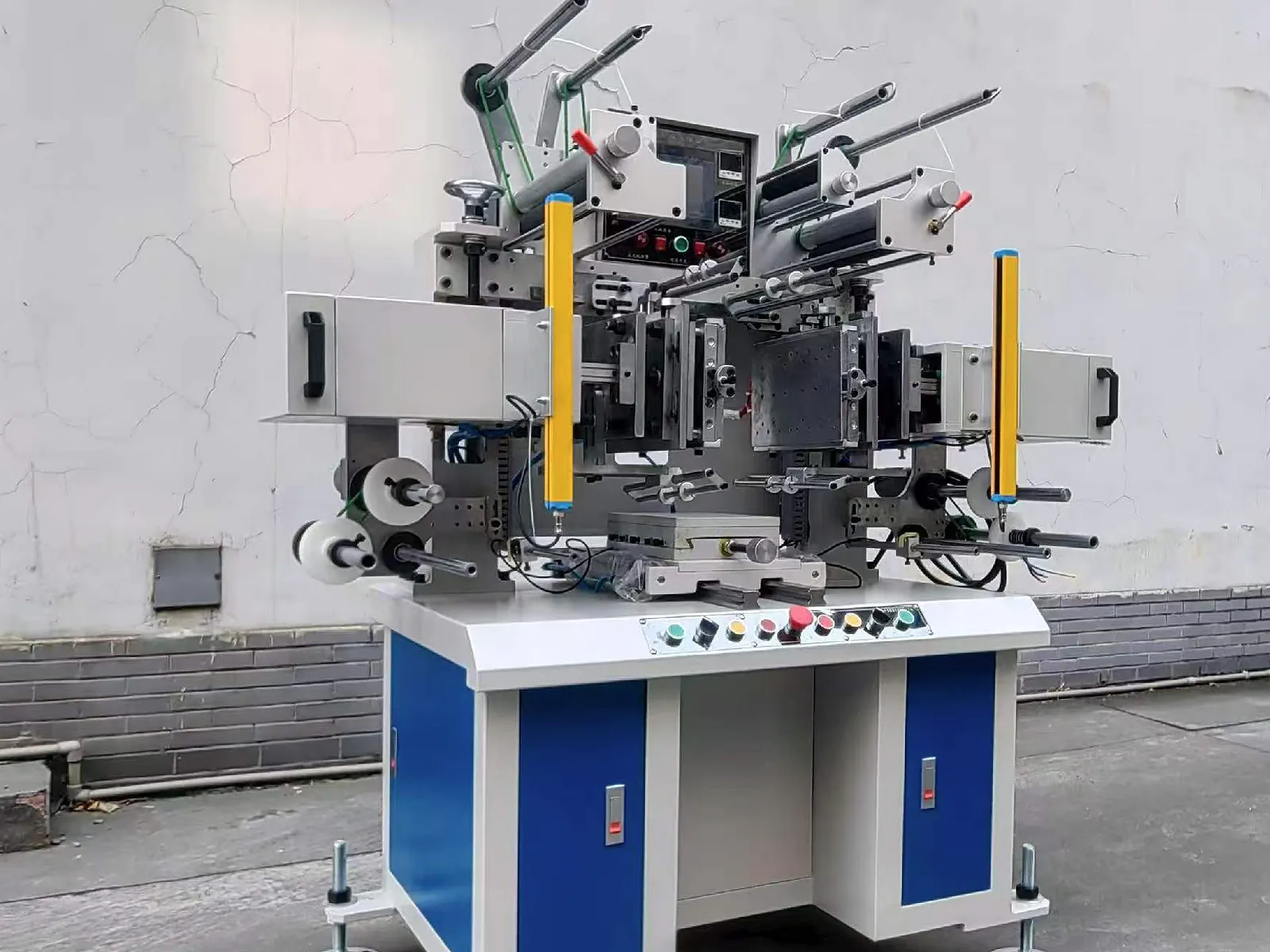
For an in-house pilot, equipment selection should follow the application, tooling, production method, and operating responsibilities defined during process review.
For a focused comparison of entry-level equipment, read when manual or pneumatic hot stamping is enough for small-batch packaging. For machine categories beyond the pilot stage, use the guide to manual, pneumatic, hydraulic, and automatic hot stamping machines.
What to Send PackFinish for a Practical Review
Provide the product type, dimensions, substrate and surface treatment, artwork dimensions, stamping position, typical batch size, order frequency, product mix, current outsourced workflow, approval delays, quality concerns, available operators, and desired automation level. Include photos, videos, and physical samples where possible.
PackFinish can review the machine direction together with foil, die, fixture, positioning, pressure, temperature, dwell time, and sample testing. If positioning or product support is uncertain, review when a custom hot stamping fixture is needed before finalizing the pilot.
Request a hot stamping application review with your repeat product family, current workflow, and representative samples.
FAQ
Does bringing hot stamping in-house always reduce cost?
No. The result depends on repeat demand, setup time, tooling, operator time, usable output, rework, maintenance, and how well the pilot process can be repeated. Compare complete costs for the same product family and acceptance standard.
Should a packaging supplier buy a machine for one large order?
One order can justify a controlled trial, but it should not automatically define a permanent equipment investment. Confirm whether the product, material, artwork, and order pattern are likely to repeat.
What proves that an in-house pilot is ready for recurring production?
Look for approved samples, a stable foil-die-fixture combination, documented settings, repeatable positioning, trained ownership, clear inspection criteria, and usable output across more than one controlled run.
When should hot stamping remain outsourced?
Keep it outsourced when demand is irregular, products and materials change constantly, specialist work dominates, internal process ownership is missing, or the current supplier meets quality and schedule needs without recurring disruption.